
Original research |
Peer reviewed |
Observations of piglet-directed behavior patterns and skin lesions in eleven commercial swine herds
T. M. Widowski, PhD; T. Cottrell, BVMS, MSc; C.E. Dewey, DVM, PhD; R.M. Friendship, DVM, PhD, Diplomate ABVP
TMW: Department of Animal and Poultry Science, University of Guelph, Guelph, Ontario. TC, CED, RMF: Department of Population Medicine, University of Guelph, Guelph, Ontario. Corresponding author: Dr T. Widowski, Department of Animal and Poultry Science, University of Guelph, Guelph, Ontario N1G 2W1, Canada; Tel: 519-824-4120, ext 52408; Fax: 519-836-9873; E-mail: twidowsk@uoguelph.ca.
Widowski TM, Cottrell T, Dewey CE, et al. Observations of piglet-directed behavior patterns and skin lesions in eleven commercial swine herds. J Swine Health Prod. 2003;11(4):181-185. Also available as a PDF
Summary
Objectives: To determine the frequencies of piglet-directed behavior performed by weaned piglets in 11 commercial herds during relatively short videotaped observations, and to test the relationships among frequency of observed behavior, injury scores, and biosecurity scores.
Materials and methods: Behavior and skin lesion scores (Mild, Moderate, or Severe) were sampled during a single visit to each of 11 commercial swine herds. The frequencies of belly nosing, nosing or chewing on ears and tails, and aggression were sampled from 2-hour video recordings of the pigs. For each herd, a biosecurity score was compiled from information regarding isolation from other herds as well as general on-farm hygiene practices according to the Ontario Swine Health Improvement Plan.
Results: All three recorded behavior patterns were observed in each herd, but frequencies varied across herds. Belly nosing was observed most often, and its frequency was negatively correlated with average weaning age. Aggression had the lowest frequency among the three behaviors, but was positively correlated with nosing or chewing on the ears or tails of other pigs. Skin scores were not significantly correlated with frequencies of behavior or weaning age. However, the proportion of pigs with Moderate and Severe lesions on the ears and abdomen decreased as the biosecurity score for the herd improved.
Implications: Frequencies of belly nosing in commercial herds were negatively correlated with weaning age. However, belly nosing was also observed at a relatively high frequency in one herd with later weaned piglets, suggesting that other factors may influence this behavior.
Keywords: swine, nursery, behavior, lesions
Search for similar articles
Received: April 23, 2002
Accepted: October 15, 2002
Piglets typically exhibit a variety of behavioral responses to weaning. Initially, piglets are restless, give distress calls, and often take several days to begin eating.1 After the initial adjustment to weaning, nursery-aged piglets may develop several maladaptive behavior patterns, such as belly nosing and sucking or chewing on the ears or tails of other pigs.2 Belly nosing is a repetitive nosing on the abdomen of another pig that resembles massaging the udder of the sow,3 but does not appear to be associated with hunger or diet.4 Belly nosing develops during the first week post-weaning,3,5-7 peaks during the second week, and then begins to wane.4,5 In some cases, it may cause lesions on recipients.8 Laboratory studies have shown that belly nosing is more prevalent in piglets weaned at earlier ages 5-7 and occurs more often in barren environments than in straw-based housing systems.9,10 It has been suggested that belly nosing may be related to stress.5,7 However, in a recent study, no correlations between belly nosing and the behavioral or physiological indicators of the stress response were observed.11 Although the causes of belly nosing and other piglet-directed behavior patterns are not well understood, there may be some relationship to body weight or growth rate, or simply physiological maturity as reflected by body size. Piglets that are light at weaning have been observed to perform more nosing and chewing on their penmates than piglets that are heavier when weaned at the same age.4 Piglets identified as "nosers" have been observed to gain less weight in the nursery than piglets that do not develop this behavior.12 However, any causal relationship between performance of belly nosing and growth rate has not been determined.
The performance of these piglet-directed behavior patterns may result in injury, and they are often considered indicators of compromised animal well-being. Therefore, it is important that we understand their prevalence and, as well, identify factors associated with them. In this study, the behavior of piglets in commercial herds was quantified to identify the frequencies of piglet-directed behavior patterns. Laboratory studies involving detailed observations indicate that the amount of time spent performing piglet-directed behavior is low relative to the overall time budget of the piglet (ie, piglets spend approximately 2% of their time belly nosing during the period of its peak occurrence).4,5,7,11 Therefore, we wanted to determine whether piglet-directed behavior would be evident during relatively short videotaped observations of the pigs. Groups of pigs, selected from those that had been videotaped, were also scored for skin lesions, and a biosecurity index calculated for each herd was used as an indirect indicator of quality of management. Data were used to explore relationships among the behavior observations, injury, and biosecurity scores.
Materials and methods
Participating herds
Data on behavior and skin lesions were collected in May and June of 1998 during a single visit to each of 11 commercial swine herds located across Southwestern Ontario. This study was conducted concurrently with a larger cross-sectional study concerning disease prevalence in nurseries, and relied on producers' willingness to participate in the study.13 Nine of the 11 herds were farrow-to-finish operations, one was a farrow-to-wean facility, and one was an off-site nursery unit. The ages of the facilities ranged from less than 1 year to greater than 10 years.
Study design
Herds were visited in the morning, one herd per day. In nine herds, three pens were selected in a single room of weanling piglets. A video camera was positioned over each pen so that the behavior of all piglets in the pen could be monitored. Attempts were made to distribute the observed pens at different locations within a nursery room. In two herds, piglets were housed in much larger group sizes, and several cameras were positioned so that all pigs in a single pen could be monitored. Piglets were videotaped in the absence of human presence in the room for a minimum of 2 hours between 9:00 am and 1:00 pm.
Immediately after the period of videotaping, piglets in the pens that had been videotaped were examined by a veterinarian and veterinary technician. Piglets were scored for redness and irritation and for cuts and scratches around the ears and neck and on the abdominal or flank areas. In the smaller groups, all pigs were scored, but in the two larger groups, only 20 and 30 piglets, respectively, were selected for scoring. Although attempts were made to select piglets of different sizes from each pen, individual piglets were not identified, nor were they weighed to ensure that a representative sample was selected.
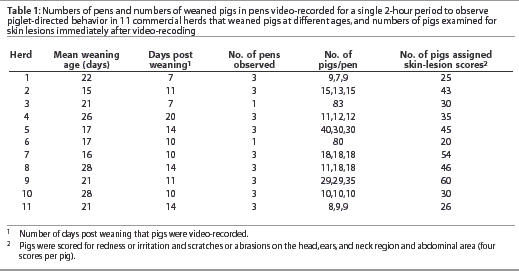
During the visit, the producer completed a questionnaire about biosecurity and nursery management. Table 1 shows the average weaning age, number of days post-weaning that pigs were videotaped and scored, and number of pens and their respective group sizes used in the study for each herd.
Skin lesion scoring
Each pig was assigned four skin-lesion scores. Scores for redness and irritation were assigned to the ears, head, and neck region and to the flank, abdomen, and inguinal area, and a score for scratches or abrasions was also assigned to each of these two areas.
For redness or irritation, a score of 0 was assigned when no redness, swelling, or hair loss were evident; a 1 (Mild) was assigned when reddening, swelling, or hair loss were barely detectable; a 2 (Moderate) was assigned when swelling, redness, or hair loss were obvious; and a score of 3 (Severe) indicated irritation easily observed as darker reddening, swelling, and patches of hair loss.
For scratches or abrasions, a score of 0 was assigned when no scratches or skin loss were evident; a 1 (Mild) was assigned when one to three small (<=2 cm) scratches or areas of abraded skin were evident; a 2 (Moderate) was assigned when one to three larger (>2 cm) scratches or areas of abraded skin were observed; and a score of 3 (Severe) indicated more than three scratches (usually >2 cm) or larger areas of superficial skin loss.
Behavior data collection
From the videotapes, behavior was observed by an experienced technician for the first minute of every 5-minute interval during a 2-hour sampling period, resulting in a total of 24 minutes of continuous observation for each pen in each herd. All occurrences of belly nosing, nosing or chewing penmates, and aggressive interactions were recorded. Belly nosing was defined as repetitive rooting movement with the snout on the abdomen of another pig. Nosing or chewing penmates was defined as sustained oral-nasal contact with the ears, tail, or anal region of another pig. Aggressive interactions were defined as head-knocks and bites directed at another pig and may have included elements of play behavior. If a piglet exhibiting a behavior stopped and then directed the behavior at another individualduring the same minute, two bouts were counted. If behavior was directed at the same individual again, a single bout was counted. Piglets within a group were not individually marked, and therefore data represent the average frequency exhibited per pig in the group and do not reflect individual differences among piglets.
Biosecurity scores
A biosecurity score was compiled, using producer responses to a questionnaire that was based on the Ontario Swine Health Improvement Plan criteria (Dr T. E. Blackwell, Ontario Ministry of Agriculture, Food, and Rural Affairs, Fergus, Ontario; written communication, February 2003). Questions were included about isolation from other herds as well as farm hygiene (eg, use of coveralls, boots, exposure of visitors or stockpeople to other herds), farm security, quarantine procedures for new stock, access of pets or wild animals to the barns, and fly and rodent control.13 A higher score indicated that stricter biosecurity measures were used, with 150 the highest possible score. The biosecurity score was used as an indirect indicator of quality of management in each study herd.
Calculations and statistical analyses
Data summaries and descriptive statistics (means, medians, ranges) were generated using the SAS statistical software program (Statistical Analysis System, Version 6.12, Cary, North Carolina). Behavioral data for each category of behavior were summed for all pens in each herd, and then divided by the number of piglets observed, providing a single per-pig value for each herd. The percentages of pigs assigned Moderate (2) and Severe (3) scores were also calculated and then summed for each herd. Values for each variable (frequencies of behavior, sums of percentages of pigs with Moderate and Severe lesion scores, and biosecurity scores) were ranked by herd, and Spearman's non-parametric rank order correlations were performed using the PROC CORR procedure of SAS to identify relationships between frequency of behaviors, lesion scores, biosecurity scores, and average weaning age.14 Sampling day varied between 7 and 20 days post weaning, but eight of 11 herds were sampled between 10 and 14 days post weaning, when most belly nosing would be expected to occur. Therefore, tests for correlations were conducted on all 11 of the herds, as well as on the sub-set of eight herds that were sampled between 10 and 14 days post weaning, and Spearman's correlation coefficients (rho) and associated P values were calculated for both the full sets (N=11) and sub-sets (N=8) of data.
Results
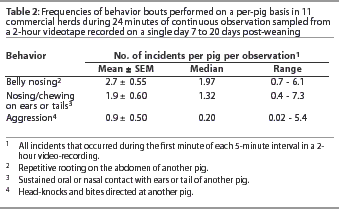
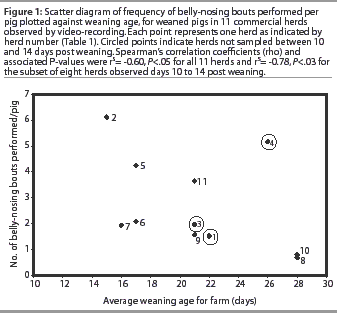
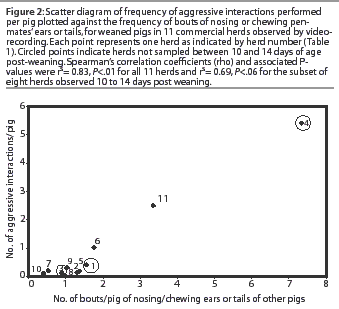
All three of the recorded behavior patterns (belly nosing, nosing or chewing penmates, and aggressive interactions) were observed during the 2-hour sampling period in each of the herds, but there was a great deal of variation among the herds in the frequencies observed (Table 2). Of the three behavior patterns measured, belly nosing was the most frequently observed in most herds (9 of 11 herds). There was a significant negative correlation between frequency of belly nosing and average weaning age for the herd (Figure 1). However, a relatively high frequency of belly nosing was also observed in one herd (Herd 4) with an average weaning age of 26 days. Among the behavior patterns measured, aggression had the lowest frequency, but aggression was positively correlated with the frequency of nosing or chewing on the ears or tails of other pigs (Figure 2).
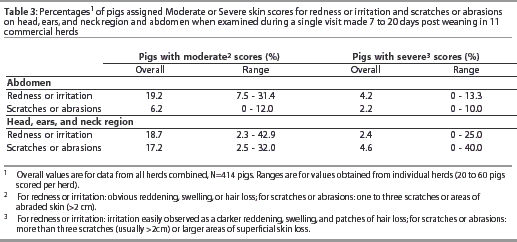
The percentages of pigs with Moderate and Severe skin lesion scores are given in Table 3. These values also tended to vary considerablyacross herds. Overall, 19.2% of piglets were given a 2 (Moderate score) for redness or irritation and only 6.2% were assigned Moderate scores for scratches or abrasions on the abdomen. Overall, 18.7% of piglets were given a 2 (Moderate score) for redness or irritation and 17.2% were assigned a 2 for scratches or abrasions on the head, ears, and neck region. Less than 5% of pigs had Severe (3) skin lesion scores in any category. In three of the 11 herds, no pigs were assigned Severe scores, and in eight of the herds, only one pig was assigned a Severe score for scratches or abrasions on the abdomen. There were no significant correlations between skin scores, any of the behavior patterns measured, or weaning age.
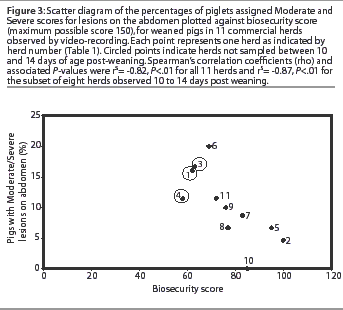
The biosecurity scores of the herds in our study ranged from 58 to 100 (out of a possible 150). Biosecurity score was negatively correlated with the percentages of pigs with Moderate and Severe lesions on both the head, ears, and neck region (P<.05) and on the abdomen (P<.05). The percentages of piglets assigned Moderate and Severe lesion scores for the abdomen plotted against biosecurity scores are shown in Figure 3. The relationship between lesion scores on the head, ears and neck region and biosecurity scores was almost identical, ie, as biosecurity score increased, the proportion of pigs with Moderate or Severe lesions decreased.
Discussion
The results of this study indicate that belly nosing and other piglet-directed behavior patterns may be readily observed during brief, videotaped samples of behavior in commercial swine nurseries. It also indicates that in some herds, a number of piglets exhibit skin damage that may be a result of being a recipient of these behavior patterns. Because our sample size was small and housing, management, and genetics varied considerably across herds, it is difficult to draw conclusions about factors associated with performance of the behavior patterns or the skin scores in this study. However, the significant negative correlation between belly nosing and weaning age (Figure 1) is in agreement with what we know from a number of laboratory studies,5-7 and this relationship was apparent even during our relatively short observation periods.
A relatively high frequency of belly nosing was observed in one herd with a weaning age of 26 days (Herd 4). Piglets in this herd were very active during the entire observation period and also exhibited extremely high frequencies of nosing or chewing penmates and aggression compared to all other herds. Interestingly, this herd also had the poorest biosecurity score (58) of the 11 study herds.
The lack of association between observed behavior and skin scores might have been due to time of sampling relative to weaning. In a laboratory experiment, Straw and Bartlett12 found that lesions from belly nosing were at their maximum 17 to 20 days post weaning; most of our pigs were examined a week earlier. Injuries to head and ears most likely occur immediately after weaning, when aggression due to mixing piglets is highest; our piglets were sampled well after that time. Alternatively, other housing or management factors not associated with the behavior exhibited by the piglets may have contributed to the development of the lesions observed in this study.
The significant negative correlations between biosecurity scores and percentages of pigs assigned Moderate and Severe lesion scores are interesting. Although no causal relationship between biosecurity measures and skin lesions can be implied from these data, the biosecurity score may reflect a producer's overall "attention to detail" in management, that is also apparent in the number of injuries or general appearance of the pigs. Producers that use stricter biosecurity measures may not only have a higher quality of health management for their herds, but may also have a higher quality of environmental management, paying more attention to factors such as ventilation or floor or feeder space allowance, which may influence piglet behavior and resulting injury. Further large scale studies are needed to identify how various management factors may affect weaned piglet behavior.
Implications
- Under the conditions of this study, the frequencies of belly nosing observed during short on-farm observations were negatively correlated with weaning age.
- Relatively short videotaped samples of behaviour in commercial nurseries may be useful in larger scale studies for investigating the influence of on-farm factors on piglet behavior.
Acknowledgements
This study was supported by Ontario Pork, the Ontario Ministry of Agriculture, Food, and Rural Affairs, and Natural Sciences and Engineering Research Council of Canada. We wish to thank the Ontario swine producers who graciously allowed us to collect data in their facilities.
References - refereed
1. Fraser D, Milligan BN, Pajor EA, Phillips PA, Taylor AA, Weary DM. Behavioural perspectives on weaning in domestic pigs. In: Wiseman, J, Varley MA, Chadwick JP, eds. Progress in Pig Science. Nottingham, UK: Nottingham University Press; 1998:121-140.
2. Blackshaw JK. Some behavioural deviations in weaned domestic pigs: persistent inguinal nose thrusting, and tail and ear biting. Anim Prod. 1981;33:325-332.
3. Fraser D. Observations on the behavioural development of suckling and early-weaned piglets during the first six weeks after birth. Anim Behav. 1978;26:22-30.
4. Gardner JM, de Lange CFM, Widowski TM. Belly nosing in early-weaned piglets is not influenced by diet quality or the presence of milk in the diet. J Anim Sci. 2001;79:73-80.
5. Gonyou HW, Beltranena E, Whittington DL, Patience JL. The behaviour of pigs weaned at 12 and 21 days of age from weaning to market. Can J Anim Sci. 1998;78:517-523.
6. Metz JHM, Gonyou HW. Effect of age and housing conditions on the behavioural and haemolytic reaction of piglets to weaning. Appl Anim Behav Sci. 1990;27:299-309.
7. Worobec EK, Duncan IJH, Widowski TM. The effects of weaning at 7, 14 and 28 days on piglet behaviour. Appl Anim Behav Sci. 1999;62:173-182.
8. Allison CJ. Snout-rubbing as a vice in weaned pigs. Vet Rec. 1976;98:254-255.
9. Dybkjær L. The identification of behavioural indicators of 'stress' in early weaned piglets. Appl Anim Behav Sci. 1992;35:135-147.
10. Petersen V, Simonsen HB, Lawson LG. The effect of environmental stimulation on the development of behaviour in pigs. Appl Anim Behav Sci. 1995;45:215-224.
11. Gardner JM, Duncan IJH, Widowski TM. Effects of social "stressors" on belly nosing behaviour in early-weaned piglets: is belly-nosing an indicator of stress? Appl Anim Behav Sci. 2001;74:135-152.
12. Straw BE, Bartlett P. Flank or belly nosing in weaned pigs. J Swine Health Prod. 2001;9:19-23.
14. Zar JH. Biostatistical Analysis. 4th ed. Upper Saddle River, New Jersey: Prentice-Hall; 1999:395-398.
References - non refereed
13. Cottrell TS. Epidemiology of post-weaning multi-systemic wasting syndrome and pathogenic strains of porcine circovirus in Southern Ontario [MSc thesis]. Guelph, Ontario; University of Guelph; 1999.