
Original research |
Peer reviewed |
A retrospective study of risk factors for porcine reproductive and respiratory syndrome virus infection and clinical disease in swine herds in Illinois during the early years of the pandemic
Lawrence D. Firkins, DVM, MBA; Ronald M. Weigel, PhD
LDF, RMW: Department of Veterinary Pathobiology, University of Illinois, College of Veterinary Medicine, Urbana, Illinois; Corresponding author: Dr Ronald M. Weigel, University of Illinois, College of Veterinary Medicine, 2001 S Lincoln Avenue, Urbana, IL 61802; Tel: 217-244-1365; Fax: 217-244-7421; E-mail: weigel@uiuc.edu
Cite as: Firkins LD, Weigel RM. A retrospective study of risk factors for porcine reproductive and respiratory syndrome virus infection and clinical disease in swine herds in Illinois during the early years of the pandemic. J Swine Health Prod 2004;12(1):23-28.
Also available as a PDF.
Summary
Objectives: To determine whether purchase and isolation of gilts and boars, purchase of semen for artificial insemination (AI), sharing of boars with other herds, herd size, and confinement housing were risk factors for porcine reproductive and respiratory syndrome (PRRS) virus infection and clinical PRRS in swine herds during the early years of the pandemic.
Methods: A herd demographic and management survey of 103 swine herds in Illinois was conducted in 1992 and repeated in 1997 to determine whether PRRS virus infection and clinical disease had been diagnosed during the intervening period. Multivariable logistic regression analysis was conducted to identify risk factor associations.
Results: Larger herd size was associated with an increased risk, and isolation of purchased gilts with a decreased risk, of both PRRS virus infection and clinical PRRS. Purchase of semen for AI was associated with an increased risk of PRRS virus infection.
Implications: Swine producers should certify that purchased semen is free of PRRS virus, gilts should be isolated prior to introduction to the herd, and biosecurity measures should be implemented to prevent PRRS virus infection, particularly in larger herds.
Keywords: swine, porcine
reproductive and respiratory syndrome virus,
epidemiology, risk factor analysis
Search the AASV web site
for pages with similar keywords.
Received: March
4, 2003
Accepted: May
22, 2003
Porcine reproductive and respiratory syndrome (PRRS), characterized by late-term abortion epidemics, neonatal mortality, and severe respiratory signs and secondary infections in nursery and growing pigs, was first identified as a distinct disease syndrome in the United States and Europe in the late 1980s.1-3 It has been demonstrated that growth rates and measures of reproductive performance decrease in herds infected with PRRS virus (PRRSV).4-6 Severe economic losses associated with PRRS outbreaks have been documented.7 Porcine reproductive and respiratory syndrome is arguably the most devastating disease affecting the swine production industry worldwide today.
Several sources of PRRSV infection for swine herds have been implicated, including purchased swine (both breeding stock and feeder pigs) and purchased semen from infected boars for use in artificial insemination (AI).8-10 However, epidemiologic studies designed to identify risk factors for the spread of PRRSV infection and clinical disease have been limited. In a cross-sectional study of 58 herds in a PRRS-endemic area of England, Edwards et al11 found that the risk of being infected with PRRSV increased with larger breeding herd size, more gilts purchased, and lack of quarantine of purchased pigs. In a case-control study of 196 herds in Denmark, Mousing et al12 found that introduction of breeding stock from PRRSV-seropositive source herds and purchase of feeder pigs increased the risk of PRRSV infection, but herd size and use of semen from PRRSV-positive source herds for breeding were not associated with PRRSV infection status. In a case-control study of 219 swine herds in Denmark, Mortensen et al13 reported that the risk of infection with a US vaccine strain of PRRSV increased with the purchase of semen from a PRRSV-infected source, larger herd size, and an increased density of PRRSV-infected neighboring herds.
The model of transmission that emerges is that PRRSV is introduced into a herd primarily through infected pigs and semen and that increased opportunities for contact with infected pigs, such as may occur in large herds in confinement facilities, facilitate the establishment of infection in the herd. Isolation of purchased swine decreases this risk.
The objective of this retrospective study was to utilize a herd demographic and management survey of 103 swine herds in Illinois to identify risk factors for PRRSV infection and clinical PRRS during the early years of the PRRS epidemic in the United States (1992 to 1997). Comparison of conditions enhancing transmission during these years with more recent results is important in understanding the constancy of risk factors and thus the efficacy of intervention methods for a virus that may be evolving in response to a changing host and treatment environment. Comparison with earlier epidemiologic studies in Europe is important, because distinct genetic differences between PRRSV in Europe and the United States have been identified.14 It is hypothesized here that the risk of PRRSV infection and clinical PRRS increases with increasing herd size, total confinement housing, a greater number of purchased gilts and boars, purchase of semen for AI, and failure to isolate boars and gilts after purchase.
Methods
In 1992, telephone interviews on demographic, management, and housing characteristics were obtained for 140 farrow-to-finish swine herds as part of a risk factor survey for Toxoplasma gondii infection.15 During 1997, it was possible to re-contact 103 of these farms (74%) to obtain updated information on herd characteristics, and also to determine whether serological detection of PRRSV infection or clinical signs of PRRS had been made for the herd by a veterinarian in the previous 5 years. A herd was classified as having clinical PRRS if a diagnosis of PRRS had been made by a veterinarian due to the presence of clinical signs of PRRS. A herd was classified as infected with PRRSV either if clinical PRRS had been diagnosed or if serological testing had indicated PRRSV infection.
Thus, the outcomes analyzed were whether or not, within the 5 years previous to the survey in 1997, clinical PRRS had been diagnosed, and whether or not PRRSV infection had been diagnosed either by clinical signs or by serological testing. Risk factors analyzed for their association with these outcomes were the following variables, obtained during the 1992 interviews: average number of sows in the herd in the previous year, total confinement housing (all pigs housed entirely inside), number of gilts purchased in the previous year, isolation of gilts after purchase, number of boars purchased in the previous year, and isolation of boars after purchase. Purchase of feeder pigs was not included as a risk factor because only one of these farrow-to-finish swine operations had purchased feeder pigs. The following additional information was obtained from the 1997 interview: purchase of semen for AI during the previous 5 years, and sharing of boars for breeding with other herds in the previous 5 years.
On the basis of previous reports,4,12,13 the following predictions were made: the probability of PRRSV infection and the probability of clinical PRRS would increase with an increase in the number of sows in the herd, total confinement housing, an increase in the number of gilts purchased, failure to isolate gilts after purchase, an increase in the number of boars purchased, failure to isolate boars after purchase, purchase of semen for AI, and sharing of boars with other herds.
Risk factors were analyzed for their association with PRRSV infection and clinical PRRS using both bivariate and multivariable methods. Bivariate associations with PRRS outcomes were analyzed using 2 x 2 contingency tables for dichotomous categorical variables16 and the Mann-Whitney U test for interval level risk factors.17 For 2 x 2 tables where the expected value in one or more cells was less than 5, Fisher's exact test was used to calculate P values. Multivariable risk factor analysis was conducted using multivariable logistic regression. A stepwise variable selection procedure was used, with initial forced entry of all predictors and subsequent backward variable elimination.18 All P values were one-tailed due to directional predictions, with [alpha] set to .05. The Hosmer-Lemeshow test was used to determine the goodness-of-fit of the model.18 This test compares the observed proportion of subjects in each risk category with the proportion expected by the fit logistic regression model and calculates a chi-square statistic. A higher P value indicates better goodness-of-fit.
Results
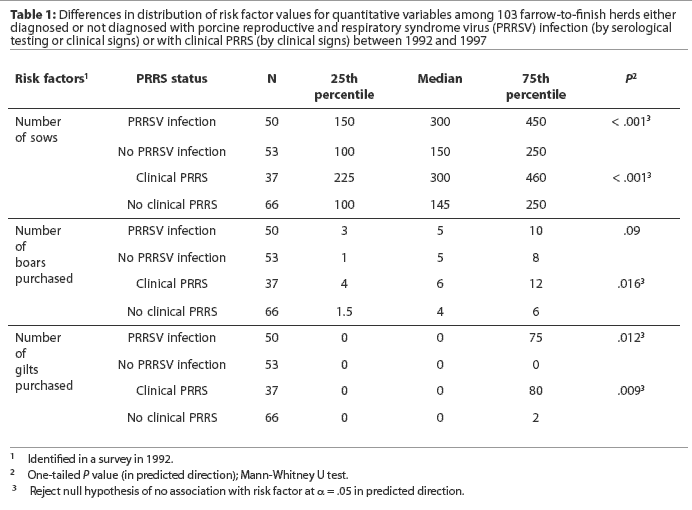
Of the 103 herds for which complete herd survey information was available for data analysis, 50 (49%) had been diagnosed with PRRSV infection between 1992 and 1997. None of these herds had been diagnosed with PRRSV infection prior to the 1992 survey. In 37 herds (74%), clinical signs of PRRS were observed, including epidemic abortions (31 herds; 62%), high preweaning mortality (18 herds; 36%), and respiratory signs in nursery pigs (29 herds; 58%) and growing-finishing pigs (26 herds; 52%).
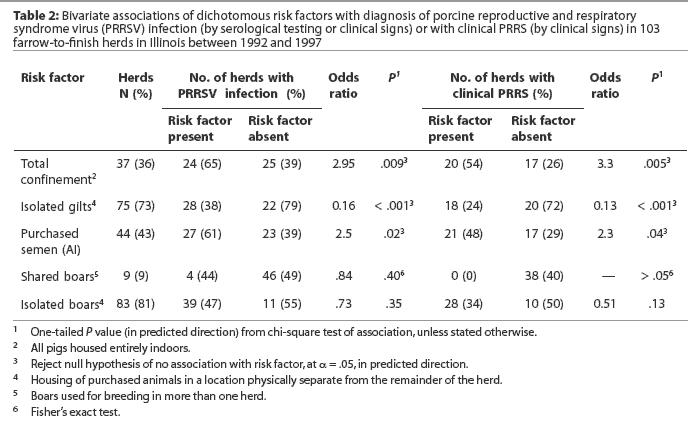
Bivariate risk factor analysis (Tables 1 and 2) indicated that the risk of diagnosis of PRRSV infection increased with larger sow herd size, purchase of more gilts, total confinement housing, and purchase of semen for AI. This risk decreased with isolation of gilts after purchase. The same risk factor associations were identified for clinical PRRS. In addition, an increase in the number of boars purchased was associated with increased risk of clinical PRRS.
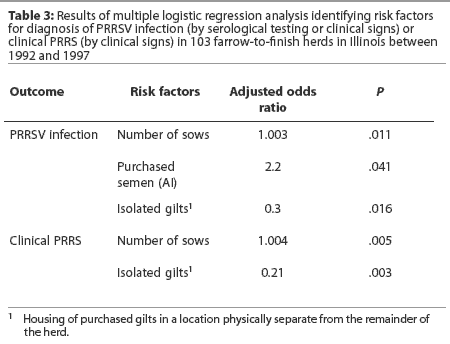
The multivariable logistic regression analysis (Table 3) indicated that an increased risk of PRRSV infection was associated with larger sow herd size and purchase of semen for AI, whereas isolating gilts after purchase was associated with decreased risk. The risk of clinical PRRS increased with larger sow herd size and decreased with gilt isolation. Results of the Hosmer-Lemeshow test indicated high goodness-of-fit both for the PRRSV infection model (c2 [8 df] = 10.5, P = .23) and the clinical PRRS model (c2 [8 df] = 7.4, P = .49).
Discussion
The analyses conducted in this study identified purchase of semen for AI as a risk factor for PRRSV infection although, after taking associations with other variables into account, this was not associated with an increased risk of clinical PRRS. These results are consistent with those of previous studies implicating purchased semen as a source of PRRSV infection.8-10 Mortensen et al13 specifically identified an association between purchase of semen from an infected source herd and increased risk of PRRS vaccine virus infection. In contrast, Mousing et al12 failed to identify purchase of semen from a PRRSV-infected source as a risk factor for PRRSV infection. Nevertheless, the use of purchased semen may be a potential source of PRRSV infection, thus identifying a critical control point for intervention.
In a bivariate analysis, Edwards et al11 found that increasing the number of gilts purchased was associated with an increased risk of PRRSV infection. In the bivariate analysis of the survey in Illinois herds reported here, risk of PRRSV infection and clinical PRRS increased with an increased number of gilts purchased; the risk of clinical PRRS also increased with an increased number of boars purchased. However, the results of the multivariable analyses in the Illinois survey showed that numbers of gilts and boars purchased did not have independent significant effects on PRRSV infection and clinical PRRS. Using stratification and multivariable analyses to control for associations among risk factors, Mousing et al12 reported specifically that purchase of gilts or boars per se did not increase the risk of PRRSV infection; however, purchase of gilts or boars from PRRS-positive sources did. Mousing et al12 also found that purchase of feeder pigs increased the risk of PRRSV infection. Using multivariable analyses, Mortensen et al13 found that the risk of PRRSV infection increased with an increase in the number of swine purchased from PRRS-positive herds. Thus, it is apparent that the risk of PRRSV infection may increase with the number of swine purchased, but obviously only if the purchased swine are infected.
This study of Illinois herds determined that isolating gilts after purchase decreased the risk both of PRRSV infection and clinical PRRS. This relationship was maintained even when the correlations among risk factors were taken into account. Baysinger et al4 found that isolation of incoming gilts reduced the risk of a PRRSV-infected herd remaining chronically infected. Isolation of incoming gilts is recommended as a control measure for PRRSV infection.19
Purchase of semen for AI and purchase of boars and gilts reflect the potential for introduction of PRRSV into a herd from an outside source. Various strategies reduce the risk of PRRSV infection from these sources. Pigs purchased may be isolated, under the assumption that they may be culled if they manifest clinical signs. Virus shedding in subclinically infected pigs occurs primarily due to stress during the isolation period, and is less likely to occur thereafter. Certification of the source herd for pigs and semen as seronegative for PRRSV is an additional method of reducing the risk of introduction of PRRSV. However, the highest confidence that introduction of PRRSV into a herd will be prevented is attained by testing purchased semen and pigs for PRRSV infection. In conjunction with serological testing, isolation of purchased animals, preferably on a separate site prior to introduction to the remainder of the herd, further minimizes the risk of infection. However, economic considerations may require some compromise in pursuing this strategy. Additional research is needed to determine the optimum isolation period and the degree of spatial separation for purchased swine.
Exchanging boars between herds was not associated with an increased risk of clinical PRRS in the bivariate analysis. The sample size was small (9 of 103 herds shared boars and none were diagnosed with clinical PRRS), and these herds may not be representative of others using this practice.
In this retrospective study, larger sow herd size was associated with an increased risk of PRRSV infection and clinical PRRS. Additional evidence supporting larger herd size as a risk factor for PRRSV infection has been presented previously,11,13 although Mousing et al12 failed to find this relationship. Goldberg et al20 determined that larger herd size increased the risk both for sow deaths and for respiratory signs of PRRS in nursery pigs. In the study reported here, larger herds purchased more gilts; however, herd size had the stronger correlation with diagnosis of PRRSV infection. Although bringing PRRSV-infected animals into a herd appears to be a primary mode of between-herd transmission, it is possible that larger herd size represents a composite of demographic and management factors that increase the risk of PRRSV infection.The larger number of animals housed within a herd and the resulting increased animal density may increase the opportunities for transmission of pathogens when animals are moved and housed in different locations during production. More animals represent a potentially greater number of sources of animals shedding PRRSV. Non-porcine vectors and fomites may also play an increased role in the spread of PRRS in an area of increased animal density.21-24 Dee25 found that PRRSV subpopulations exist in chronically infected breeding herds, suggesting that transmission of the virus is very sporadic and that exposure is inconsistent over time, particularly in large breeding herds. It has been suggested that sow interaction is minimized in large breeding herds with stall housing, reducing the spread of the virus within a population, thus resulting in subpopulations of animals with varying immunological status.26 The specific characteristics of large herds that increase the risk of PRRSV infection and clinical PRRS require further investigation to optimize intervention strategies.
Although purchased pigs and semen have been repeatedly implicated as sources of PRRSV, other potential sources have been suspected. Infected needles, flies, mosquitoes, coveralls, boots, and hands of personnel are also believed to play a role in the transmission of PRRSV.22-23 Houseflies and soil also have been found to be sources of PRRSV.24 Zimmerman et al27 have identified birds as a potential source. The risk of PRRSV infection has been demonstrated to be higher if another herd within 3 km is infected, implicating airborne transmission.13 Although it has been difficult to demonstrate transmission across a distance of more than 1 meter under experimental conditions,28 the aerosol transmission of PRRSV that was infectious to pigs after traveling a distance of 150 meters has been reported recently.29 Goldberg et al30 found that genetic similarity among PRRSV isolates was not correlated with geographic distance, thereby implicating as the primary mode of transmission the movement of animals and semen, which are conducted independent of distance, rather than airborne or wildlife transmission, which occur only over short distances.
Risk of introduction of PRRSV into a herd via semen purchased for AI and through replacement gilts have been identified as important in several epidemiologic studies throughout the 1990s in both Europe and the United States. Assuming that there are genetic differences due to geographic location among the PRRSV populations studied,14 and perhaps genetic differences due to time of sampling, the consistency of results justifies a unified strategy for the control of PRRS transmission, although some modification for larger herd size may be needed. This unified strategy should focus on certification of PRRSV-free status of the source populations and biosecurity of the destination herds.
Some limitations of this study should be recognized. The original data were obtained in 1992 as part of another study, and thus not all risk factors for PRRS were addressed, in part because little was known about the epidemiology of PRRS at that time. With less awareness of PRRS during the early years of the pandemic, apparently negative herds might have been misdiagnosed due to a lack of serological testing when clinical signs were not present or when clinical signs of PRRS were attributed to other causes, thus reducing the number of herds diagnosed by a veterinarian during this period.
The survey identified the status of risk factors at the time of the 1992 survey only. Factors such as herd size and number of breeding stock purchased, as well as practices such as isolation of purchased breeding stock, sharing of boars for breeding, and purchase of semen for AI, may change over time. This is a limitation of all predictive risk factor surveys where changes in risk factors over time (and the associated demanding analytic models) are not taken into account. Risk models do not precisely implicate causation, but they can identify factors that may be studied more closely in causal models (eg, analysis of experiments and longitudinal studies).
Error in recall of information is another potential limitation of a retrospective study. Also, the inability to identify herds that purchased replacements from PRRS-positive sources compared to PRRS-negative sources reduced the ability of the study to pinpoint precisely the risk of transmission of PRRSV from purchased breeding stock. This study was conducted only in Illinois farrow-to-finish herds, and different results might be found in other climates and production systems. Nevertheless, confirmation of predictions derived from previous studies suggests that the factors identified in this study generalize to other locations, times, and production systems beyond Illinois farrow-to-finish operations in the mid-1990s.
Implications
- In this retrospective study in Illinois farrow-to-finish herds, larger sow herd size was associated with an increased risk of diagnosis of PRRSV infection.
- In this study, isolation of purchased breeding stock before introduction into the breeding herd was associated with a decreased risk of PRRSV infection.
- The status of PRRSV infection should be evaluated for any potential source prior to the purchase of replacement breeding stock.
- Biosecurity measures should be implemented to prevent PRRSV infection, particularly in larger herds.
Acknowledgements
This research was supported by the Illinois Department of Agriculture and the Illinois Agricultural Experiment Station. Art Siegel and Sarah Probst assisted in data collection.
References
1. Christianson WT, Joo HS. Porcine reproductive and respiratory syndrome: A review. Swine Health Prod. 1994;2:10-28.
2. Albina A. Epidemiology of porcine reproductive and respiratory syndrome (PRRS): an overview. Vet Microbiol. 1997;55:309-316.
3. Zimmerman JJ, Yoon K-J, Wills RW, Swenson SL. General overview of PRRSV: A perspective from the United States. Vet Microbiol. 1997;55:187-196.
4. Baysinger AK, Dewey CE, Straw BE, Brumm MC, Schmitz J, Doster A, Kelling C. Risk factors associated with endemic reproductive deficiencies caused by PRRSV infection. Swine Health Prod. 1997;5:179-187.
5. Regula G, Lichtensteiger CA, Mateus-Pinilla NE, Scherba G, Miller GY, Weigel RM. Comparison of serologic testing and slaughter evaluation for assessing the effects of subclinical infection on growth in pigs. JAVMA. 2000;217:888-895.
6. Regula G, Scherba G, Mateus-Pinilla NE, Lichtensteiger CA, Miller GY, Weigel RM. The impact of endemic porcine reproductive and respiratory syndrome virus and other pathogens on reproductive performance in swine. J Swine Health Prod. 2003;11:13-18.
7. Dee SA, Joo HS, Polson DD, Marsh WE. Evaluation of the effects of nursery depopulation on the profitability of 34 pig farms. Vet Rec. 1997;140:498-500.
8. Yeager M, Prieve T, Collins J, Christopher-Hennings J, Nelson E, Benfield D. Evidence for transmission of porcine reproductive and respiratory syndrome. Swine Health Prod. 1993;1(5):7-9.
9. Swenson SL, Hill HT, Zimmerman JJ, Evans LE, Wills RW, Yoon K-J, Schwartz KJ, Althouse GC, McGinley MJ, Brevik AK. Preliminary assessment of porcine reproductive and respiratory syndrome virus vaccine on the excretion of virus in semen. Swine Health Prod. 1995;3:244-247.
10. Christopher-Hennings J, Nelson EA, Hines RJ, Nelson JK, Swensen SL, Zimmerman JJ, Chase CL, Yaeger MJ, Benfield DA. Persistence of porcine reproductive and respiratory syndrome virus in serum and semen of adult boars. J Vet Diagn Invest. 1995;4:456-464.
*11. Edwards S, Robertson IB, Wilesmith JW, Ryan JB, Kilner CG, Paton DJ, Drew TW, Brown I, Sands J. PRRS (blue-ear pig disease) in Great Britain. AASP Newsletter. 1992;4(4):32-36.
12. Mousing J, Permin A, Mortensen S, Botner A, Willeberg P. A case-control survey of risk factors for porcine reproductive and respiratory syndrome (PRRS) seropositivity in Danish swine herds. Vet Microbiol. 1997;55:323-328.
13. Mortensen S, Stryhn H, Sogaard R, Borklund A, Stark D, Christensen J, Willeberg P. Risk factors for infection of sow herds with porcine reproductive and respiratory (PRRS) virus. Prev Vet Med. 2002;53:83-101.
14. Nelsen CJ, Murtaugh MP, Faaberg KS. Porcine reproductive and respiratory syndrome virus comparison: divergent evolution on two continents. J Virol. 1999;73:270-280.
15. Weigel RM, Dubey JP, Siegel AM, Kitron UD, Mannelli A, Mitchell MA, Mateus-Pinilla NE, Thulliez P, Kwok OCH, Shen SK, Todd KS. Risk factors for the transmission of Toxoplasma gondii on swine farms in Illinois. J Parasitol. 1995;81:736-741.
16. Fleiss JL. Statistical Methods for Rates and Proportions. 2nd ed. New York: Wiley; 1981.
17. Hays WL. Statistics. 4th ed. New York: Holt, Rinehart, Winston; 1988.
18. Hosmer DW, Lemeshow S. Applied Logistic Regression Analysis. New York: Wiley; 1989.
19. Dee SA, Joo HS, Pijoan C. Controlling the spread of PRRS virus in the breeding herd through management of the gilt pool. Swine Health Prod. 1995;3:64-69.
20. Goldberg TL, Weigel RM, Hahn EC, Scherba G. Associations between genetics, farm characteristics and clinical disease in field outbreaks of porcine reproductive and respiratory syndrome virus. Prev Vet Med. 2000;43:293-302.
*21. Otake S, Dee SA, Rossow KD, Deen J, Joo HS, Molitor TW, Pijoan C. Transmission of PRRSV: recent research papers. Proc AASV. 2002;33:349-352.
22. Otake S, Dee SA, Rossow KD, Deen J, Joo HS, Molitor TW, Pijoan C. Transmission of porcine reproductive and respiratory syndrome virus by fomites (boots and coveralls). J Swine Health Prod. 2002;10:59-65.
*23. Dee SA, Otake S, Trincado C, Moon R, Rossow K, Pijoan C. Transmission of porcine reproductive and respiratory syndrome virus (PRRSV) by non-porcine vectors and fomites: Soil, insects, avians, and aerosols. AD Leman Swine Conf Proc. 2002;74-75.
24. Otake S, Dee SA, Rossow KD, Moon RD, Trincado C, Pijoan C. Transmission of porcine reproductive and respiratory syndrome virus in houserflies, (Musca domestica Linnaeus). Vet Rec. 2003;152:73-76.
*25. Dee SA. PRRS eradication: Why does it fail? Proc Swine Dis Conf Swine Pract. 2002:63-70.
26. Dee SA, Joo HS, Henry S, Tokach L, Park BK, Molitor T, Pijoan C. Detecting subpopulations after PRRS virus infection in large breeding herds using multiple serologic tests. Swine Health Prod. 1996;4:181-184.
27. Zimmerman JJ, Yoon K-J, Pirtle EC, Wills RW, Sanderson TJ, McGinley MJ. Studies of porcine reproductive and respiratory syndrome (PRRS) virus infection in avian species. Vet Microbiol. 1997;55:329-336.
28. Wills RW, Zimmerman JJ, Swenson SL, Yoon K-J, Hill HT, Bundy DS, McGinley MJ. Transmission of PRRSV by direct, close, or indirect contact. Swine Health Prod. 1997;5:213-218.
29. Dee SA, Jacobson L, Rossow KD, Development of a model to re-evaluate aerosol transmission of porcine reproductive and respiratory syndrome virus. Vet Rec. In press.
30. Goldberg TL, Hahn EC, Weigel RM, Scherba G. Genetic, geographic, and temporal variation of porcine reproductive and respiratory syndrome virus in Illinois. J Gen Virol. 2000;81:171-179.
* Non-refereed references