
What's your interpretation? |
Non refereed |
Pursuing causes of production losses beyond the obvious
Gaylan Josephson, DVM, Dip Path; Don Atkinson, DVM
GJ: Animal Health Laboratory, Laboratory Services Division, University of Guelph, Guelph, Ontario N1H 6R8; Tel: 519-824-4120, Ext 54611; Fax: 519-821-8072; E-mail: gjosephs@lsd.uoguelph.ca
 The number of pigs actually marketed from a 350-sow herd fell short of
the projected number, which was based on the number of breeding
animals in the herd and the number of piglets weaned per litter. With this
information in hand, what steps should be taken to identify the reason for
the reduced marketings?
The number of pigs actually marketed from a 350-sow herd fell short of
the projected number, which was based on the number of breeding
animals in the herd and the number of piglets weaned per litter. With this
information in hand, what steps should be taken to identify the reason for
the reduced marketings?
This case includes a farrow-to-finish operation that increased in size from 225 to 350 sows between January 1999 and January 2000. For over a year, a diarrhea problem was evident in pigs ranging from 6 weeks of age through to market weight, and also in replacement gilts, in a herd classified as stable for porcine reproductive and respiratory syndrome and positive for Mycoplasma hyopneumoniae. Death losses were higher than the industry norm, and considerably higher than those experienced previously in this herd. Various treatment regimes were tried, but with little success. Colitis of unknown etiology was identified through submissions made to the Animal Health Laboratory, University of Guelph (Guelph, Ontario, Canada), but lesions in other body systems were not identified. Some coughing was apparent in the herd, and many pigs had ear necrosis. Neither ear nor tail biting was identified.
Bakery waste (eg, potato chips, bread, toast, cookie meal) was fed because of its low cost and high fat content, and constituted 10% of the diets of the nursery and grow-finish pigs and replacement gilts. Grain elevator screenings were routinely added as carriers, because the high fat content created problems during processing and handling. In late 2000, it was discovered that unmarketable raw red kidney beans (splits) had been added to the bakery waste as the carrier. This practice, which began in November 1999, was stopped in December 2000.
The toxic effects of raw red kidney beans are well understood, with lectins, protease inhibitors, and tannins all contributing to reduced appetite, poor digestibility of feed, and diarrhea.1 Removal of the kidney beans from the feed resulted in an almost instant cessation of diarrhea, a return to normal appetite, and a reduction in death losses. However, the numbers of pigs marketed remained lower than expected for a breeding herd of this size (Figure 1). This was unanticipated, as raw red kidney beans are not known to have a negative impact on reproduction.

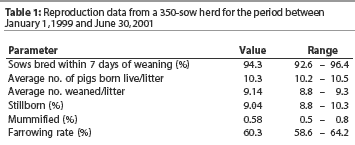
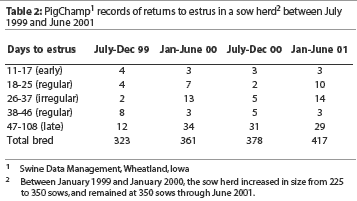
PigChamp records (Swine Data Management, Wheatland, Iowa) were reviewed, and a breeding problem that could not be attributed to disease was identified (Table 1). Additional PigChamp records identified a high level of returns to estrus as the major reproductive problem (Table 2), and ultimately this was identified as a gilt problem (Table 3).
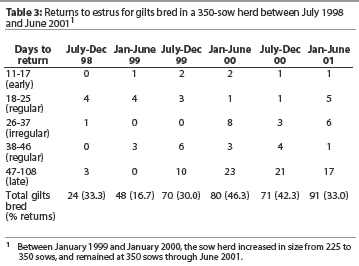
The cause was identified when boar breeding records were examined. Prior to January 1999, all breeding was by natural service. Beginning in July 1998 and ending with the period between January and July, 2001, the percentage of females bred via artificial insemination rose in 6-month increments from 0% to 27.1% to 48.8% to 62.4% to 68.1% and, finally, to 90.8%. As soon as the problem was identified, artificial insemination of gilts ceased immediately, and the total number of animals born and ultimately marketed increased to the numbers expected (PigChamp records not available for this period).
The simultaneous appearance of the nutritional and reproductive problems resulted in a delay in identifying the presence and cause of the reproductive problems in this herd. This case emphasizes the fact that a single etiology is not necessarily responsible for variable clinical signs that may appear simultaneously, and that we shouldn't stop our investigations until all clinical problems have been solved.
Reference
1. van der Poel AFB. Effect of processing on antinutritional factors and protein nutritional value of dry beans (Phaseolus vulgaris L). A review. Animal Feed Sci Technol. 1990;29:179-208.