
Original research |
Peer reviewed |
Quality of frozen semen from crossbred boars (Ibérico x Landrace) related to centrifugation methodology
L.F. Gosálvez, PhD; J.J. Valdelvira, MS; J.M.R. Alvariño, PhD; X. Averos, DVM; D. Babot, PhD
LFG, JJV, XA, DB: Department of Animal Production, University of Lleida, Lleida, Spain; JMRA: Department of Animal Production, Politechnique University of Madrid, Madrid, Spain; Corresponding author: L.F. Gosálvez, Av Rovira Roure, 191, 25198-Lleida, Spain; Tel: +34 973702560; Fax: +34 973238264; E-mail: lfgosalvez@prodan.udl.es.
Cite as: Gosálvez LF, Valdelvira JJ, Alvariño JMR, et al. Quality of frozen semen from crossbred boars (Ibérico x Landrace) related to centrifugation methodology. J Swine Health Prod. 2004;12(2):66-70.
Also available as a PDF.
Summary
Objective: A total of 30 ejaculates from five Ibérico x Landrace boars were studied in order to establish the effect of different centrifugation conditions on semen quality after refrigeration and freezing.
Methods: The Westendorf method was used for freezing, with some variations. The factors analysed included centrifugation g-force (250g, 1010g, and 2250g), shape of centrifugation tube (spherical or conical), and phase of the freeze-thaw process. Individual boar was a random effect.
Results: There were no significant differences in semen quality associated with the shape of the centrifugation tube either for refrigerated (5°C) or thawed semen. The g-force of centrifugation did affect semen quality. In refrigerated samples centrifuged at 250g, the percentage of sperm with normal apical ridges (NAR) was lower (P < .01) and the percentage of damaged acrosomes was higher (P < .01); however, motility was unaffected. Total motility was higher (P < .01) in refrigerated semen (approximately 53%) compared to thawed semen (approximately 36%), and percentage of sperm with NAR was higher (P < .01) in refrigerated semen (approximately 67%) compared to thawed semen (approximately 31%). The influence of individual boars was not detected (P > .05).
Implications: Centrifugation at 2250g in tubes with spherical bottoms is faster and makes handling easier. Selection of boars by freezability of semen eliminates the influence of individual boars on characteristics of frozen-thawed semen.
Keywords: swine, semen,
cryopreservation, freezing, crossbreed
Search the AASV web site
for pages with similar keywords.
Received: July
31, 2002
Accepted: December
20, 2002
The outcome of the freezing and thawing process for boar semen depends in part on whether dialysis1 or centrifugation2 is employed to separate seminal plasma. Centrifugation is harmful to the acrosome and stimulates hypercinesis;3 however, it is commonly used because of its simplicity. Centrifugation technique (ie, temperature of centrifugation, g-force, and duration) has been studied by several authors4-8 with the objective of reducing negative effects on spermatozoa. Centrifugation at 15°C for 10 minutes and 800g is recommended,2 although results are also good with a g-force lower than 350g for 15 minutes.9,10 Recently, Carvajal et al7 reported that the percentage of viable spermatozoa was higher when semen was centrifuged for a shorter time (3 or 5 minutes instead of 10 minutes) at a higher g-force (2400g or 1600g). The lack of agreement in results obtained by several authors has not clarified the influence of centrifugation method on the quality of frozen boar semen.
Variations in semen quality among individual boars have been reported during storage after cooling11 and after freezing,12 and better storage performance after cooling has been described in semen from crossbred males.13 Differences in semen quality under conditions of cooling and freezing are associated with reduction in motility and loss of acrosomes.14 Both characteristics seem to be related to the cellular wall and its capacity to resist cold shock.15 Fertility after insemination with frozen-thawed semen is also influenced by individual boars.16 These individual effects justify the use of selected males for semen freezing.17
The aim of this study was to analyse the influence of centrifugation regime and shape of the centrifugation tube on the quality of frozen-thawed semen, and to determine differences among individual Ibérico x Landrace males, a breed not previously studied.
Materials and methods
The five Ibérico x Landrace boars used in this study were approximately 2 years old and were randomly selected from the 240 boars in the herd. Semen freezability of all boars had been previously assessed by the osmotic resistance test (ORT) performed on fresh semen,17 and qualified as good. The study animals were housed in an experimental farm, with the same temperature and relative humidity conditions for all animals, and standard handling procedures.
Six ejaculates from each male were studied. One ejaculate was collected weekly from each selected boar. Semen was collected by manual stimulation into a plastic tube containing 100 mL of commercial semen extender (MRA extender; Kubus Ltd., Madrid, Spain) warmed to body temperature. The Westendorf method of freezing2 was used, with some modifications.18 Temperature was reduced to 15°C within 4 hours. To determine the spermatic concentration of ejaculates, a Burker cell-counter chamber was used, with semen diluted 1:100 in formalinized physiological saline.
Each ejaculate from each male was divided into six aliquots that were allocated to treatments in a factorial design, with the main factors the g-force and shape of the bottom of the centrifugation tube. Each of the five boars' ejaculates were subjected to all possible combinations of factors, ie, samples were centrifuged for 10 minutes in centrifugation tubes with either spherical or conical bottoms, at 250g, 1010g, or 2250g. After centrifugation, the liquid (seminal plasma plus extender) was extracted by vacuum bomb and the cellular pellet was resuspended in 2.5 mL of cryoprotector (Cryoprotector A: 110 g lactose and 200 mL egg yolk in 800 mL of distilled water). The temperature was then reduced to 5°C, and 5 mL of a second cryoprotector (Cryoprotector B) was added to the semen samples. Cryoprotector B consisted of Cryoprotector A with addition of 1.5% Orvus Es Paste (Nova Chemical Sales, Scituate, Maryland) and 4% glycerol. Samples were packed in 0.5-mL plastic mini-straws. Freezing rate, which was controlled using a biological freezer (Planer KRYO 10, Series II; Minitub, Landshut, Germany), was 4 C° per minute from 5°C to -100°C, and 20 C° per minute from -100°C to -196°C.
All variables were quantified at two phases of the freeze-thaw protocol. For the first analysis, a 0.5-mL subsample was collected from each semen aliquot when the temperature of the aliquot reached 5°C (ie, after refrigeration but before freezing). The second subsamples were collected 10 minutes after frozen straws had been thawed for 20 seconds in a water bath at 38°C. Total motility and individual motility (percentage of sperm with forward motility) were assessed using an optic microscope (400 x magnification). Acrosome status was quantified by optic microscope and phase contrast (1000 x magnification),19,20 and reported in terms of the proportions of sperm with the following characteristics: normal apical ridges (NAR), damaged acrosomes, losing acrosomes, and lost acrosomes.
Statistical analysis
ANOVA was performed using the GLM procedure of the SAS statistical package (Statistical Analysis Systems, Release 9; SAS Institute, Cary, North Carolina). The MIXED procedure was used, with the g-force (250g, 1010g, or 2250g) and the shape of the centrifugation tube (spherical or conical) as the main fixed factors in the model. The phase of the freeze-thaw protocol (ie, before freezing and after thawing) was a fixed effect, the animal was a random effect, and the interactions between fixed effects were cofactors in the model. For fixed effects, least squares (LS) means estimates and their standard errors were estimated using the LSMEANS option in the MIXED procedure. Differences between factors and or combinations of factors were compared pairwise using Fisher's exact test. Effects were considered significant if P < .05. Significance of estimated animal covariance was obtained using the approximate Wald test.
Results
The mean volume of the rich-fraction of the studied ejaculates was 102.5 +/- 2.9 mL, and the mean total number of spermatozoa was 60.9 +/- 1.3 x 10⁹ per ejaculate.
Table 1 shows the influence of centrifugation speed, centrifuge tube, and phase of freeze-thaw protocol on semen quality parameters. Motility and the proportion of spermatozoa losing acrosomes were influenced only by the phase of the freeze-thaw protocol. Both the g-force of centrifugation and the interaction of phase of the freeze-thaw protocol and g-force had a significant influence on the percentage of NAR and percentage of spermatozoa losing acrosomes. The type of centrifuge tube had no significant effect on any variable.
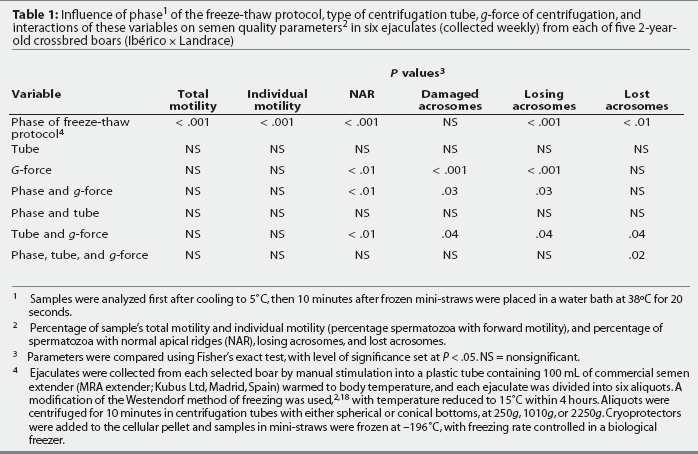
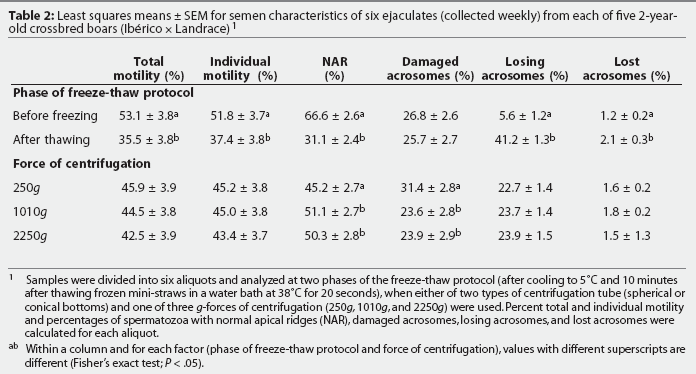
Table 2 shows the LS means of the semen quality variables before and after thawing and at the three g-forces of centrifugation. No statistical differences in semen quality were associated with the shape of the centrifugation tube. The g-force of centrifugation had no effect on motility, but the percentage of NAR was lower and the percentage of damaged acrosomes was higher when samples cooled to 5°C were centrifuged at 250g compared to the two higher g-forces (P < .05).
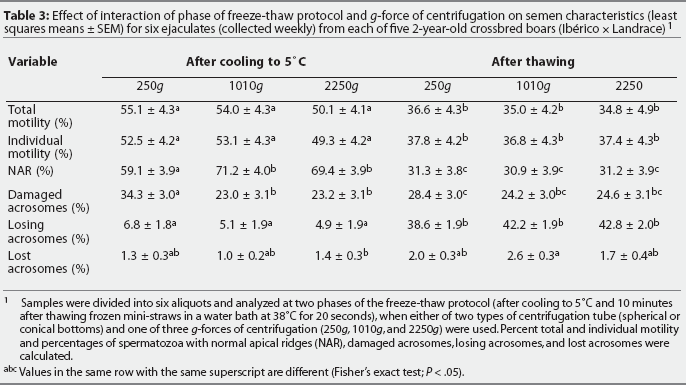
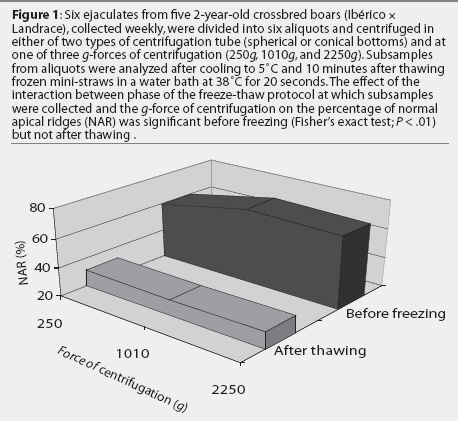
When Fisher's exact test was used to determine the effect of the interaction of phase of freeze-thaw protocol and g-force of centrifugation, sample quality was significantly better before freezing than after thawing for all variables except damaged and lost acrosomes (Table 3). There was a significant influence of g-force of centrifugation on NAR before freezing (P < .01), but not after thawing. The lowest percentage of NAR before freezing was observed in samples centrifuged at 250g (Figure 1). The percentage of spermatozoa with damaged acrosomes was also influenced by the g-force of centrifugation (P < .01), but with less effect of phase of the freeze-thaw process (Figure 2).
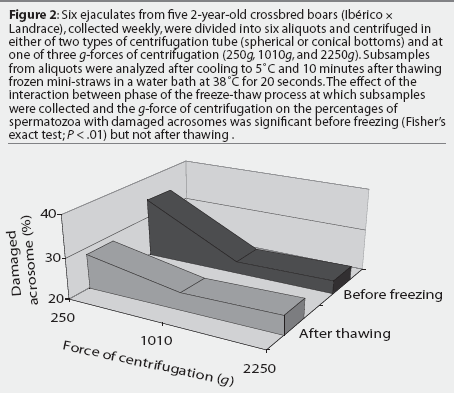
There was no difference associated with the individual boars in any of the studied parameters (P > .05).
Discussion
Volume of the studied ejaculates was lower than expected. All other parameters assessed by optic microscope were normal as reported for the Iberian breed, including rate of agglutination and percentage of abnormal spermatozoa.21 As expected, the phase of the freeze-thaw protocol influenced most of the variables studied.
Although separation of seminal plasma before freezing decreases sperm viability,4 it is a necessary step in order to reduce volume and minimize acrosomal damage during the freezing process.2 Several authors have reported results for optimal semen quality using forces of centrifugation varying from 250g to 2400g.4,6,7,10 In this study, motility did not differ significantly with g-force of centrifugation, but was maximal when semen was centrifuged at 250g compared to 1010g and 2250g. However, samples centrifuged at 250g had the poorest percentage of NAR, due to the significantly greater percentage of damaged acrosomes. Carvajal et al7 also reported a similar effect of centrifugation regimens. In our study, the percentage of damaged acrosomes increased as the g-force of centrifugation decreased from 1010g to 250g, but there was no significant difference between the two larger g-forces used. This suggests that there may be a centrifugal force threshold below which the cellular walls of spermatozoa are not damaged.
After freezing, no differences in relation to centrifugation g-force were found, suggesting a strong influence of the freezing protocol.18 In consequence, it is advisable to centrifuge at 2250g to reduce the time for the whole process. It would be interesting to establish the effect of different centrifugation times at a g-force higher than 2000g, in order to minimize processing time and thus acrosomal damage.
The effect of the shape of the centrifugation tube (spherical or conical bottom) on quality of centrifuged semen has not previously been reported. Although there appeared to be no effect of the type of centrifuge tube on semen quality in this study, the spherical bottom is more desirable for practical purposes, as it is easier to collect and resuspend the formed pellet.
Although an effect of individual boars on semen parameters has been previously described,1,22 it was not evident in this study. Lack of individual effects may have been the result of including the animal as a random effect in the statistic model, or because semen from all males used in the study had similar freezability, ie, ORT had been tested prior to the study, and semen qualified as good for all 240 boars in the group from which the study animals were selected. Probably, if randomly selected males had been used in the study, individual effects would have been more pronounced.
Implications
- Under the conditions of this study, only the g-force of centrifugation had a significant influence on the proportions of spermatozoa with normal apical ridges and damaged acrosomes.
- The shape of the centrifugation tube did not influence semen characteristics before or after freezing.
- Selection of boars by freezability of semen, as measured by the osmotic resistance test, eliminates the influence of individual boars on characteristics of frozen-thawed semen.
Acknowledgements
We are grateful to the Spanish Ministry of Science and Technology (Project no. AGF 96/2510/C05) and to Novagenética Limited, the provider of the ejaculates studied in this work. Thanks also to Antonio Vidal and Elena Milá for their helpful support in laboratory analysis.
References
*1. Watson PF, Plummer JM. The responses of boar sperm membranes to cold shock and cooling. In: Johnson LA, Larsson K, eds. Proceedings of the First International Conference on Deep Freezing of Boar Semen. Uppsala, Sweden: Swedish University of Agricultural Sciences. 1985;113-127.
2. Westendorf P, Richter L, Treu H. Zur Tiefgefrierung von Ebersperma: Labor-und Besamungsergebnisse mit dem Hulsenberger Pailletten-Verfahren [Deep freezing of boar semen. Laboratory and insemination results using the Hulsenberger paillett method]. Deutsche Tierarztliche Wochenschrift. 1975;82:261-300.
3. Martín S. Artificial insemination in pigs: possibilities of future improvement in reproductive performance. Medicina Veterinaria. 1987;4:199-208.
4. Salamon S. Deep freezing of boar semen. 3. Effects of centrifugation, diluent and dilution rate, pellet volume, and method of thawing on survival of spermatozoa. Austral J Biol Sci. 1973;26:239-247.
5. Schrader R, Treu H, Hahn R. Deep freezing of boar semen in plastic straws. Deutsche Tierarztliche Wochenschrift. 1977;84:9-12.
6. Samouilidis S, Saoulidis K, Kuriakis S, Giannakopoulos K, Tskalof P, Kyriakis S. New modified method for extending and freezing boar semen.J Hellenic Vet Med Soc. 1996;47:275-279.
*7. Carvajal G, Cuello C, Ruiz M, Lucas X, Vázquez JM, Martínez EA, Roca J. Effect of the centrifugation regimes on the viability and penetrability of frozen-thawed boar spermatozoa [abstract].Theriogenology. 2001;55:302.
*8. Petz B, Bali Papp A, Somfai T, Nanassy L, Pecsi T, Invancsics J. Effect of percoll or short time centrifugation treatment on viability and acrosome integrity of frozen/thawed boar spermatozoa. [abstract].Theriogenology. 2002;57:681.
9. Zheng YS, Fiser P, Sirard MA. The use of ejaculated boar semen after freezing in 2 or 6% glycerol for in vitro fertilization of porcine oocytes matured in vitro. Theriogenology. 1992;38:1065-1075.
10. Córdova A, Ducolomb Y, Jiménez I, Casas E, Bonilla E, Betancourt M. In vitro fertilizing capacity of frozen-thawed boar semen. Theriogenology. 1997;47:1309-1317.
11. Johnson LA, Aalbers JG, Willems CMT, Rademaker JHM, Rexroda CE Jr. Use of boar spermatozoa for artificial insemination III. Fecundity of boar semen stored in Beltsville liquid and Kiev extenders for three days at 18°C. J Anim Sci. 1982;54:132-136.
12. Almlid T, Hofmo PO. A brief review of frozen semen application under Norwegian AI service conditions. Reprod Domestic Anim. 1996;31:169-173.
13. Bhuyan D, Borgohain BN, Ahmed K, Deka BC. Semen quality of Hampshire and indigenous X Hampshire boars during preservation at 15 degrees C. J Assam Vet Counc. 1995;5:32-34.
14. Hammitt DG, Martin PA. Correlation among assays of porcine semen quality following cryopreservation. Theriogenology. 1989;32:369-384.
15. Pursel VG. Effect of cold shock on boar sperm treated with butylated hydroxytoluene. Biol Reprod. 1979;21:319-324.
16. Hammitt DG, Martin PA, Callanan T. Correlation between heterospermic fertility and assays of porcine semen quality before and after cryopreservation. Theriogenology. 1989;32:385-399.
17. Schilling E, Vengust M. Frequency of semen collection in boars and quality of ejaculates as evaluated by the osmotic resistance of acrosomal membranes. Anim Reprod Sci. 1987;12:283-290.
18. Gosálvez LF, Valdelvira JJ, Vidal A, Alvariño JM. Assessment of suitable porcine semen for freezing, according to the ejaculate characteristics in the Ibérico x Landrace breed. Reprod Domest Anim. 2002;37:282-284.
19. Pursel VG, Johnson LA, Rampacek GB. Acrosome morphology of boar spermatozoa incubated before cold shock. J Anim Sci. 1972;34:278-283.
20. Sánchez R. Control de calidad espermática. [Sperm quality control]. Anaporc. 1991;104:27-33.
21. Martín S, Pérez C, Cidoncha R, de Alba C. Inseminación artificial en el cerdo Ibérico [Artificial insemination in Iberian pig]. Solo cerdo Ibérico. 1999;3:39-45.
22. Medrano A, Watson PF, Holt WV. Importance of cooling rate and animal variability for boar sperm cryopreservation: insights from the cryomicroscope. Reproduction. 2002;123:315-322.
* Non-refereed references.