
Original research |
Peer reviewed |
Effects of ractopamine step-up use programs on finishing pigs fed under commercial conditions
Efectos de los programas de aumento paulatino del uso de ractopamina en cerdos de finalización alimentados bajo condiciones comerciales
Effets des programmes de l'augmentation par étape de ractopamine sur animaux de engraissement sous conditions commerciaux
Todd A. Armstrong, MS, PhD; Brian T. Kremer, MS, PhD; Thomas A. Marsteller, DVM; Dale Mechler, DVM
TAA, BTK, TAM: Elanco Animal Health, Greenfield, Indiana; DM: Suidae Health and Production, Algona, Iowa; Corresponding author: Dr Todd A. Armstrong, Elanco Animal Health, 2001 West Main Street, Greenfield, IN 46140; Tel: 317-655-0957; Fax: 317-277-1414; E-mail: tarmstrong@lilly.com.
Cite as: Armstrong TA, Kremer BT, Marsteller TA, et al. Effects of ractopamine step-up use programs on finishing pigs fed under commercial conditions. J Swine Health Prod. 2005;13(2):66-71.
Also available as a PDF.
SummaryObjectives: To provide live performance and carcass information on ractopamine (RAC) use programs in commercial field conditions and to compare a feeding regimen in which the dietary concentration of RAC was increased after 2 or 3 weeks with a regimen in which the dietary RAC concentration was constant for 35 days. Methods: A total of 1050 pigs were assigned to pens (n = 48) on the basis of weight and gender. Average body weight at trial initiation was 78.5 kg. Four dietary treatments were randomly assigned to pens and stratified across weight and gender. Dietary treatments included control (0 g/tonne RAC for 35 days); constant (5.0 g/tonne RAC for 35 days); Step 2 (5.0 g/tonne RAC for 14 days then 10.0 g/tonne for 21 days); Step 3 (5.0 g/tonne RAC for 21 days then 10.0 g/tonne for 14 days). Pen and feed weights were recorded weekly to determine live performance variables. All pigs were transported to market after the experimental period, and packer sheet data were collected for assessment of carcass response. Results: Average daily gain, feed efficiency, and carcass parameters were better in pigs fed diets supplemented with RAC. Live performance and carcass measures were better in pigs on Step 2 and Step 3 programs, and these pigs produced more carcass lean than pigs on the constant RAC program. Implications: Under commercial management conditions, live performance and carcass measures were better in pigs fed RAC for 35 days, and further benefits were obtained with RAC step-up programs. | ResumenObjetivos: Proveer información del desempeño de crecimiento y de canal sobre los programas de uso de ractopamina (RAC por sus siglas en inglés) bajo condiciones comerciales y comparar un régimen alimenticio en el cual la concentración de RAC se aumentó después de 2 ó 3 semanas con un régimen en el que la concentración de RAC en la dieta fue constante por 35 días. Métodos: Un total de 1050 cerdos se asignaron a diferentes corrales (n = 48) en base a peso y sexo. El peso promedio al inicio de la prueba fue de 78.5 kg. Al azar, se asignaron cuatro diferentes tratamientos en los diferentes corrales y estratificándolos en todos los peso y sexos. Los tratamientos incluyeron control (0 ppm de RAC por 35 días); constante (5.0 ppm de RAC por 35 días); Paso 2 (5.0 ppm de RAC por 14 días seguido de 10.0 ppm de RAC por 21 días); Paso 3 (5.0 ppm de RAC por 21 días, seguido de10.0 ppm de RAC por 14 días). Los corrales y el alimento fueron pesados semanalmente para determinar las variables de desempeño. Todos los cerdos fueron enviados al rastro después del periodo experimental, y se recopilaron las hojas con información de la empacadora para evaluar la respuesta de la canal. Resultados: La ganancia diaria promedio, la eficiencia alimenticia y los parámetros de la canal fueron mejores en los cerdos con dietas suplementadas con RAC. El desempeño de crecimiento y las mediciones de la canal fueron mejores en los programas de Paso 2 y Paso 3, ya que estos cerdos produjeron más carne magra que los cerdos en el programa de RAC constante. Implicaciones: Bajo condiciones comerciales, las medidas de desempeño y de la canal fueron mejores en cerdos alimentados con RAC por 35 días, y se obtuvieron mayores beneficios con programas de aumento paulatino de RAC. | ResuméObjectifs: Fournir information de la performance et de la carcasse sur les programmes d'usage de ractopamine (RAC par ses initiales en anglais) dans les conditions commerciaux et comparer un régime de l'alimentation où la concentration diététique de RAC a été augmentée après 2 ou 3 semaines avec un régime de l'alimentation où la concentration diététique du RAC était constante pour 35 jours. Méthodes: Un total de 1050 cochons a été assigné à différents parcs (n = 48) par poids et genre. Le poids moyen à l'initiation de la expérience était 78.5 kg. Quatre traitements étaient assignés au hasard, et étaient stratifié selon le poids et genre. Les traitements ont inclus le contrôle (0 ppm du RAC pour 35 jours); constant (5.0 ppm du RAC pour 35 jours); Étape 2 (5.0 ppm du RAC pour 14 jours ensuite 10.0 ppm du RAC pour 21 jours); Étape 3 (5.0 ppm du RAC pour 21 jours ensuite 10.0 ppm du RAC pour 14 jours). Les poids des parcs et la moulée ont été enregistrés hebdomadaire pour déterminer des variables de la performance. Tous les animaux ont été envoie a l'abattoir après la période expérimentale, et les feuilles des données ont été rassemblées pour l'estimation de réponse de la carcasse. Résultats: La gain quotidien moyen, la taux de conversion, et les paramètres de la carcasse étaient meilleurs dans les animaux qui consumant la moulée avec la RAC. Les mesures de la performance et de la carcasse étaient meilleures dans les animaux en les programmes de Étape 2 et de Étape 3, ces animaux ont produit plus de carcasse maigre que les animaux sur le programme du RAC constant. Implications: Sous conditions de gestion commerciaux, les mesures de la performance et de la carcasse étaient meilleures dans les animaux nourris avec RAC pour 35 jours, et des avantages supplémentaires ont été obtenus avec les programmes d'augmentation par étape de la RAC. |
Keywords: swine, carcass,
performance, ractopamine
Search the AASV web site
for pages with similar keywords.
Received: January
30, 2004
Accepted: April
26, 2004
Ractopamine (RAC) (Paylean; Elanco Animal Health, Greenfield, Indiana) is a phenethanolamine [beta]-adrenergic agonist used as a feed supplement to redirect nutrients to increase the amount of quality meat in high-value cuts and improve production efficiency. Supplementing finishing pig diets with RAC for the final 28 to 35 days prior to marketing has resulted in improved live performance and carcass characteristics.1,2 However, the response is not constant over the course of the feeding period, in that the live animal response increases rapidly, plateaus, and appears to decrease during the course of the RAC feeding period.3-5 This occurs as a result of either down-regulation or desensitization of [beta]-adrenergic receptors, or both.6
Recent research has demonstrated that it may be possible to maintain the RAC response by increasing the dietary concentration of RAC throughout the course of the feeding period (RAC step-up).7,8 Conversely, implementation of a RAC step-down feeding regimen (ie, decreasing the dietary concentration of RAC throughout the RAC feeding period) resulted in live performance responses inferior to those achieved through RAC step-up or constant feeding programs.7,9 These studies were conducted in university research settings. The efficacy of a RAC step-up feeding program has not been established under commercial management conditions. Therefore, the objectives of this study were to provide information concerning RAC feeding programs under commercial field conditions, and to compare a feeding regimen in which the dietary concentration of RAC was increased after 2 or 3 weeks with a feeding regimen in which the dietary RAC concentration was constant for 35 days.
Materials and methods
Experimental animals and housing
A total of 1050 pigs (NPD genetic line), originating from a Canadian herd and representing 1 week of production output from the source farm, were utilized in this experiment. The source farm had a historical finisher death loss of < 4%, and no disease outbreaks occurred prior to or during the experimental period in the pigs utilized in this trial. Pigs weighing approximately 27.3 kg on arrival were housed in pens with completely slatted flooring in a double-curtain-sided finishing barn near Algona, Iowa. Pigs were sorted by weight and gender into 48 pens (28 pens of gilts and 20 pens of barrows), with an average stocking density of 22 pigs per pen. Pen integrity was maintained throughout the finishing phase. Average body weight at trial initiation was 78.5 kg. Outlier pigs within a pen, as defined by body weight, were not removed at trial initiation; therefore, growth performance of all pigs in this population (ie, representing 1 week of production output) was evaluated. All procedures, care, and handling of animals followed the guidelines established by the Federation of Animal Science Societies.10
The basal diets for all dietary treatments were formulated to contain 18.6% crude protein and 1.0% total lysine. Standard formulations for calcium and phosphorus were increased by 15% over the concentrations used in these specific commercial late-finishing formulations, and vitamin and trace mineral formulations were increased by 10%. Diets were manufactured and delivered as feed was consumed, and feed samples collected when feed was delivered were assayed for RAC, protein, and lysine. Assay results for RAC were within acceptable tolerance limits of 80% to 100%, average assayed protein concentration was 18.6% (SD, 0.51%), and average assayed lysine concentration was 0.995% (SD, 0.51%).
Experimental design
The trial was designed and conducted as a randomized complete block. In order to target an experiment-wide final end weight of 109 kg (based on the historical growth rate of this population of pigs) and to facilitate transport of pigs to the packing plant, pens within a gender were assigned to one of three weight blocks, each including 16 pens and formed on Day 0 of the 5-week experimental period. Weight categories were determined by body weight on Day 0. Sixteen pens of heavyweight pigs were started on test on June 4, 2002 (four pens of gilts and 12 pens of barrows); 16 pens of middleweight pigs were started on test on June 11, 2002 (eight pens of gilts and eight pens of barrows); and 16 pens of lightweight pigs, all gilts, were started on test on June 18, 2002. Each weight block had ad libitum access to the experimental diets for a 35-day period; therefore, the heavyweight, middleweight, and lightweight blocks were removed from test on July 9, 2002, July 16, 2002, and July 23, 2002, respectively.
Pens within a weight block were randomly assigned to receive one of four dietary treatments, which resulted in 12 pens per dietary treatment. Dietary treatments consisted of 0 g per tonne RAC for 35 days (Control); 5.0 g per tonne RAC for 35 days (Constant); 5.0 g per tonne RAC for 14 days then 10.0 g per tonne for 21 days (Step 2); and 5.0 g per tonne RAC for 21 days then 10.0 g per tonne for 14 days (Step 3). All dietary treatments were applied for 5 weeks. On-farm pen and feed weights were recorded at Day 0, and subsequently on Days 7, 14, 21, 28, and 35 for calculation of ADG, average daily feed intake (ADFI), and feed efficiency (feed:gain). Performance data were calculated for the number of pig-days in the experimental period, which included the number of days contributed by pigs that either died or were removed from the trial during the period.
All pigs, regardless of weight block, were fed experimental diets for 5 weeks and marketed at Tyson Fresh Meats in Storm Lake, Iowa. Pigs were identified with shoulder tattoos unique within a weight block and were loaded and shipped to market by pen. The tattoo allowed pen data for live weight at the plant and carcass measurements to be obtained from the packer sheets. Carcass measurements included carcass weight; percent yield; Animal Ultrasound (AUS; Ithaca, New York) estimates of fat depth, loin depth, and percent lean; and percent of pigs that were outside of the acceptable packer weight range (sort percent). Total weight of lean per carcass was calculated from packer sheet data.
Statistical analyses
Analysis of variance was performed using the MIXED procedure of SAS (SAS Institute, Cary, North Carolina). The model contained dietary treatment, gender, weight block, and all appropriate interactions. There were no interactions (P > .05); therefore, data were pooled and presented across gender and weight block, which resulted in each mean including 12 replications. Pen was the experimental unit for all dependent variables. For each dependent variable, differences between means were determined using preplanned orthogonal contrasts with a single degree of freedom. Contrasts included Control versus all RAC treatments combined; Step 2 versus Step 3; and step-up RAC treatments (Step 2 and Step 3 combined) versus Constant RAC treatment. Significance was declared at P <= .05 and statistical trends were noted when the P value was between .06 and .10.
Results
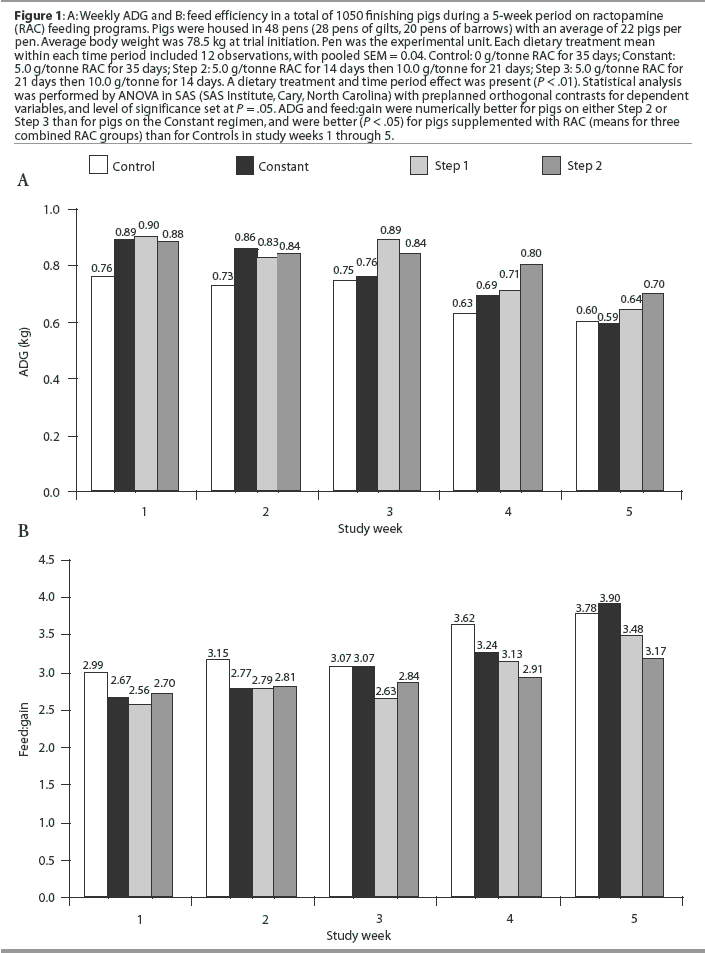
Over the entire 35-day feeding period, ADG and feed efficiency were better (P < .01) for groups of pigs fed RAC (Table 1). In addition, ADG and feed efficiency were better when a RAC step-up program was used, compared to a constant RAC feeding regimen of 5.0 g RAC per tonne (P < .01). However, there was no difference in ADG and feed efficiency between pigs on the Step 2 and Step 3 programs. Numerically better ADG and feed efficiency were realized through week 4 for pigs fed the constant RAC feeding regimen compared to the controls. However, ADG and feed efficiency were better for pigs on either the Step 2 or Step 3 program than for pigs on the constant RAC feeding regimen (Figure 1). In addition, better ADG and feed efficiency were maintained through week 5 of the experimental period in pigs on the RAC step-up feeding programs. Average daily feed intake was not affected by dietary treatment during the 35-day experimental period (Table 1).
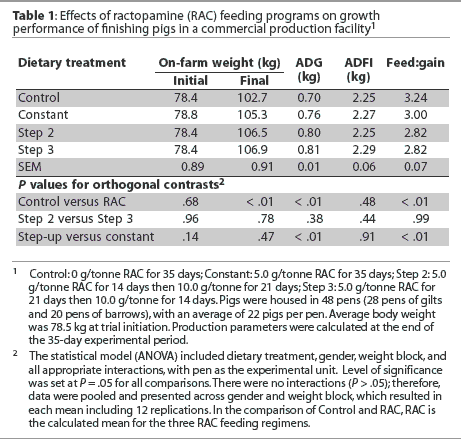
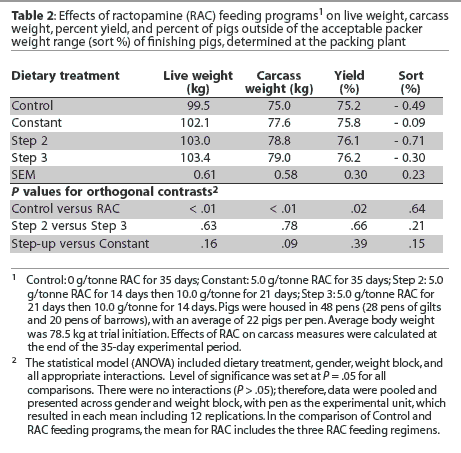
Live weight (on-farm and at the packing plant) and carcass weight were higher (P < .01) for pigs on any of the RAC feeding regimens than for control pigs, and carcass weight tended to be higher for pigs on a RAC step-up feeding program than for pigs on a constant RAC feeding regimen (P = .09) (Tables 1 and 2). Live weight (on-farm and at the packing plant) and carcass weight did not differ between the two RAC step-up regimens. Carcass weights of pigs fed RAC were greater than those of the control pigs by 2.6 kg in the constant-feeding-regimen treatment; by 3.8 kg in the Step-2 treatment; and by 4.0 kg in the Step-3 treatment. Percent yield was higher in pigs fed RAC-supplemented diets (P = .02), but percent yield in pigs on RAC step-up feeding programs did not differ from that of pigs on the constant RAC feeding regimen (Table 2). There was no difference in sort percent among treatment groups (Table 2).
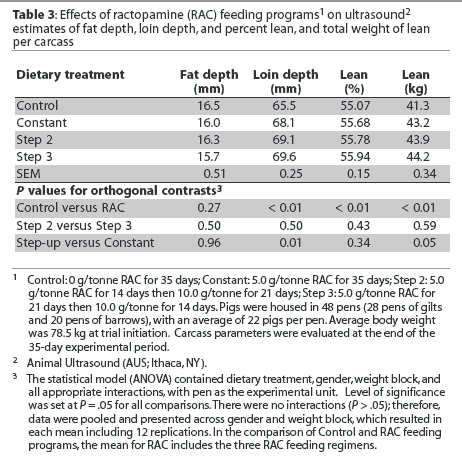
AUS estimates of loin depth and percent lean were higher (P < .01) and total weight of lean per carcass was higher (P < .01) in pigs fed RAC than in control pigs (Table 3). AUS estimates of loin depth and total weight of lean per carcass were higher (P < .05) when a RAC step-up feeding program was implemented than when pigs were fed the constant RAC dietary treatment, with no difference between pigs on the two RAC step-up programs. Estimates of fat depth were not affected by dietary treatment (Table 3).
Discussion
With prolonged exposure to a [beta]-agonist (eg, RAC), [beta]-adrenergic receptors are sequestered, internalized, and ultimately degraded, which results in a net loss of available membrane receptors.11 When porcine adipocytes were incubated in vitro with the [beta]-agonist isoproterenol, the number of [beta]-adrenergic receptors decreased.12 In addition, Spurlock et al11 reported that maximum binding of the RAC molecule to adipose tissue [beta]-adrenergic receptors decreased with time. Therefore, this down-regulation or desensitization of [beta]-adrenergic receptors results in a diminishing response to RAC in the live animal over the course of the feeding period when a constant dietary concentration of RAC is fed.3-5 However, the current study demonstrated that implementation of a RAC step-up feeding regimen resulted in greater benefits in live-animal performance than a constant RAC feeding program, which may indicate that a RAC step-up program maintains the physiological RAC response in the live animal through a potential delay in the down-regulation or desensitization of the [beta]-adrenergic receptors for the RAC molecule.
Ractopamine supplementation to finishing pig diets for periods of approximately 35 days has consistently resulted in improvements in ADG and feed efficiency.13-15 The results of this experiment support these earlier studies, in that ADG and feed efficiency were better in pigs fed diets containing RAC. In addition, implementation of a RAC step-up program produced further benefits in ADG and feed efficiency when compared to a constant RAC feeding program. These data support previous research conducted under controlled university conditions, that demonstrated that ADG was better in pigs on a RAC step-up program (5.0 g per tonne RAC for 3 weeks, then 10.0 g per tonne for 3 weeks) than in pigs fed 5.0 g per tonne RAC for 6 weeks.8 In another study, ADG was better during the final 2 weeks of a 6-week feeding period when a RAC step-up program was implemented (5.0 g per tonne RAC for 2 weeks, then 10.0 g per tonne for 2 weeks, then 20.0 g per tonne for 2 weeks) compared to a constant regimen of 11.7 g per tonne RAC for 6 weeks.7
Not only was live-animal performance better in this study when a RAC step-up program was used, but carcasses also tended to be heavier and produced more lean, compared to those of pigs that had been on the constant RAC feeding program. Hot carcass weight and percent lean were numerically higher under controlled university conditions when a RAC step-up program was implemented.7,8 These data are consistent with the earlier literature that demonstrated the carcass-enhancing properties of the RAC molecule. Specifically, RAC feeding has been shown to result in heavier carcasses1,2,14 with a greater composition of lean.2,13,16
This is the first commercial-scale trial that has demonstrated the production advantages of a RAC step-up feeding regimen. In this study, there were no differences between the two RAC step-up feeding regimens in the dependent variables. Therefore, it would be more economical for a swine producer to implement the Step-2 program in this study (ie, 5.0 g per tonne RAC for 21 days, then 10.0 g per tonne for 14 days). However, further research is required to further quantify and describe the RAC feeding program that maximizes the production, carcass, and economic advantages associated with RAC feeding.
Implications
- Live performance and carcass measures were better in pigs fed RAC at 5.0 g per tonne for 35 days than in pigs fed the same diet without RAC.
- Live performance and carcass measures were better in pigs on either of two 5-week RAC step-up feeding programs than in pigs fed 5.0 g per tonne RAC for 35 days.
- Loin depth and total weight of the carcass lean were greater in pigs on either of two 5-week RAC step-up feeding programs than in pigs fed 5.0 g per tonne RAC for 35 days.
- There was no difference in live performance and carcass measures for groups fed either RAC step-up feeding program tested in this study; therefore, it would be more economical for producers to implement the step-up program that included 5.0 g per tonne RAC for 21 days, then 10.0 g per tonne RAC for 14 days.
References
1. Watkins LE, Jones DJ, Mowrey DH, Anderson DB, Veenhuizen EL. The effect of various levels of ractopamine hydrochloride on the performance and carcass characteristics of finishing swine. J Anim Sci. 1990;68:3588-3595.
2. Stites CR, McKeith FK, Singh SD, Bechtel PJ, Mowrey DH, Jones DJ. The effect of ractopamine hydrochloride on the carcass cutting yields of finishing swine. J Anim Sci. 1991;69:3094-3101.
3. Dunshea FR, King RH, Campbell RG, Sainz RD, Kim YS. Interrelationships between sex and ractopamine on protein and lipid deposition in rapidly growing pigs. J Anim Sci. 1993;71:2919-2930.
4. Williams NH, Cline TR, Schinckel AP, Jones DJ. The impact of ractopamine, energy intake, and dietary fat on finisher pig growth performance and carcass merit. J Anim Sci. 1994;72:3152-3162.
*5. Kelly JA, Tokach MD, Dritz SS. Weekly growth and carcass response to feeding ractopamine (Paylean"). Proc AASV. Orlando, Florida. 2003;51-58.
6. Moody DE, Hancock DL, Anderson DB. Phenethanolamine repartitioning agents. In: D'Mello JPF, ed. Farm Animal Metabolism and Nutrition. New York: CAB International; 2000:65-95.
*7. Herr CT, Schinckel AP, Watkins L, Weldon B, Richert BT. Optimal Paylean" sequence (step-up/step-down) when fed to late-finishing swine. Purdue University Swine Day 2001. Available at http://www.ansc.purdue.edu/swine/swineday/sday01/7.pdf. Accessed December 31, 2004.
*8. Trapp SA, Rice FP, Kelly DT, Bundy A, Schinckel AP, Richert BT. Evaluation of four ractopamine use programs on pig growth and carcass characteristics. Purdue University Swine Day 2002. Available at http://www.ansc.purdue.edu/swine/swineday/sday02/10.pdf. Accessed December 31, 2004.
9. See MT, Armstrong TA, Weldon WC. Effect of a ractopamine feeding program on growth performance and carcass composition of finishing pigs. J Anim Sci. 2004;82:2474-2480.
10. Guide for the Care and Use of Agricultural Animals in Agricultural Research and Teaching. 1st ed. Savoy, Illinois: Federation of Animal Science Societies; 1999.
11. Spurlock ME, Cusumano JC, Ji SQ, Anderson DB, Smith CK II, Hancock DL, Mills SE. The effect of ractopamine on [beta]-adrenoceptor density and affinity in porcine adipose and skeletal muscle tissue. J Anim Sci. 1994;72:75-80.
12. Ding ST, McNeel RL, Smith EO, Mersmann HJ. Modulation of porcine adipocyte [beta]-adrenergic receptors by a [beta]-adrenergic agonist. J Anim Sci. 2000;78:919-926.
13. Uttaro BE, Ball RO, Dick P, Rae W, Vessie G, Jeremiah LE. Effect of ractopamine and sex on growth, carcass characteristics, processing yield, and meat quality characteristics of crossbred swine. J Anim Sci. 1993;71:2439-2449.
14. Crome PK, McKeith FK, Carr TR, Jones DJ, Mowrey DH, Cannon JE. Effect of ractopamine on growth performance, carcass composition, and cutting yields of pigs slaughtered at 107 and 125 kilograms. J Anim Sci. 1996;74:709-716.
15. Dunshea FR, King RH, Eason PJ, Campbell RG. Interrelationships between dietary ractopamine, energy intake, and sex in pigs. Aust J Agric Res. 1998;49:565-574.
16. Aalhus JL, Jones SDM, Schaefer AL, Tong AKW, Robertson WM, Merrill JK, Murray AC. The effect of ractopamine on performance, carcass composition and meat quality of finishing pigs. Can J Anim Sci. 1990;70:943-952.
* Non-refereed references.