
Original research |
Peer reviewed |
Feed composition in herds with or without postweaning Escherichia coli diarrhea in early-weaned piglets
La composición del alimento en piaras con o sin diarrea causada por Escherichia coli después del destete en lechones de destete precoz
Composition des aliments dans les troupeaux avec ou sans diarrhée colibacillaire postsevrage chez les porcelets sevrés précocement
François Cardinal, DVM, MSc; Sylvie D'Allaire, DVM, MSc, PhD; John M. Fairbrother, BVSc, PhD
FC, SD, JMF: Faculté de médecine vétérinaire, Université de Montréal, St-Hyacinthe, Québec, Canada; Corresponding author: Dr François Cardinal, Les Consultants Avi-Porc, 1320, boul Jean de Brébeuf, Drummondville, Québec, Canada J2B 4T6; Tel: 819-478-0450; Fax: 819-478-1807; E-mail: francoiscardinal@sympatico.ca.
Cite as: Cardinal F, D'Allaire S, Fairbrother JM. Feed composition in herds with or without postweaning Escherichia coli diarrhea in early-weaned piglets. J Swine Health Prod. 2006;14(1):10-17.
Also available as a PDF.
SummaryObjective: To conduct a preliminary screening of possible risk factors associated with water and feed composition for postweaning Escherichia coli diarrhea (PWECD) in early-weaned piglets. Methods: A case-control study was conducted in Québec, Canada, including 34 herds with weaning age less than 22 days: 17 herds in which PWECD did not occur (Control; Group C) and 17 affected herds (Diarrhea; Group D). Diagnoses of PWECD with colibacillary shock were confirmed by a provincial diagnostic laboratory. Information on rations used in the nursery was collected during a farm visit. Each ration was analyzed, and electrolytic balance was calculated. Rations fed the day before the first occurrence of diarrhea in Group D herds were compared to median values for rations fed on the same postweaning days in Group C herds. Drinking water samples were also analyzed. Results: Higher levels of soybean and canola products (sources of vegetal proteins) were used in Group D herds the day before the first occurrence of diarrhea. Calcium and magnesium levels were higher and zinc concentrations and electrolytic balance were lower in the feeds of Group D herds than in the feeds of Group C herds. There was no relationship between water composition and PWECD status. Implications: Feed content may play a role in the occurrence of PWECD. Protein of animal origin should be included in the feed for the first 3 weeks post weaning, and high calcium levels should be avoided for 1 week. Zinc oxide supplementation is beneficial in reducing incidence of PWECD. | ResumenObjetivo: Realizar una revisión preliminar de los posibles factores de riesgo asociados con la composición del alimento y del agua en la diarrea causada por Escherichia coli después del destete (PWECD por sus siglas en inglés) en lechones de destete precoz. Métodos: Se realizó un estudio de casos y control en Québec, Canadá, incluyendo 34 piaras con una edad de destete menor a 22 días: 17 piaras en las que no se presentó la PWECD (Grupo C) y 17 piaras afectadas (Grupo D). Un laboratorio de diagnóstico provincial confirmó el diagnósticos de la PWECD con choque colibacilar. Durante una visita a la granja se recopiló información sobre las raciones utilizadas en el destete. Se analizó cada ración y se calculó el balance electrolítico. Se compararon las raciones ofrecidas el día anterior a la primera aparición de diarrea en las piaras del Grupo D, con los valores de la mediana de las raciones ofrecidas durante los mismos días post destete en las piaras del Grupo C. También se analizaron muestras del agua potable. Resultados: El día anterior a la primera aparición de diarrea se utilizaron niveles más altos de productos de soya y canola (fuentes de proteína vegetal) en las piaras del Grupo D. Los niveles de calcio y magnesio fueron más altos y las concentraciones de zinc y el balance electrolítico fueron más bajos en el alimento de las piaras del Grupo D que en el alimento de las piaras del Grupo C. No hubo relación entre la composición del agua y el estado de la PWECD. Implicaciones: El contenido del alimento puede influir en la aparición del PWECD. La proteína de origen animal debe incluirse en el alimento en las 3 semanas posteriores al destete, y se deben evitar los niveles altos de calcio por 1 semana. Suplementar con óxido de zinc ayuda a reducir la incidencia del PWECD. | ResuméObjectif: Faire une évaluation préliminaire des facteurs de risque potentiels associés à la composition de l'aliment et de l'eau pour la diarrhée colibacillaire postsevrage (PWECD selon le sigle anglais) chez les porcelets sevrés précocement. Méthodes: Une étude de type cas-témoin a été effectuée au Québec, Canada, dans des troupeaux dont l'âge au sevrage des porcelets était de moins de 22 jours. Elle portait sur 34 troupeaux: 17 sans problème de PWECD (Groupe C) et 17 au prise avec cette condition (Groupe D). Les diagnostics de PWECD avec choc colibacillaire ont été confirmés par un laboratoire de diagnostic provincial. L'information sur les rations utilisées dans la pouponnière a été recueillie durant une visite de la ferme. Chaque ration a été analysée, et la balance électrolytique a été calculée. Les rations distribuées le jour avant la première apparition de diarrhée dans les troupeaux du Groupe D ont été comparées aux valeurs médianes des rations données pour les mêmes jours après le sevrage dans les troupeaux du Groupe C. Des échantillons d'eau de boisson ont aussi été analysés. Résultats: Des niveaux plus élevés de produits de soja et de colza (sources de protéines d'origine végétale) ont été utilisés dans les troupeaux du Groupe D le jour avant la première apparition de diarrhée. Les niveaux de magnésium et de calcium étaient plus élevés et les concentrations de zinc et la balance électrolytique étaient plus faibles dans les aliments des troupeaux du Groupe D que dans ceux des troupeaux du Groupe C. Il n'y avait pas d'association entre la composition de l'eau et le statut de la PWECD. Implications: La composition de l'aliment peut jouer un rôle dans l'apparition de la PWECD. Des protéines d'origine animale devraient être incluses dans l'alimentation pour les 3 premières semaines après le sevrage, et des niveaux élevés de calcium devraient être évités pour la première semaine. L'ajout d'oxyde de zinc est bénéfique pour diminuer l'incidence de la PWECD. |
Keywords: swine, postweaning
diarrhea, Escherichia coli, colibacillary shock, nursery feed
Search the AASV web site
for pages with similar keywords.
Received: May
5, 2004
Accepted: January
18, 2005
Postweaning Escherichia coli diarrhea (PWECD) has been a problem in swine herds for many years.1,2 After weaning, piglets must adapt to new nutrients present in solid feed, and this is especially stressful when early weaning is practiced. Reduced feed intake, intestinal villous atrophy, crypt hyperplasia, and reduced enzymatic and absorption capacity are observed during the postweaning period3-9 and may result in transitory maldigestion and malabsorption of nutrients.10-12 Presence of undigested nutrients in the gut lumen favors proliferation of enterotoxigenic E coli (ETEC) strains, attachment of these organisms to the intestinal mucosa, and secretion of enterotoxins.13 Diarrhea due to hypersecretion of fluids and electrolytes and fecal excretion of pathogenic E coli soon follow.14-19 However, PWECD may be hyperacute, with pigs dying suddenly, often without signs of diarrhea, and is then referred to as "colibacillary shock."20,21
When piglets weaned at 4 days of age were experimentally challenged at 28 days of age with ETEC strains administered by the oral or intragastric routes, diarrhea occurred within 12 hours.22 Pigs challenged by spreading broth cultures of ETEC strains on the pen floor developed diarrhea 1 to 5 days after weaning.23 Piglets may become infected with ETEC on or soon after arrival in the nursery. Alternatively, some piglets might already be infected before weaning, but may not excrete ETEC until after weaning, when favorable conditions exist. In many herds, phase feeding is practiced in the postweaning period in order to provide a ration adapted to the developing piglets and to reduce feeding costs. It is possible that in herds in which diarrhea occurs at a later time after weaning, feeds that inhibit E coli proliferation and attachment in the intestine, or that do not favor maldigestion of nutrients, are fed for a longer period. These arguments suggest that feed constituents should be examined in relation to timing of diarrhea and not only globally over the postweaning period. Reported incubation periods in challenge studies suggest that the feed used the day before the appearance of diarrhea might be the factor that triggers proliferation of E coli, and that it would be appropriate to look specifically at this ration when investigating the effect of feed on diarrhea.
Few epidemiological studies have evaluated risk factors associated with occurrence of PWECD in early-weaned pigs. Before this study was initiated, reports from diagnostic laboratories indicated that prevalence of PWECD had increased during the previous 3 years in Québec, Canada (Dr Michel Major, coordinator, Réseau d'Alerte et d'Information Zoosanitaire, Ministère de l'Agriculture, des Pêcheries et de l'Alimentation du Québec, 1999, personal communication). This increased prevalence might have been related to recent changes in management, such as early weaning. Since diet seems to play a key role in the pathophysiology of PWECD, our objective was to conduct a preliminary screening of possible risk factors associated with water and feed composition for PWECD in early-weaned piglets. This project was part of a larger study designed to assess the relative importance of management, feeding practices, and microbiological findings in PWECD.
Materials and methods
Study sample
A total of 34 herds located in the province of Québec were involved in the study: 17 herds in which PWECD did not occur (Control; Group C) and 17 affected herds (Diarrhea; Group D). The selection criteria for the Group C herds were nursery mortality of < 2% and diarrhea affecting < 5% of piglets in the first 3 weeks postweaning in all batches of piglets during the previous 6 months. Criteria for Group D herds were nursery mortality >= 3% in at least one of four batches of piglets in the previous 3 months, diarrhea affecting >= 15% of piglets during the first 3 weeks postweaning, PWECD confirmed by a provincial diagnostic laboratory, and colibacillary shock occurring as part of the usual clinical presentation or necropsy findings. Average weaning age was < 22 days in all herds. An attempt was made to obtain an equal number of single-source and multiple-source nurseries in both study groups. Herds were referred by practicing veterinarians who had been invited by mail and telephone to submit case and control herds according to the above definitions. After a practicing veterinarian had referred a herd and interviewed the producer, a farm visit with investigators was scheduled to ascertain that selection criteria had been met. Farms were visited between November 1999 and May 2001. One batch of piglets with diarrhea (Group D herds) or one batch of piglets weaned for less than 3 weeks (Group C herds) was selected on each farm. A batch was defined as a group of piglets weaned during the same week and housed in the same room. Each batch was monitored for 23 days after weaning. In all herds, housing was adequate and pigs were humanely cared for.
Data collection
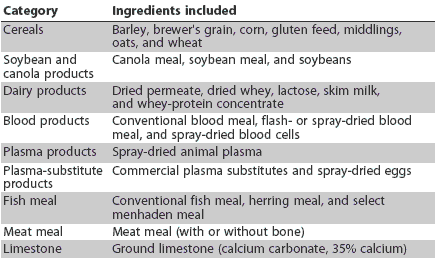
Prevalence of diarrhea on the day of the farm visit, average weaning age, weaning date, and date of first occurrence of diarrhea for the selected batch of piglets were recorded, and the interval between weaning and occurrence of diarrhea was calculated. Mortality during the nursery phase was also obtained for this batch of pigs. Information on nursery rations used and date of feeding of each of these rations was collected from a questionnaire administered by a single interviewer to each producer during the farm visit (questionnaire available upon request). Additional information was obtained from the manufacturer of the feed used on the farm. For each ration, questions focused on amounts of cereal, soybean and canola products, dairy products, blood products, plasma products, plasma-substitute products, fish meal, meat meal, and ground limestone (calcium carbonate, 35% calcium) present in the feed. Ingredients included in each category are shown in Table 1. Each ration used in the nursery phase was sampled during the visit and analyzed on a dry matter basis for crude protein, calcium, copper, iron, potassium, magnesium, manganese, sodium, phosphorus, zinc, chlorine, and sulfur (Shur-Gain Laboratories, St Hyacinthe, Québec, Canada). Electrolytic balance (EB) was calculated on a dry matter basis for each ration used, according to the following equation:24 EB (mmol per kg) = [(Na+ 22.99) + (K+ 39.10) - (Cl- 35.45)] x 1000, where Na+, K+, and Cl- are expressed as g per kg of feed.
Table 1: Description of categories of ingredients used in rations for nursery pigs in a study to determine the effects of dietary components on occurrence of postweaning Escherichia coli diarrhea
|
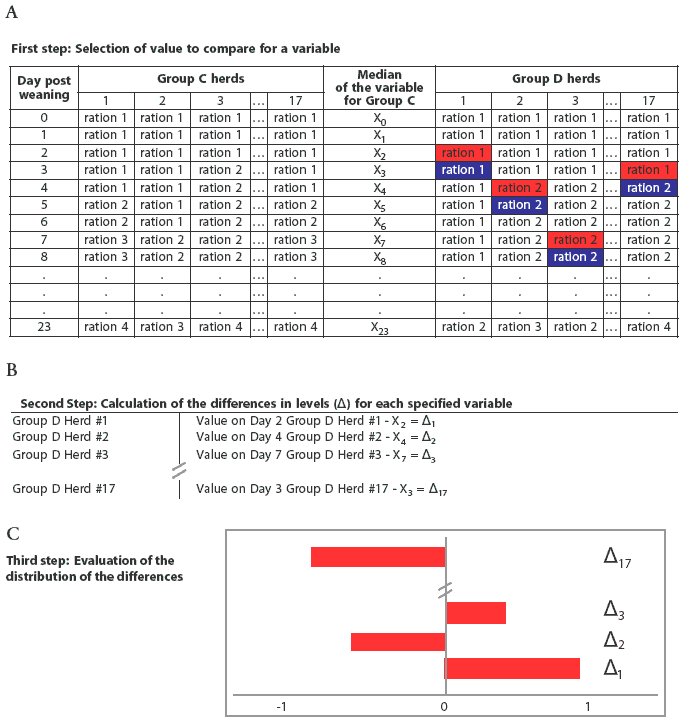
Using this information, a data set was constructed in which feed variables were known for each day after weaning for each herd, with day of weaning identified as Day 0 (Figure 1).
Figure 1: Schema representing a method developed to compare rations fed to piglets in herds in which postweaning diarrhea either occurred (Group D, 17 herds) or did not occur (Group C, 17 herds). Phase feeding and variation in the timing of rst occurrence of diarrhea in Group D herds was taken into account. In the rst step, the ration fed the day before occurrence of diarrhea in each Group D herd was matched with the ration fed in Group C herds on the corresponding postweaning day. For example, in Figure 1A, diarrhea first occurred in Group D herd 17 on postweaning day 4 (blue cell), and the ration fed the previous day (red cell) was selected for comparison to the median of the Group C rations for that day (X3) (Figure 1A). Feed composition variables considered were cereal, soybean and canola products, dairy products, and ground limestone (calcium carbonate, 35% calcium), crude protein, calcium, chlorine, copper, iron, magnesium, manganese, phosphorus, potassium, sodium, sulfur, zinc, and electrolytic balance. For each feed composition variable, the median value in the Group C rations was compared to the value for each Group D herd. In a second step, the difference (D) was calculated between the value for each variable in the Group D rations and the median for the corresponding variables in the Group C rations (Figure 1B). A Wilcoxon signed rank test was then used to determine whether the distribution was centered on 0, which would indicate no difference between the two groups for the variable considered. A hypothetical graphical representation of these differences is presented (Figure 1C). Herds are identied by number, and ration numbers correspond to the phase of the nursery diet (eg, ration 1 is a phase 1 diet). Medians of the Group C variables are identied by X with a subscript indicating the postweaning day for which the median was calculated.
|
Water samples were collected during the farm visit. When a treatment system was present, water was sampled along the line of distribution after treatment. Samples were submitted to one of two private laboratories accredited by the Ministère de l'Agriculture, des Pêcheries et de l'Alimentation du Québec (MAPAQ) (Agridirect or Laboratoire d'Environnement SM Inc, Longueuil, Québec, Canada). For each sample, magnesium, calcium, zinc, copper, iron, sodium, potassium, chloride, manganese, boron, sulfate, nitrate, hardness, alkalinity expressed as concentration of calcium carbonate, and conductivity were measured. Water pH was measured directly on the farm using a pocket-size pH tester with an accuracy of +/- 0.1 (pHTestr 2, model 35624-20; Lesman Instrument Company, Elmhurst, Illinois).
Statistical analyses
All statistical analyses were performed using SAS Software version 8.1 (SAS Institute Inc, Cary, North Carolina). A Wilcoxon signed rank test was performed to ensure that the groups were different in regard to prevalence of diarrhea and mortality. A median two-sample test was used to compare results from water analysis for the two groups of herds. To determine the effect of feed variables on occurrence of diarrhea, rations fed to piglets on the day before the first occurrence of diarrhea in Group D herds were compared to rations fed on the same postweaning days in herds in Group C (Figure 1). These Group C rations are referred to as "corresponding rations." For each variable, we calculated the difference between the value for the ration used on the day before first occurrence of diarrhea for each Group D herd and the value of the median for the Group C corresponding ration. Hence, for each variable, a distribution of the differences between Group D and C herds was obtained. A Wilcoxon signed rank test was used to determine whether the distribution was centered on 0,25 which would indicate no difference in the variable between the two groups. This analysis was not performed when the median of the variable was equal to 0 for Group C. Since values for feed variables cannot be less than 0, a median of 0 for Group C does not mean that values are equally distributed above and below 0, but only indicates that more than 50% of the observations for this variable have a value of 0. When a value of a variable for a Group D herd was compared to a median of 0, it was only possible to obtain a difference >= 0. A correlation test was performed on variables with significant differences to verify that these variables were independent of each other. Variables were considered independent when correlation coefficients were < 0.50. For all statistical analyses, differences were considered significant at P < .05.
Results
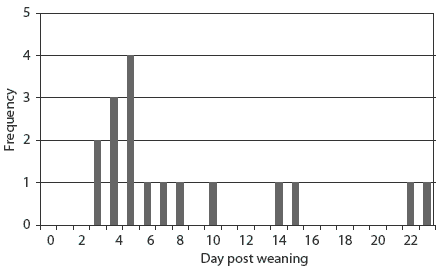
The median prevalence of diarrhea on the day of the visit was 10.5% in Group D and 0.0% in Group C (P < .001). Median mortality was 4.5% in Group D and 0.9% in Group C (P = .001). In Group D herds, diarrhea appeared between Days 3 and 23 (Figure 2), but usually before Day 10.
Figure 2: Batches of piglets were selected at weaning in 17 herds in the province of Québec, Canada, using the following criteria: litters weaned at < 22 days of age, nursery mortality 3% in at least one of four batches of piglets in the previous 3 months, diarrhea affecting 15% of piglets during the rst 3 weeks postweaning, postweaning Escherichia coli diarrhea conrmed by a provincial diagnostic laboratory, and colibacillary shock occurring as part of the usual clinical presentation or necropsy ndings of postweaning diarrhea. Frequency represents the number of these herds in which diarrhea rst occurred in the selected batch of piglets on each day post weaning.
|
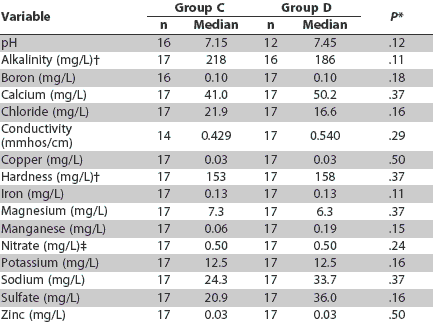
No difference was detected between the two groups for water pH and mineral analysis (Table 2).
Table 2: Analysis of drinking water from 34 nurseries in Québec, Canada, in which postweaning Escherichia coli diarrhea either occurred (Group D) or did not occur (Group C)
* Probability that the difference between Groups D and C for the variable is signicantly different from zero; median two-sample test. † Measured as calcium carbonate. ‡ Measured as nitrogen |
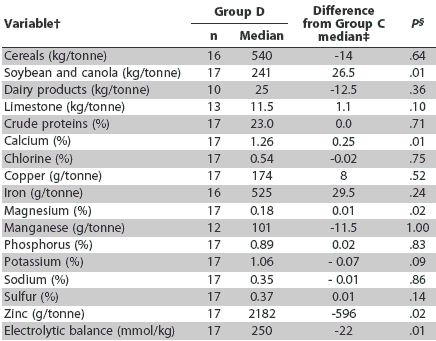
Complete feed, premix, and base mix used in the studied herds originated from 10 different feed companies: six for Group C and eight for Group D. Levels of soybean and canola products, calcium, and magnesium were higher in the Group D feeds on the day before the occurrence of diarrhea than in the corresponding rations for Group C herds (Table 3). Zinc concentrations and EB were lower in the Group D feeds than in the corresponding rations for Group C herds (Table 3). For all other feed variables, there were no differences between groups. Correlation coefficients between significant variables were all < 0.50.
Table 3: Feed composition for Group D herds the day before occurrence of postweaning Escherichia coli diarrhea in comparison with Group C herds for the corresponding ration*
* The study included herds in the province of Québec, Canada, in which postweaning E coli diarrhea either occurred (17 herds; group D) or did not (17 herds; Group C). Rations fed the day before the rst occurrence of postweaning diarrhea in Group D herds were compared to rations fed on the corresponding postweaning day in Group C herds. † Blood products, plasma products and substitutes, sh meal, and meat meal were not tested because the median of Group C values was equal to zero. ‡ A negative value means that the median of Group D values is less than the median of Group C values for the corresponding postweaning day (eg, Group D herds used 14 kg/tonne less cereals than Group C for the day before occurrence of diarrhea in Group D). § Probability that the difference between the Groups D and C median values for the variable is signicantly different from zero; Wilcoxon signed rank test. |
Discussion
Our observation that diarrhea did not occur before Day 3 suggests that favorable conditions for E coli proliferation and attachment in the intestine take some time to occur.
Although the number of herds selected for this study was small, comparison of feed contents between groups clearly revealed that Group D herds were more likely to use soybean and canola products in their rations than were Group C herds. This category of ingredients is a vegetal source of proteins. No difference could be found for categories of ingredients of animal origin because some values were missing in each category. For the same reason, it was not possible to group data in order to put all ingredients of animal origin in the same category. Missing values were a problem because some feed manufacturers would not reveal all information about the composition of their rations. Since levels of crude protein in the rations for both groups were similar, we can assume that more ingredients of animal origin were used as a source of protein in Group C herds than in Group D herds.
It should be noted that in the category of soybean and canola products, the predominant ingredients were soybean meal and soybean seed, with very little canola meal being used. Soybean contains trypsin inhibitors and is known to be antigenic. Various heat treatments have been used to eliminate these factors from soybean with variable success. When adverse effects due to soybean are observed, the inclusion proportion is generally about or > 25% of the total diet,13,26 which was the approximate level of inclusion observed in our study (24.1% for Group D herds). Several mechanisms have been proposed to explain the potential for soybean to cause or exacerbate signs of postweaning diarrhea. A localized immune response may be induced by soybean antigens, resulting in shortened intestinal villi and increased crypt depth, and hence maldigestion and malabsorption, which might favor E coli proliferation.26-28 Maldigestion might also be the direct consequence of a lack of enzymes able to completely digest soybean in weaned piglets.13 Also, insoluble non-starch polysaccharides present in soybeans increase diet viscosity, which in turn predisposes piglets to intestinal proliferation of E coli.29
Group C herds seemed to use a more sophisticated ration for a longer period after weaning and to adopt a phase-feeding program in which dietary components were changed by smaller increments from one phase to another than in Group D herds. Animal-source proteins are more costly than soybean and canola products, which might explain why use of animal-source proteins was limited to shorter periods. Several other authors have suggested that animal-source proteins provide protection against PWECD. Tzipori et al14 showed that when dairy products were added to feed, occurrence of postweaning diarrhea was delayed and mortality was lower. In Swedish herds without postweaning diarrhea, dairy products or fish meal were included in the feed for piglets during the first 10 postweaning days to a greater extent than in herds in which postweaning diarrhea occurred.30 Lower PWECD mortality was reported when plasma products were included at 250 kg per tonne of feed.31 In our study, none of the selected herds used more than 88 kg per tonne of plasma products. However, we could not analyze the relationship between the level of plasma products and the occurrence of postweaning diarrhea because too many values were missing. The protective role of feed ingredients of animal sources may be related to easier digestion of these ingredients by the weaned piglet, reducing the amount of undigested nutrients in the gut lumen and thus E coli proliferation. Another explanation might be that animal-source ingredients may stimulate higher feed intake by the piglet, helping to prevent further postweaning diarrhea problems.32
We observed a lower feed EB in Group D herds for the day before occurrence of diarrhea than in the corresponding rations for Group C herds. A feed with low EB has the potential to reduce blood pH, bicarbonate level (HCO3-), and base excess.24,33,34 Hypersecretory diarrhea due to E coli also causes a decrease in blood pH, pCO2, and base excess. The metabolic acidosis that develops with diarrhea is due mainly to loss of HCO3- via the feces. Death occurs when the base excess becomes too low.15 In hyperacute cases, death may also be caused by endotoxic shock.20 Metabolic acidosis and reduced base excess are also present before death caused by endotoxic shock.35 Since low feed EB, hypersecretory diarrhea, and endotoxic shock all result in decreased blood base excess in pigs, we suggest that a low EB diet would potentiate the effects of PWECD on acute mortality. Even though feed EB was in the normal range24 for both Group C and D herds, the lower EB of the feed for Group D herds might have caused a slight decrease in blood base excess even before the onset of diarrhea. Hence, renal and respiratory compensation mechanisms against metabolic acidosis would have been overcome more rapidly.36 The influence of feed EB on PWECD should be further evaluated.
As magnesium content differed only slightly in the feeds for the two groups, it would be difficult to relate the difference to any particular ingredient. Moreover, magnesium carbonate or magnesium oxide might have been added to the feed,37 as the questionnaire did not ask for this information.
The level of calcium in the feed on the day prior to the occurrence of diarrhea was higher in Group D herds. Higher levels of calcium, through supplementation with limestone, increase feed buffering capacity, which may predispose to postweaning diarrhea.38 Feeds with high buffering capacity may increase stomach pH, which may favor maldigestion and proliferation of E coli. It is interesting to note that among the 12 herds in which diarrhea appeared before Day 9, only one had a level of calcium in the feed lower than the median for herds in Group C for the corresponding rations (data not shown). This finding suggests that the level of calcium in the feed may play a role in triggering diarrhea, and that this effect is more important during the first week post weaning than at later times. This would make sense, since the inability of the early-weaned piglet to secrete sufficient HCl to maintain a low stomach pH is transitory.3
It is well known that levels of zinc oxide between 2400 and 3000 g per tonne of feed reduce the incidence of postweaning diarrhea and related mortality.39 Such levels would yield 1720 to 2160 g per tonne of zinc on a feed analysis.37 Although the median zinc concentration in the feed used on the day prior to the occurrence of diarrhea in group D (2182 g per tonne) was higher than 2160 g per tonne, six of the 17 Group D herds used no zinc oxide supplementation. Moreover, the feed concentration of zinc in Group D herds on the day prior to the onset of diarrhea was lower than that in the Group C corresponding rations. Hence, our results confirm the beneficial effects of zinc oxide supplementation reported by others.39
In our study, we found no relationship between water composition and PWECD status, possibly due to the low variability in water constituents among herds. Thus, we conclude that drinking water similar in composition to that reported in Table 2 would not be considered an important factor in the development of PWECD.
The association between diarrhea and some feed categories could not be evaluated when the Group C median was equal to 0 for that variable, because this might have resulted in bias for differences between Groups D and C to be > 0 by the Wilcoxon signed rank test. These feed categories included blood products, plasma products, plasma substitutes, fish meal, and meat meal. As feed manufacturers were reluctant to reveal the level of inclusion in the diet for these categories, there were several missing values for these variables.
Since a multivariate statistical analysis was not possible with the type of data in our study, a correlation test was used on significant variables. No correlation was found between significant variables, indicating that these variables were independent from each other.
Finally, the power of this study was relatively low because sample size was small. Since this was a preliminary study, the overall goal was to evaluate the association of as many potential risk factors for PWECD as possible. Hence, we focused on a larger number of variables in each herd rather than on a greater sample size. It is also important to note that herds without signs of diarrhea were compared to herds experiencing severe PWECD problems. It is possible that pathogenic E coli were not present in some Group C herds. In these herds, PWECD would not occur whether or not risk factors for PWECD existed. This might reduce the differences between Groups C and D with respect to risk factors related to water and feed composition, and would also decrease the power of our study. Therefore, variables not identified as risk factors in our study might actually be associated with PWECD. Results of this study should be used in an experimental design to validate the findings.
Implications
- Feed content plays a role in the occurrence of PWECD.
- To prevent or reduce PWECD-related losses, protein of animal origin should be included in the feed for the first 3 weeks post weaning.
- High calcium levels in nursery feed should be avoided, especially in the first week post weaning.
- Zinc oxide supplementation is beneficial in reducing incidence of PWECD.
- Under the conditions of this study, there was no relationship between water composition and PWECD status.
Acknowledgements
We gratefully thank participating farmers and veterinarians for their cooperation in this project. We also thank the Conseil de recherches en pêche et en agroalimentaire du Québec (CORPAQ), the Fédération des Producteurs de Porcs du Québec (FPPQ), and the Fondation Desjardins for their financial contribution.
References
1. Palmer NC, Hulland TJ. Factors predisposing to the development of coliform gastroenteritis in weaned pigs. Can Vet J. 1965;6:310-316.
2. Svendsen J, Larsen JL, Bille N. Outbreaks of post weaning Escherichia coli diarrhea in pigs. Nord Vet Med. 1974;26:314-322.
3. Cranwell PD, Titchen DA. Gastric secretion in newly born pigs. Res Vet Sci. 1974;16:105-107.
4. Efird RC, Armstrong WD, Herman DL. The development of digestive capacity in young pigs: effects of age and weaning system. J Anim Sci. 1982;55:1380-1387.
5. Hampson DJ. Alterations in piglet small intestinal structure at weaning. Res Vet Sci. 1986;40:32-40.
6. Hampson DJ, Kidder DE. Influence of creep feeding and weaning on brush border enzyme activities in the piglet small intestine. Res Vet Sci. 1986;40:24-31.
7. Lindemann MD, Cornelius SG, El Kandelgy SM, Moser RL, Pettigrew JE. Effect of age, weaning and diet on digestive enzyme levels in the piglet. J Anim Sci. 1986;62:1298-1307.
8. Cera KR, Mahan DC, Cross RF, Reinhart GA, Whitmoyer RE. Effect of age, weaning and postweaning diet on small intestinal growth and jejunal morphology in young swine. J Anim Sci. 1988;66:574-584.
9. Cera KR, Mahan DC, Reinhart GA. Effect of weaning, week postweaning and diet composition on pancreatic and small intestinal luminal lipase response in young swine. J Anim Sci. 1990;68:384-391.
10. van Beers-Schreurs HMG, Vellenga L, Wensing T, Breukink HJ. The pathogenesis of the post-weaning syndrome in weaned piglets: a review. Vet Q. 1992;14:29-34.
11. Nabuurs MJA, Hagendorn A, van Zijderveld FG. Effects of weaning and enterotoxigenic Escherichia coli on net absorption in the small intestine of pigs. Res Vet Sci. 1994;56:379-385.
12. Pluske JR, Hampson DJ, Williams IH. Factors influencing the structure and function of the small intestine in the weaned pig: a review. Livest Prod Sci. 1997;51:215-236.
13. Etheridge RD, Seerley RW, Huber TL. The effect of diet on fecal moisture, osmolarity of fecal extracts, products of bacterial fermentation and loss of minerals in feces of weaned pigs. J Anim Sci. 1984;58:1403-1411.
14. Tzipori, D, Chandler D, Smith M, Makin T, Hennessy D. Factors contributing to postweaning diarrhoea in a large intensive piggery. Aust Vet J. 1980;56:274-278.
15. Andrén B, Persson S. Acid-base and electrolyte changes in 1-3 days old piglets infected with enteropathogenic Escherichia coli and in spontaneous cases of piglet diarrhoea. Acta Vet Scand. 1983;24:84-98.
16. Miller BG, Newby TJ, Stokes CR, Bourne FJ. Influence of diet on postweaning malabsorption and diarrhea in the pig. Res Vet Sci. 1984;36:187-193.
17. Hampson DJ, Fu ZF, Smith WC. Pre-weaning supplementary feed and porcine post-weaning diarrhea. Res Vet Sci. 1988;44:309-314.
18. Kelly D, O'Brien JJ, McCracken KJ. Effect of creep feeding on the incidence, duration and severity of post-weaning diarrhea in pigs. Res Vet Sci. 1990;49:223-228.
19. Mezoff AG, Jensen NJ, Cohen MB. Mechanisms of increased susceptibility of immature and weaned pigs to Escherichia coli heat-stable enterotoxin. Pediatr Res. 1991;29:424-428.
*20. Moxley RA, Erickson ED, Breisch S. Shock associated with enteric colibacillosis in suckling and weaned swine. Proc George A. Young Swine Conf & Ann Nebraska SPS Swine Conf. Lincoln, Nebraska. 1988;33-38.
21. Faubert C, Drolet R. Hemorrhagic gastroenteritis caused by Escherichia coli in piglets: clinical, pathological and microbiological findings. Can Vet J. 1992;33:251-256.
22. Madec F, Bridoux N, Bounaix S, Cariolet R, Duval-Iflah Y, Hampson DJ, Jestin A. Experimental models of porcine post-weaning colibacillosis and their relationship to post-weaning diarrhea and digestive disorders as encountered in the field. Vet Microbiol. 2000;72:295-310.
*23. Melin L, Mattsson S, Wallgren P. Challenge with pathogenic strains of E coli at weaning. Clinical signs and reisolation of challenge strains. Proc IPVS. Melbourne, Australia. 2000:22.
*24. Dourmad JY, Meschy F. Le bicarbonate de sodium en nutrition porcine. Proc Conf GTV/ SPACE. France. 1998:1-12.
25. Fisher L, van Belle G, eds. Biostatistics. A Methodology for the Health Sciences. New York, New York: John Wiley & Sons; 1993.
26. Dréau D, Lallès JP, Philouze-Romé V, Toullec R, Salmon H. Local and systemic immune responses to soybean protein ingestion in early-weaned pigs. J Anim Sci. 1994;72:2090-2098.
27. Dunsford BR, Knabe DA, Haensly WE. Effect of dietary soybean meal on the microscopic anatomy of the small intestine in the early-weaned pig. J Anim Sci. 1989;67:1855-1863.
28. Li DF, Nelssen JL, Reddy PG, Blecha F, Hancock JD, Allee G, Goodband RD, Klemm RD. Transient hypersensitivity to soybean meal in the early-weaned pig. J Anim Sci. 1990;68:1790-1799.
*29. McDonald DE, Pethick DW, Mullan BP, Hampson DJ. Increased intestinal viscosity depresses carcass growth and encourages intestinal proliferation of Escherichia coli in weaner pigs. Proc IPVS. Melbourne, Australia. 2000:21.
*30. Löfstedt M, Holmgren N, Lundeheim N. Risk factors for postweaning diarrhea in Swedish pig herds. Proc IPVS. Melbourne, Australia. 2000:367.
31. Bosi P, Han IK, Jung HJ, Heo KN, Perini S, Castellazzi AM, Casini L, Creston D, Gremokolini C. Effect of different spray dried plasmas on growth, ileal digestibility, nutrient deposition, immunity and health of early-weaned pigs challenged with E coli K88. Asian-Aust J Anim Sci. 2001;14:1138-1143.
32. Madec F, Bridoux N, Bounaix S, Jestin A. Measurement of digestive disorders in the piglet at weaning and related risk factors. Prev Vet Med. 1998;35:53-72.
*33. Mongin P. Recent advances in dietary anion-cation balance: applications in poultry. Proc Nutr Soc. 1981;40:285-294.
34. Patience JF, Wolynetz MS. Influence of dietary undetermined anion on acid-base status and performance in pigs. J Nutr. 1990;12:579-587.
35. Li JX, Oliver JR, Lu CY, Grantham KD, Philips JB. Age-related differences in responses to endotoxin infusion in unanesthetized piglets. Circ Shock. 1993;41:40-47.
36. Robinson NE. Homeostasis. In: Cunningham JG, ed. Textbook of Veterinary Physiology. Philadelphia, Pennsylvania: WB Saunders Company; 1992:601-610.
37. National Research Council. Nutrient Requirements of Swine. Washington DC: National Academy Press; 1998.
*38. Spencer BT, Tilley TJ. Low acid binding feed for weaner piglets. Proc IPVS. Bangkok, Thailand. 1994:279.
39. Holm A, Poulsen HD. Zinc oxide in treating E coli diarrhea in pigs after weaning. Compend Cont Educ Pract Vet. 1996;18:S26-S48.
* Non-refereed references.