
Original research |
Peer reviewed |
Esophagogastric ulcer in finishing pigs from twelve large multi-site herds in southeastern Spain, 1995-2000: Descriptive epidemiology
Úlcera gastroesofágica en cerdos de finalización de doce piaras grandes de sitios múltiples en el sureste de España, 1995-2000: Epidemiología descriptiva
Ulcère gastro-oesophagien des porcs de finition de douze gros élevages en sites multiples du sud-est de l'Espagne, 1995-2000: Épidémiologie descriptive
Guillermo Ramis, DVM, PhD; Serafín Gómez, DVM, PhD; Monica Ballesta; Antonio Muñoz, DVM, PhD
GR: Research, Development, and Innovation Department, CEFU, SA, Alhama de Murcia, Murcia, Spain. SG: Department of Histology and Pathological Anatomy, Faculty of Veterinary, University of Murcia, Murcia, Spain. MB: Statistical Analysis. Consejería de trabajo, Consumo y Política Social. Comunidad Autónoma de la Región de Murcia, Murcia, Spain. AM: Department of Animal Production, Faculty of Veterinary, University of Murcia, Murcia, Spain. Corresponding author: Dr Guillermo Ramis, Departamento de Producción Animal, Facultad de Veterinaria, Universidad de Murcia, Campus de Espinardo, 30.840 Alhama de Murcia, Murcia, Spain; Tel: +34 629 380 444; Fax: +34 968 634 147; E-mail: guiramis@um.es.
Cite as: Ramis G, Gómez S, Ballesta M, et al. Esophagogastric ulcer in finishing pigs from twelve large multi-site herds in southeastern Spain, 1995-2000: Descriptive epidemiology. J Swine Health Prod. 2006;14(1):18-24.
Also available as a PDF.
SummaryObjective: To describe mortality due to esophagogastric ulcers over time in pigs from 12 herds in southeastern Spain in which this was the main cause of death until the emergence of postweaning multi-systemic wasting syndrome (PMWS). Methods: All animals (nursery to finisher) that died during 1995 to 2000 were necropsied. The database of necropsy results was analyzed for morbidity trends using classical time series analyses. Total mortality and mortality due to chronic wasting and pneumonia were included because of their possible relationships with gastric ulcers. Age at death in 1998, 1999, and 2000 was analyzed for trends. Results: A seasonal distribution in total mortality was observed, with highest mortality occurring during winter months and lowest during summer months. Mortality due to gastric ulcers was also higher in winter months. Over the study period, mortality due to gastric ulcers declined while mortality due to chronic wasting increased. No change was observed in average age at death due to gastric ulcer. In contrast, a slight reduction (P < .001) was observed in average age at death due to total mortality and chronic wasting in 2000 compared to 1998 and 1999. Implications: In this study, gastric ulcer mortality and occurrence of respiratory diseases were greatest during winter and lowest during early summer, suggesting a relationship between these conditions. Average age at death due to gastric ulcer was 120 to 121 days. Emergence of PMWS was not associated with an increase in gastric ulcer mortality. | ResumenObjetivo: Describir la mortalidad debida a úlceras gastroesofágicas a través del tiempo en 12 piaras en el sureste de España, en las cuales la úlcera gástrica fue la causa principal de muerte hasta la aparición del síndrome multisistémico de adelgazamiento post-destete (PMWS por sus siglas en inglés). Métodos: Se realizó una necropsia a todos los animales (destete a finalización) que murieron de 1995 a 2000. Se analizó la base de datos de los resultados de las necropsias para observar las tendencias de morbilidad usando el análisis de series de tiempo clásico. Se incluyeron el total de la mortalidad y la mortalidad por neumonía y desgaste crónico debido a su posible relación con las úlceras gástricas. Se analizó la edad de muerte en 1998, 1999, y 2000 en busca de tendencias. Resultados: Se observó una distribución estacional en la mortalidad total, la mortalidad más alta ocurrió durante los meses de invierno y la más baja en los meses de verano. La mortalidad debida a úlceras gástricas también fue mayor en los meses de invierno. Durante el periodo del estudio, la mortalidad debido a úlceras gástricas declinó mientras que la mortalidad debida al desgaste crónico aumentó. No se observó ningún cambio en la edad promedio de muerte debido a úlceras gástricas. En contraste, se observó una ligera reducción (P < .001) en la edad promedio de muerte para el desgaste crónico y la mortalidad total en 2000 comparado con 1998 y 1999. Implicaciones: En este estudio la mortalidad por úlcera gástrica y la incidencia de enfermedades respiratorias fue mayor durante el invierno y más baja durante el principio del verano, sugiriendo una relación entre estas dos condiciones. La edad promedio al momento de la muerte debido a úlcera gástrica fue de 120 a 121 días. La aparición del PMWS no estuvo asociada con el aumento en la mortalidad por úlcera gástrica. | ResuméObjectif: Décrire la mortalité dans le temps due aux ulcères gastro-oesophagiens des porcs de 12 élevages du sud-est de l'Espagne pour lesquels l'ulcère gastrique était la principale cause de mortalité, jusqu'à l'apparition du syndrome de dépérissement post sevrage (PMWS en anglais). Méthodes: Tous les animaux (pouponnière et engraissement) qui sont morts de 1995 à 2000 ont été autopsiés. La base de données des résultats de nécropsie a été analysée pour détecter des tendances de morbidité en utilisant des analyses de séries temporelles classiques. La mortalité totale et la mortalité due au dépérissement chronique et à la pneumonie ont été incluses à cause de leur relation possible avec les ulcères gastriques. L'âge au moment de la mort a été analysé pour les années 1998, 1999, et 2000 pour détecter des tendances. Résultats: Une distribution saisonnière dans la mortalité totale a été observée, la mortalité la plus élevée survenant durant les mois d'hiver et la plus basse durant les mois d'été. La mortalité due aux ulcères gastriques a aussi été plus élevée durant les mois d'hiver. Au cours de l'étude, la mortalité due aux ulcères gastriques a diminué alors que la mortalité due au dépérissement chronique a augmenté. Aucun changement n'a été observé dans l'âge moyen au moment de la mort due à un ulcère gastrique. Par contre, une légère réduction (P < .001) de l'âge moyen au moment de la mort a été observée pour la mortalité totale et le dépérissement chronique en 2000 par rapport à 1998 et 1999. Implications: Dans cette étude, la mortalité causée par un ulcère gastrique et l'apparition de maladies respiratoires ont été les plus élevées l'hiver et les plus basses au début de l'été, ce qui suggère une relation entre ces conditions. L'âge moyen au moment de la mort due à un ulcère gastrique a été de 120 à 121 jours. L'apparition du PMWS n'a pas été associée à une augmentation de la mortalité causée par les ulcères gastriques. |
Keywords: swine, esophagogastric
ulcer, epidemiology, seasonality
Search the AASV web site
for pages with similar keywords.
Received: February
11, 2004
Accepted: July
28, 2004
Porcine esophagogastric ulcer affects pigs of all ages, but especially those in the growing-finishing period.1,2 Although it is termed "esophagogastric," the condition rarely affects the esophagus,3 and most cases involve the nonglandular region of the gastric mucosa.3-5 The etiology of esophagogastric (gastric) ulcer is complex, comprising genetic, infectious, nutritional, and environmental factors. Gastric ulcer has been associated with various infectious diseases, including classical swine fever,1 African swine fever,1 porcine reproductive and respiratory syndrome (PRRS),6 and, recently, emerging diseases such as post-weaning multisystemic wasting syndrome (PMWS)7-9 and porcine dermatitis-nephropathy syndrome.10 Climate may be a factor in development of gastric ulcers, and an association with seasonality has been reported in several countries, including the United States,2 the United Kingdom,1 Yugoslavia,11 and Slovenia.12 Any condition causing a relatively prolonged period of anorexia may produce outbreaks of intragastric bleeding and increase the severity of lesions present in the nonglandular mucosa.13
Historically, the reported occurrence of esophagogastric ulcers has varied widely, with estimated prevalence ranging from 1%14 to 87%15 and mortality in finishers ranging from 1%16 to 10%.1 The purpose of this study was to assess total mortality and mortality specifically due to gastric ulcer, chronic wasting, and pneumonia over time in a commercial production system. Although the rate of mortality due to gastric ulcer was of primary interest, mortality due to pneumonia or chronic wasting was included because of the possible relationships of these diseases with gastric ulcer.
Material and methods
Animals, housing, and management
The herds in this study were located in southeastern Spain, a region with a mean annual rainfall of 23.9 cm per year and a mean annual temperature of 18.8°C. During the years of the study, mean temperature was 12.9°C in winter, 20.7°C in spring, 26.1°C in summer, and 15.5°C in autumn. Temperature varied from day to night by as much as 15C°.
The animals in this study were located in 11 commercial herds and one genetic multiplier herd under the same ownership. For this reason, genetic, health, and nutritional aspects of production were relatively uniform across herds. All herds were endemically infected with PRRS virus (PRRSV), Mycoplasma hyopneumoniae, Actinobacillus pleuropneumoniae, Bordetella bronchiseptica, and Pasteurella multocida type D. Breeding herds comprised 1000 animals (sows in two commercial herds and males in the multiplier), 2000 sows (six herds), and 2500 sows (three herds). The sizes of the herds continuously increased between 1995 and 1998. Breeding-herd genetics were based on Landrace x Large White for maternal lines and Pietrain x Large White for boars. Herds were managed either as two-site production (farrowing and nursery barns at one location and finisher at a separate location) or three-site production, but as the type of production system used was not recorded in every case, the influence of this variable on gastric ulceration was not assessed. At 21 +/- 1 days of age, pigs were weaned into a nursery. After 65 +/- 3 days, they were moved to a finisher where they remained for an average of 119 +/- 7 days.
Finisher pigs were allocated 0.7 m2 per animal. Feed was produced for all herds by the same mill during the entire study period. All finishers received pelleted rations. Because of the frequency of gastric ulcers, an emphasis was placed on continuous access to feed, and all finisher barns provided automatic feed distribution systems and ad libitum feeders. Water was provided via nipple drinkers. All finishing barns were naturally ventilated.
All animals in this study were reared under welfare conditions described in the European Union Council Directive 91/630/EEC,17 laying down minimum standards for the protection of pigs.
Necropsy and diagnostic codes
Between June 1995 and December 2000, all dead animals were necropsied. A presumptive cause of death was established from each necropsy on the basis of clinical signs, gross lesions, or both. For consistency, all necropsies were performed by one of six experienced veterinary practitioners trained in pig pathology. Macroscopic diagnoses were classified using a list of codes, with the most important for this study included in three categories: "ulcer" (death caused by intragastric hemorrhage, ie, stomach filled with clotted blood without other remarkable gross lesions); "pneumonia" (lesions compatible with an inflammatory lung process involving alveolar parenchyma); and "chronic wasting" (chronic loss of body condition, up to 50% less live weight than average for cohort). Necropsy results were combined with average weekly inventory and pig age at time of death (years 1998 to 2000 only).
Clinical history
Health status of the studied population was acceptable considering the PRRS-positive status of the herds. Some respiratory disease occurred, but the clinically most important pathological diagnosis in finishers was esophagogastric ulceration.
During 1999, PMWS was suspected on the basis of clinical signs (animals wasted very quickly with or without dyspnea or diarrhea, sometimes showing icterus) and macroscopic lesions (marked enlargement of mesenteric and inguinal lymph nodes, pulmonary interstitial edema, enlargement and discoloration of kidneys). This diagnosis was eventually confirmed by histologic findings (ie, depletion of lymph nodes and lympho-histiocytic to granulomatous lymphadenitis, interstitial pneumonia, hepatitis, and nephritis) and demonstration of the porcine circovirus type 2 (PCV2) genome in lymph nodes by in situ hybridization, meeting the criteria established by Sorden (2000)18 and Pallarès et al (2002)19 for an accurate diagnosis of PMWS. Samples were submitted for histological and PCR testing for PCV2 on a regular basis during subsequent years. From the time PMWS emerged mid-1999 until December 2000, the number of animals assigned to the "chronic wasting" category was threefold and sixfold higher, respectively, than in 1998.
Statistical analyses
The final database included a total of 100,783 necropsy results. These data were statistically analyzed using a general lineal model and Systat version 5.0 (Systat Inc, Evanston, Illinois) and SPSS version 11.5 (SPSS Inc, Chicago, Illinois). The data were grouped by year (expressed as least squares means) and the following parameters were recorded or calculated for each year: average weekly inventory; mortality rate per week average weekly inventory (%); ulcer deaths per week; ulcer deaths per week total number of deaths per week (%); ulcer deaths per week average weekly inventory (%); and percentage of variation in total annual mortality compared to the lowest recorded annual mortality. Differences were assessed by Tukey's test.
Estimates were calculated as least squares means, except for average weekly inventory, which was calculated as a simple mean. Variation in total annual mortality was calculated relative to the mortality rate in 1995, ie, the period with the lowest mortality rate.
Data were also grouped on a monthly basis and the following parameters, expressed as least squares means, were recorded for each month: total mortality per month average inventory (%); percentage of ulcers per month average inventory; percentage of pneumonia per month average inventory; and percentage of chronic wasting per month average inventory. A classical time series analysis was performed on these data, excluding those recorded in 1995 (with data for only 5 months), and the cyclical component was calculated using the following model: mortality inventory = a + b1 ([sin 2[pi] monthi] 12) + b2 ([cos 2[pi] monthi] 12), where a = mean mortality during a cycle; b1 = coefficient of the sine; and b2 = coefficient of the cosine, calculated for total mortality and for mortality attributed to gastric ulceration, pneumonia, and chronic wasting. The cycle was the year, and i represents the number of the month (ie, 1 through 12). The cyclical component shows the variation for each of these variables in every month over a year, thus showing the periods of maximum and minimum mortality caused by each condition.
A seasonal index, showing how monthly parameters were influenced by season, was also calculated as follows: seasonal index = (corrected mean mortality mean of corrected means) x 100, where the corrected mean for each month = monthly mean (mortality - trend) ([number of the month - 1] 12). When the seasonal index exceeds 100, mortality for that month for that cause of death is influenced by season. The trends for total mortality and for mortality caused by ulcer, pneumonia, and chronic wasting were calculated using a simple linear regression of the yearly means, expressed as least squares means. The trend shows whether the parameter increased or decreased during a period.
The average ages at necropsy of all animals necropsied and of those diagnosed with gastric ulcer or chronic wasting for the years 1998, 1999, and 2000 were calculated as least squares means.
Results
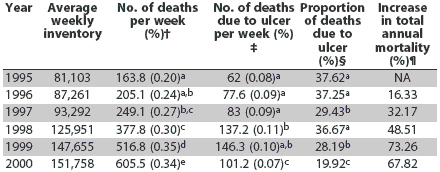
Results obtained when data were grouped on a yearly basis are shown in Table 1. The most noteworthy variation is the increase in total mortality over the study period after the emergence of PMWS. Annual mortality, which was 3.3% in 1995, increased by 73% in 1999 and by 67% in 2000. When expressed as a percentage of inventory, mortality due to gastric ulcer increased between 1995 and 1998, then decreased, reaching its lowest value, 0.07% per week, in 2000. When expressed as a percentage of total deaths, mortality due to gastric ulcer ranged from 29% to 38% in the period 1995-1999, then decreased to 20% in 2000. Before the emergence of PMWS, gastric ulcer was the most important pathological problem in the studied population.
Table 1: Weekly mortality due to all causes and due to gastric ulcer, proportion of total deaths attributed to gastric ulcer, and variation in total annual mortality in a study in the finishers of 11 commercial swine herds and in one genetic multiplier herd in Spain* during the years 1995-2000
* All herds were under the same ownership, and genetic, health, and nutritional aspects of production were relatively uniform across herds. Pigs moved into finishers at 65 +/- 3 days of age and remained for 119 +/- 7 days. Between June 1995 and December 2000, necropsies were performed on 100,783 animals. Macroscopic diagnoses were classified, including the category "ulcer" (death caused by intragastric hemorrhage, ie, stomach filled with clotted blood without other remarkable gross lesions). † Percent weekly mortality calculated as no. of deaths per week average weekly inventory. Values with no common superscript in the same column are different (Tukey's test; P < .001). ‡ Percent weekly mortality due to ulcer calculated as no. of deaths due to ulcer per week average weekly inventory. Values with no common superscript in the same column are different (Tukey's test; P < .05). § Weekly deaths due to ulcer expressed as a percentage of total deaths that week. Values with different superscripts in the same column are different (Tukey's test; P < .001). ¶ Compared with mortality in 1995 (the year when the lowest annual mortality rate was recorded during the study). NA = not applicable |
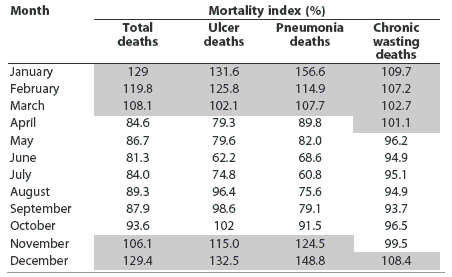
Results grouped on a monthly basis are shown in Figure 1 (total mortality per month expressed as a percentage of average inventory), Figure 2 (percentage of ulcers per month expressed as a percentage of average inventory), Figure 3 (percentage of pneumonia per month expressed as a percentage of average inventory), and Figure 4 (percentage of chronic wasting per month expressed as a percentage of average inventory). The seasonal indexes for these categories by month are shown in Table 2. The trends for total mortality (0.027), pneumonia mortality (0.001), and chronic wasting mortality (0.235) were positive (ie, prevalences increased slightly during the study period), and the trend for gastric ulcer mortality (-0.003) was negative (ie, prevalence decreased very slightly during the studied period). There was a cyclical component due to variations over the year for total mortality (P = .01), pneumonia (P = .01), and chronic wasting (P = .01), but not for gastric ulcer (P = .26). Seasonal indexes showed that maximum and minimum total mortality and mortality due to pneumonia and gastric ulcer occurred in the same months each year. Maximum mortality caused by gastric ulcer, pneumonia, and chronic wasting occurred in January, February, March, November, and December, with minimum mortality in June and July.
Figure 1: Least squares means of monthly total mortality expressed as a percentage of the average inventory for the years 1996 through 2000 in 12 commercial swine herds in Spain. Using the cyclical component of the model resulting from a classical time sequence analysis, with months numbered 1 through 12, total mortality average inventory = 0.270 + 0.119 sin (2[pi] monthi 12) + 0.041 cos (2[pi] monthi 12) (P = .047). A total of 100,783 necropsy results were performed as described in Table 1.
|
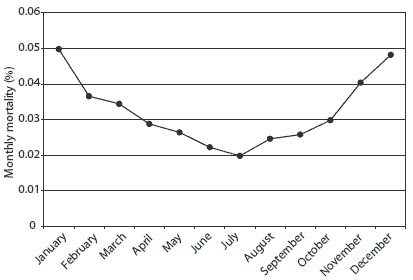
Figure 2: Least squares means of monthly mortality due to gastric ulcer expressed as a percentage of the average inventory for the years 1996 through 2000 in 12 commercial swine herds in Spain. Using the cyclical component of the model resulting from a classical time sequence analysis, with months numbered 1 through 12, gastric ulcer mortality average inventory = 0.094 + 0.0540 sin(sin 2[pi] monthi 12) + 0.007 cos (sin 2[pi] monthi 12) (P = .26). A total of 100,783 necropsy results were performed as described in Table 1.
|
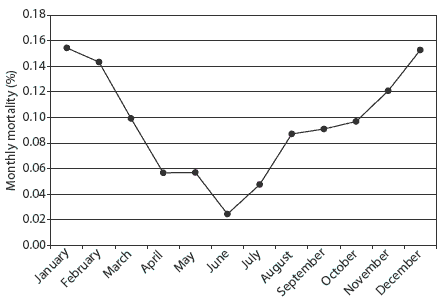
Figure 3: Least squares means of monthly mortality due to pneumonia expressed as a percentage of the average inventory for the years 1996 through 2000 in 12 commercial swine herds in Spain. Using the cyclical component of the model resulting from a classical time sequence analysis, with months numbered 1 through 12, pneumonia mortality average inventory = 0.031 + 0.02345448 sin(sin 2[pi] month12) + 0.009 cos(sin 2[pi] monthi 12) (P = .01). A total of 100,783 necropsy results were performed as described in Table 1.
|
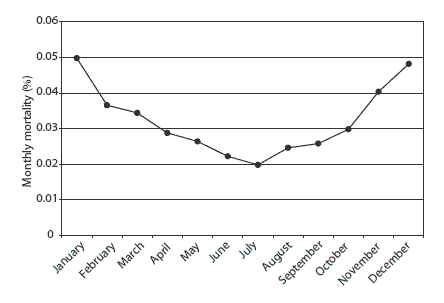
Figure 4: Least squares means of monthly mortality due to chronic wasting expressed as a percentage of the average inventory for the years 1996 through 2000 in 12 commercial swine herds in Spain. Using the cyclical component of the model resulting from a classical time sequence analysis, with months numbered 1 through 12, chronic wasting mortality average inventory = -4.547 + 0.263 sin(sin 2[pi] monthi) + 0.136 cos(cos 2[pi] monthi 12) (P = .01). A total of 100,783 necropsy results were performed as described in Table 1.
|
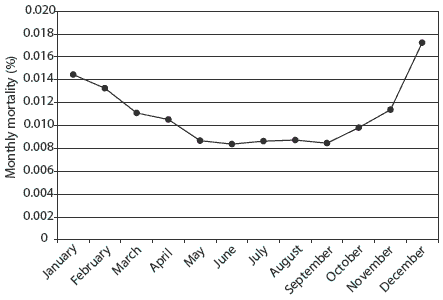
Table 2: Seasonal indexes* for monthly total mortality and for mortality due to ulcers, pneumonia, and chronic wasting in the finishers of 11 commercial swine herds and one genetic multiplier herd in Spain in the years 1996-2000
* A total of 100,783 necropsies were performed. Total mortality and mortality due to gastric ulcer, pneumonia, and chronic wasting were calculated for each month using the mean monthly inventory. Seasonal index (SI) was calculated as (corrected mean for the month mean of corrected means) x 100. The corrected mean was calculated as [(monthly mean - trend) x (number of the month -1)] 12. Trends, showing whether the parameter increased or decreased during a period, were calculated using a simple linear regression of the yearly means, expressed as least squares means. When SI >100% (shaded areas), there is an influence of month on mean yearly mortality for a parameter. |
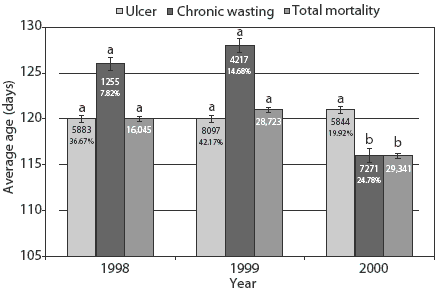
Analysis of average age at necropsy is shown in Figure 5. The average age of all animals that died during the finishing period was 120 to 121 days in 1998 and 1999, decreasing to 116 days in 2000. The average age of pigs that died due to gastric ulcer between 1998 and 2000 remained stable at 120 to 121 days, which was the age at death for total mortality in 1998 and 1999, when gastric ulcer was the main cause of death. The average age at death due to chronic wasting decreased from 128 days in 1999 to 116 days in 2000 (P < .001), but it should be noted that most of the pigs included in this category (representing 57% of animals) were necropsied in 2000, when PMWS emerged in this population.
Figure 5: Age at necropsy in 12 commercial swine herds in Spain (11 commercial finisher herds and one genetic multiplier herd) during 1998, 1999, and 2000 for all necropsied animals and for those included in the mortality categories "ulcer" and "chronic wasting." Average age at death for total mortality resembles age at death due to the current most important pathological problem, ie, gastric ulcer in 1998 and 1999 and chronic wasting (related to PMWS) in 2000. Top numbers in the bars represent the number of necropsies performed (total mortality) or the number of necropsies performed that were diagnostic for either gastric ulcers or chronic wasting, and lower numbers represent ulcer deaths or chronic wasting deaths expressed as percentages of total deaths. Average age at death due to gastric ulcer remained constant over the study period, while average age at death due to all causes and due to chronic wasting decreased substantially in 2000. Comparing years, bars with different superscripts are significantly different (Tukey's test; P < .05 for total mortality and P < .001 for chronic wasting).
|
Discussion
In this study, maximum prevalence of deaths due to gastric ulcer occurred during the cold season in the northern hemisphere, ie, November through March, with minimum prevalence during June and July. Most studies on seasonality of gastric ulcers are observational studies of gastric lesions at slaughter or at necropsy. In Deen's study (2000)2 on mortality due to intragastric hemorrhage, lowest mortality occurred in June (0.1%), in agreement with our results, but in Deen's study, the trend was completely different, with mortality becoming maximal (approximately 3.5%) during September, then progressively decreasing.
Results of studies reporting prevalence and severity of lesions at slaughter or necropsy are variable. Varga et al (1984)11 observed differences in prevalence of gastric ulcer associated with the type of feed offered to the animals. For pigs fed meal, gastric ulcer prevalence was 63% of total deaths in winter and 31% in summer, while for animals fed pelleted feed, prevalence was 76% of total deaths in winter and 99.6% in summer. Marcato and Di Guardo (1986)14 in Italy found a higher incidence of erosions and ulcers in winter, and Senk et al (1994)20 in Slovenia recorded the highest prevalence of gastric ulcers in February and the lowest during summer, with no increase in prevalence but an increase in severity of lesions in winter.21 The observations of Senk et al20 and Marcato and Di Guardo14 are in agreement with the results of our study, but it should be taken into account that there is little correlation between lesional stage of nonglandular mucosal ulceration (ie, severity) and mortality due to gastric ulcer during finishing.22 Moreover, lesional scoring criteria are subjective, as they are based on gross lesions, not histopathological assessment of lesions in the nonglandular mucosa.3 In addition, lesional scores at slaughter may be influenced by antemortem management, including length of transport, rest period, and management at the abattoir responsible for producing hyperacute lesions in the last hours of life.23-25
The relationship between season (ie, winter) and a higher prevalence of mortality caused by gastric ulcer in this study, or the higher number of gastric ulcer lesions in other studies, might be associated with the greater prevalence of respiratory disease during this season, especially when natural ventilation is used in the finishing facilities, as in this case. However, the relationship between occurrence of gastric ulcers and respiratory disease is not clear. An association has been made between a higher prevalence of gastric ulcers and the occurrence of respiratory disease in general,13,20 and with outbreaks of PRRS6 and PMWS.7-9 However, the opposite association has also been suggested, ie, a higher prevalence of respiratory disease in herds with a higher prevalence of gastric ulcers, specifically chronic and subacute ulcers.14 In fact, animals with gastric ulcers have a tenfold greater chance of developing respiratory disease,14 but it is impossible to determine which is the initial process.26 In this study, the annual monthly distribution of mortality due to pneumonia and gastric ulceration was similar, but these two variables may not be causally related.
During this study, PMWS became the main disease affecting the study population. Although affected animals usually have gastric lesions at necropsy,8 the relationship seems to be circumstantial, as with other diseases. Gastric lesions have been found positive by PCR for PCV2, the etiologic agent most likely to cause PMWS, but always in association with histiocytes, the target cells for PCV2.27 After PMWS appeared in 1999, total mortality in the study population increased, and gastric ulcer mortality decreased. Average age at death for total mortality remained constant in 1998 and 1999 and decreased in 2000, with no variations in the average age at death for gastric ulcer, suggesting that a great number of animals at risk of dying of gastric ulcers at 120 to 121 days of life died of PMWS before they reached this age. This might explain why losses due to gastric ulcer in these herds decreased while total mortality increased.
Implications
- In southeast Spain, prevalence of death due to gastric ulcers is maximal in winter and minimal in early summer, suggesting an important influence of the cold season.
- The cold season is associated with an increase in occurrence of respiratory disease, which may have an indirect effect on gastric health.
- In swine populations with a high prevalence of PMWS, it is likely that mortality caused by acute gastric ulcer will decrease as mortality due to PMWS increases, as animals at highest risk of dying of PMWS are younger than those at highest risk of dying of gastric ulcer.
Acknowledgments
The authors would like to express their gratitude to J. E. Oliva, DVM; A. Sánchez, DVM; F. Berrocal, DVM; M. Martínez, DVM; F. Tristán, DVM; J. S. Martínez, DVM; E. García; J. Bretón, DVM; F. Pardo, DVM; and F. J. Pallarès, DVM, PhD, for their technical support in diagnosis; A. Rouco, DVM, PhD, for assistance with the statistical analysis; and Jeff Zimmermann, DVM, PhD, for his assistance in preparing the manuscript.
References
1. Taylor DJ. Stomach ulcers. In: Taylor DJ, ed. Pig Diseases. 7th ed. Cambridge, United Kingdom: Book Production Consultant PLC; 1999:366-370.
*2. Deen J. Epidemiology of gastroesophageal ulcers. Proc Allen D. Leman Conf. Minneapolis, Minnesota. 2000;96-97.
3. O'Brien JJ. Gastric ulcer. In: Leman AD, Straw BE, Mengeling WL, D'Allaire S, Taylor DJ, eds. Diseases of Swine. 7th ed. Ames, Iowa: Iowa University Press; 1992:680-691.
4. Gómez S, Gómez MA, Sánchez J, Ramis G, Bernabè A. Patología digestiva por otras causas [Digestive diseases by other causes]. In: Luzan 5. Patología digestiva porcina [Porcine digestive pathology]. Porci. 1994;23:53-59.
5. Elbers ARW, Hessing MJ, Tielen MJ, Vos JH. Growth and oesophagogastric lesions in finishing pigs offered pelleted feed ad libitum. Vet Rec. 1995;136:588-590.
*6. Henry SC. Gastric ulcers. Feed management is top priority for prevention. Large Anim Vet. 1996;January-February:8-11.
7. Segalès J, Sitjar M, Domingo M, Dee S, Del Pozo M, Noval R, Sacristán C, De las Heras A, Ferro A, Latimer KS. First report of post-weaning multisystemic wasting syndrome in pigs in Spain. Vet Rec. 1997;141:600-601.
8. Harding JCS, Clarck EG. Recognizing and diagnosing postweaning multisystemic wasting syndrome (PMWS). Swine Health Prod. 1997;5:201-203.
*9. Clark EG, Harding JC. The pathology of post-weaning multisystemic wasting syndrome. Proc IPVS. Birmingham, United Kingdom. 1998;397.
*10. Segalès J, Domingo M. Porcine dermatitis and nephropathy syndrome: a porcine circovirus type 2 infection disease? Merial PMWS Symp. Melbourne, Australia. 2000;21-31.
11. Varga F, Masic V, Durica G, Kolaric S. The influence of pelleted and ground diets on the occurrence of gastric ulcers in fattening pigs. Veterinarsk Glasnik. 1984;38:291-299.
12. Senk L. Stomach ulcer in swine. 14. Seasonal occurrence. Veterinarstvo. 1984;21:201-209.
*13. Straw B, Henry S, Nelssen J, Doster A, Moxley R, Rogers D, Webb D, Hogg A. Prevalence of lesions in the pars esophagea of normal and sick pigs. Proc IPVS. The Hague, the Netherlands. 1992;386.
*14. Marcato PS, Di Guardo G. Researches on gastric lesions in 3057 pigs. Proc IPVS. Barcelona, Spain. 1986;381.
*15. Friendship R, Melnichouck S, Dewey C. Ulceration of the pars oesophagea of swine. Proc AASV. St Louis, Missouri. 1999;409-411.
*16. Ball RO, Friendship RM, Bubenik GA, Ayles HL. Effect of dietary melatonin supplementation on gastric ulcers in swine. Proc IPVS. Bologna, Italy. 1996;694.
17. Council Directive of 19 November 1991 laying down minimum standards for the protection of pigs (91/630/EEC). Available at : http://europa.eu.int /comm/food/animal/welfare/references_en.htm.
*18. Sorden SE. Update on porcine circovirus and postweaning multisystemic wasting syndrome (PMWS). Swine Health Prod. 2000;8:133-136.
19. Pallarès FJ, Halbur PG, Opriessing T, Sorden SD, Villar D, Janke BH, Yaeger MJ, Larson DJ, Schwartz KJK, Yoon KJ, Hoffman LJ. Porcine circovirus type 2 (PCV-2) coinfections in US field cases of postweaning multisystemic wasting syndrome (PMWS). J Vet Diagn Invest. 2002;14:515-519.
*20. Senk L, Pogacnik M, Curk A, Vengust M, Juntes Polona. Relationship between the occurrence of gastric ulcers and pneumonia in pigs. Proc IPVS. Bangkok, Thailand. 1994;480.
21. Fugate WH, Pickett RA, Perry TW, Curtin TM. Influence of feed preparation on performance and occurrence of ulcers in swine. J Anim Sci. 1965;24:881.
22. Ramis G. Estudio multifactorial de la úlcera gastroesofágica porcina: aspectos genèticos, nutricionales, de manejo y sanitarios [Multifactorial study of porcine esophagogastric ulcer: genetic, nutritional, management and sanitary factors] [Phd thesis]. Murcia, Spain: University of Murcia; 2002.
*23. Muggenburg BA, Kowalczyk T, Hoekstra WG, Grummer RH. Effect of certain management variables on the incidence and severity of gastric lesions in swine. Vet Med Small Anim Clinic. 1967;62:1090-1094.
24. Penny RHC, Hill FWG. Abattoir observations of ulceration of the stomach (pars oesophagea) of the pig. Vet Ann. 1973;55-60.
*25. Guise HJ, Penny RHC, Abbott TA, Weeding CM. Do systems of handling and transport influence the rate of gastric emptying? Proc IPVS. The Hague, the Netherlands. 1992;384.
26. Kavanagh N. Gastric ulcers in pigs. In Pract. 1994; July:209-213.
*27. Pastor J, Segalès J, Cuenca R, Balasch M. Gastric ulcers and hematological disorders in post-weaning multisystemic wasting syndrome (PMWS) affected pigs. Proc IPVS. Birmingham, United Kingdom. 1998;397.
* Non-refereed references.