
Original research |
Peer reviewed |
Assessment of a group-housing system for gestating sows: Effects of space allowance and pen size on the incidence of superficial skin lesions, changes in body condition, and farrowing performance
Evaluación de un sistema de alojamiento en grupo para hembras gestantes: Efecto del espacio y tamaño de corral en la incidencia de lesiones en piel, cambios en condición corporal y desempeño al parto
Évaluation d'un système d'hébergement en groupe pour les truies en gestation: Effets de l'allocation de l'espace et de la taille des enclos sur l'incidence des lésions cutanées superficielles, la modification de l'état corporel des truies en gestation, et le rendement lors du cochonnage
M. J. Séguin, MSc; D. Barney, PhD; T. M. Widowski, PhD
MJS, TMW: Department of Animal and Poultry Science, University of Guelph, Guelph, Ontario, Canada. DB: Toronto Zoo, Toronto, Ontario, Canada. Corresponding author: Dr T. M. Widowski, Department of Animal and Poultry Science, University of Guelph, Guelph, Ontario, Canada N1G 2W1; Tel: 519-824-4120, ext 52408; Fax: 519-836-9873; E-mail: twidowsk@uoguelph.ca.
Cite as: Séguin MJ, Barney D, Widowski TM. Assessment of a group-housing system for gestating sows: Effects of space allowance and pen size on the incidence of superficial skin lesions, changes in body condition, and farrowing performance. J Swine Health Prod. 2006;14(2):89-96.
Also available as a PDF.
SummaryObjectives: To determine short-term effects of converting a gestation barn from individual stalls to group housing and effects of manipulating space allowance and pen size on body condition, farrowing performance, and skin lesions. Materials and methods: Pregnant multiparous Yorkshire sows (N = 285) were housed in static groups of 11 to 31 sows in SMALL (34.0 to 49.5 m2) or LARGE pens (72.5 to 74.5 m2) with 2.3 m2 (n = 2,2), 2.8 m2 (n = 3,2) or 3.2 m2 (n = 4,2) per sow. A reference population of 98 sows was housed in gestation stalls. Sows were scored for body condition upon entering and leaving their respective housing treatments. Shoulder skin lesions were assessed 24 hours premixing, 24 hours postmixing, and weekly thereafter for 5 weeks. Liveborn piglets, stillborn piglets, and individual piglet birth weights were recorded for each sow. Results: Body condition was not affected by group housing at any space allowance or pen size (P > .05). Group-housed sows had substantial numbers of skin lesions 24 hours postmixing, but these were not affected by space allowance or pen size (P > .05), and they decreased significantly over time (P < .01). Group-housed sows had larger litter sizes (P < .05) and slightly heavier piglets (P < .05) than sows in stalls. Implications: The conversion from individual stalls to group housing did not affect body condition or reduce reproductive performance of sows in this herd. Shoulder scratches were a short-term consequence of aggression that occurs after mixing. | ResumenObjetivos: Determinar los efectos a corto plazo de convertir un edificio de gestación de alojamiento individual a alojamiento grupal y los efectos de manipular el espacio y el tamaño de corral sobre la condición corporal, desempeño al parto, y lesiones en piel. Materiales y métodos: Se alojaron hembras multíparas gestantes Yorkshire (N = 285) en grupos estáticos de 11 a 31 hembras en un corral PEQUEÑO (34.0 a 49.5 m2) ó GRANDE (72.5 a 74.5 m2) con 2.3 m2 (n = 2,2), 2.8 m2 (n = 3,2), ó 3.2 m2 (n = 4,2) por hembra. Una población de referencia de 98 hembras se alojó en jaulas. Se calificaron la condición corporal al entrar y al salir de su tratamiento respectivo de alojamiento. Las lesiones en piel en los hombros se valoraron 24 horas antes de la mezcla, 24 horas después, y posteriormente cada semana por 5 semanas. Se registraron los lechones nacidos vivos y muertos y el peso individual de cada lechón de cada hembra. Resultados: La condición corporal no se afectó por el alojamiento en grupo en ninguno de los diferentes espacios permitidos o tamaño de corral (P > .05). Las hembras alojadas en grupos tuvieron más lesiones en piel 24 horas después de la mezcla, pero éstas cambiaron con relación al espacio o tamaño de corral (P > .05) y disminuyeron de manera significativa con el tiempo (P < .01). Las hembras alojadas en grupos tuvieron un mayor tamaño de camada (P < .05) y lechones ligeramente más pesados (P < .05) que las hembras en jaula. Implicaciones: La conversión de jaulas individuales a alojamiento en jaulas no afectó la condición corporal o el comport-amiento reproductivo de las hembras en esta piara. Los rasguños en los hombros fueron solo de corto tiempo como resultado de las agresiones que ocurren después del mezclado. | ResuméObjectifs: Déterminer les effets à court terme du passage des stalles individuelles à un espace d'hébergement en groupe ainsi que les effets de la modification de l'allocation de l'espace et de la taille des enclos sur l'état corporel des truies, le rendement au moment du cochonnage, et les lésions cutanées. Matériel et méthodes: Des truies Yorkshire multipares en gestation (N = 285) ont été parquées par groupes statiques variant entre 11 et 31 truies dans de PETITS enclos (34.0 à 49.5 m2) ou dans de GRANDS enclos (72.5 à 74.5 m2) où chaque truie disposait soit de 2.3 m2 (n = 2,2), de 2.8 m2 (n = 3,2), ou de 3.2 m2 (n = 4,2). Une population de 98 truies logées dans des stalles de gestation individuelles a servi de référence. On a évalué l'état corporel des truies au moment où ces dernières arrivaient et quittaient le nouveau mode d'hébergement. On a observé l'incidence de lésions cutanées 24 heures avant et 24 heures après le regroupement des truies et ensuite à toutes les semaines pendant 5 semaines. On a enregistré, pour chacune des truies, le nombre de porcelets nés vivants et le nombre de porcelets mort-nés ainsi que le poids de chacun des porcelets. Résultats: L'état corporel des truies n'a pas été affecté par l'hébergement en groupe ni par l'espace qui leur était alloué (P > .05). Les truies hébergées en groupe présentaient un grand nombre de lésions cutanées 24 heures après leur introduction dans le groupe, mais le nombre de ces lésions n'était pas modifié par l'allocation de l'espace ou la taille de l'enclos (P > .05) et elles régressaient ensuite de manière significative au fil du temps (P < .01). Les truies hébergées en groupe ont eu des portées plus importantes (P < .05) et les porcelets étaient un peu plus lourds (P < .05) par rapport aux truies hébergées dans des stalles individuelles. Implications: Le passage des stalles individuelles à un hébergement en groupe n'a pas eu d'impact sur l'état corporel et n'a pas réduit le rendement gestationnel des truies de ce troupeau. Les égratignures aux épaules se sont avérées être une conséquence à court terme des agressions liées à l'hébergement en groupe. |
Keywords: swine, group
housing, gestating sows, body condition, farrowing performance
Search the AASV web site
for pages with similar keywords.
Received: February
9, 2005
Accepted: May
25, 2005
The impact of group housing on sow reproduction and well-being is gaining interest, with the increasing trend towards housing pregnant sows in groups rather than individual stalls. The shift away from individual housing is primarily driven by animal welfare concerns, as physical restriction of sows in stalls allows them little opportunity to interact socially.1 However, when sows are housed in individual stalls, feed intake can be controlled, promoting physical uniformity within the herd.2 In addition, aggression among sows can be reduced, although they may suffer from unresolved social conflict with neighboring sows.3 Alternatively, sows may be housed in stable groups (ie, individuals within a group are housed together until farrowing, with no new sows being introduced) or in large dynamic groups (ie, sows are removed or introduced periodically according to farrowing dates).4
Housing sows in groups enables them to interact with one another and perform other natural behavior patterns.1 However, group-housed sows may suffer from social and nutritional stressors which may affect their reproductive performance.2,5 There is much debate as to the best group system to adopt, as there is no single representative group-housing system or management structure.4 Factors such as herd size, feeding method, and social-group management dictate pen designs and group sizes.4 Each system design controls feed intake and aggression to a different degree. In common systems used, sows may be fed competitively on the floor or individually, either in free access stalls or electronic sow-feeding systems.4
In group systems, the first few days after mixing may be critical for sow well-being. Newly mixed sows typically engage in aggressive behavior which leads to formation of a social hierarchy.6,7 The majority of fights occur within the first few hours after mixing, resulting in lesions such as wounds and superficial lesions (scratches) to the head and shoulders.6,7 The number of lesions sustained is correlated with the incidence of aggressive interactions.8-11 Therefore, scoring of skin lesions can be used as an indicator of the well-being of a group of sows.12 The National Pork Board's Swine Welfare Assurance Program (SWAP) uses this approach to evaluate the welfare of sows on farms.13
Various researchers have attempted to determine the impact of various management procedures used in group-housing systems on the well-being of pregnant sows.8,14-16 The incidence and duration of aggressive encounters among sows, as well as lesions sustained due to fighting, may be reduced by manipulating factors such as space allowance and pen size,8,14,15 visual and physical barriers,17,18 and feeding method.8,9,16,18 In floor-feeding systems, mediating aggression becomes paramount, as feed is routinely restricted to limit excessive weight gain, and sows therefore aggressively compete for the limited food supplies.19 More importantly, dominant sows may consume more feed than subordinate sows, causing subordinates to suffer from undernourishment and loss of body condition during gestation.16 The highly variable and complex nature of group systems may compromise not only the well-being of sows but also their reproductive performance.5
Many producers are becoming interested in converting their gestation systems from individual stalls to group housing, and there is a need for practical information regarding the possible effects of competition resulting from floor feeding on sow performance and well-being. In 2001, the University of Guelph Arkell Swine Research Station converted one of their two gestation rooms from an individual dry-sow stall system to group housing with a floor feeding system. The facility had been operational for 1 year before this study was initiated. Sows in this system were housed at a space allowance of 3.2 m2 per sow;20 however, effects of housing sows at higher densities, which are more likely to be used for commercial application, were unknown. The objective of this study was to determine the short-term effects on body condition, farrowing performance, and incidence of skin lesions when sows in this group-housing system were managed using three different space allowances and two different pen sizes. Results were compared to data from sows in the same herd housed in individual gestation stalls.
Materials and methods
Facility design and management
The layout of the group-housing facility is shown in Figure 1. Approximately one third of each pen had slatted flooring, where hanging drinkers and overhead sprinklers were located. The remaining floor area was solid concrete sloping away from the walls and towards the dunging area. The unique feature of the system was the half-walls (approximately 1 m high) made of concrete block that subdivided the pens. Feed was dropped from two separate metering devices suspended from the ceiling within each section, resulting in feed being spread on the floor in an area 1 m in diameter. The half-walls were designed to create several distinct feeding areas, facilitating better access to feed for subordinate sows, and were also intended to provide "hiding" areas and increase perimeter space where sows could lie against the wall.
Figure 1: Layout of the group-housing area in the University of Guelph Arkell Swine Research Station (Guelph, Ontario, Canada). Floor areas are indicated for the two LARGE pens on the left and the four SMALL pens on the right. "Walls" are concrete block half-walls approximately 1 m high. "Feed drop" indicates floor areas 1 m in diameter where feed was delivered from metering devices suspended from the ceiling.
|
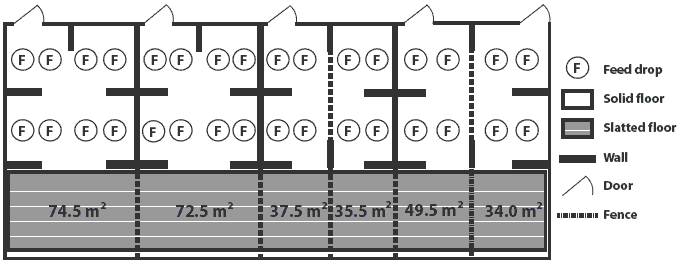
The facility was originally designed with four large pens providing 70 m2 to 75 m2 of floor area (LARGE pens). However, for the purpose of this experiment, two of the LARGE pens were divided in half to create four SMALL pens with floor areas of 34.0 m2, 35.5 m2, 37.5 m2, and 49.5 m2, respectively. The two remaining LARGE pens provided 72.5 m2 and 74.5 m2 of floor area (Figure 1). Sows had free access to water via swing drinkers (Bosman Agri Inc, Moorefield, Ontario) at the recommended allowance of six sows per nipple.20
An adjacent room in the same barn contained 108 standard gestation stalls. Each stall had a space allowance of 2 m2 and was furnished with a stainless steel sow feeder and a nipple drinker. An automatic feeding system dropped feed into the feeders.
All sows were fed approximately 2.5 kg per day of a standard pelleted sow diet between 7:30 am and 8:30 am. Sows were moved to the farrowing room 1 week prior to farrowing. Lights were on from 7:30 am to 4:00 pm in both rooms.
Animals and experimental design
Two hundred and eighty-five pregnant multiparous Yorkshire sows (average parity 2.4 +/- 0.8; average bodyweight 205.9 +/- 1.8 kg), ranging from 33 to 76 days bred (average 43.0 +/- 0.42 days), were randomly assigned to groups. Pregnancy was confirmed before sows were mixed. Concurrently, 98 pregnant sows (average parity 2.8 +/- 0.2; average bodyweight 206.4 +/- 3.4 kg) were randomly assigned to individual stalls and served as a reference population for comparison. During previous pregnancies, sows had been housed either in the group-housing system at 3.2 m2 per sow or in individual gestation stalls.
Group-housed sows were kept in either SMALL pens at 2.3 m2 (n = 2), 2.8 m2 (n = 3), or 3.2 m2 (n = 4) per sow or LARGE pens at 2.3 m2 (n = 2), 2.8 m2 (n = 2), or 3.2 m2 (n = 2) per sow. In order to accommodate the three different space allowances in pens with different floor areas (Figure 1), group sizes ranged from 11 to 19 sows in the SMALL pens and 22 to 31 sows in the LARGE pens.
Experimental procedures were approved by the Animal Care Committee of the University of Guelph under the guidelines of the Canadian Council on Animal Care.
Data collection
All sows were weighed and visually scored for body condition (1 = emaciated; 2 = thin; 3 = ideal; 4 = fat; 5 = obese) prior to entering and upon leaving their assigned gestation-housing treatment.21 The numbers of liveborn piglets, stillborn piglets, and mummified fetuses were recorded for each sow. Liveborn piglets were weighed within 12 hours of birth. Any fully developed piglets found dead in the farrowing crate within this period were recorded as stillborn.
Skin lesions were assessed for each sow using definitions outlined in the SWAP program.13 A scratch was defined as a superficial lesion not penetrating the skin. A scoring system for skin scratches was developed following methods described by Hodgkiss and co-workers22 and de Koning.23 Individual shoulders were assigned numeric values (0 = no scratches; 1 = < 5 scratches; 2 = 5-10 scratches; 3 = > 10 scratches) 24 hours prior to mixing, 24 hours after mixing, and on a weekly basis thereafter for 5 weeks. Shoulder scratches of sows in individual stalls were scored weekly. The sum of both shoulder scores was calculated. Minimum lesion score for an individual sow was 0, and maximum was 6. Qualitative features of the scratches were not documented.
Statistical analyses
In order to test for the effects of space allowance and pen size, data from group-housed sows were analyzed as a 2 x 3 factorial arrangement with sow group nested within treatment using the Proc GLM procedure in SAS version 8.1 (SAS Institute Inc, Cary, North Carolina). Group was the experimental unit in all analyses. Data were tested for normality using the Proc Univariate procedure of SAS and for homogeneity of variance across treatment groups using Brown and Forsythe's modified Levine's test. Data were transformed when necessary. Due to the differences in group sizes, a random selection of 11 sows per group (smallest group size) was used for analyses. However, all analyses were duplicated using data from all 285 sows in the study. When results were compared, no differences in significance were found; therefore, the reported means and significance values reflect data from all 285 sows.
The effects of space allowance and pen size on body condition scores and farrowing performance were evaluated using a general linear model analysis. Group means and standard deviations within groups were analyzed for body condition entering (BCin) and leaving (BCout) and the absolute change in body condition (BCc = [BCin - BCout]). Parity, days pregnant at the time of mixing, and the number of days of gestation spent in the group were included as covariates in the analyses of body condition parameters. Covariates used in the analysis of the number of piglets born alive were the number of days of gestation spent in the group, BCout, parity, farrowing season, and total litter size. Covariates used in the analysis of the average piglet birth weight were the number of days of gestation spent in the group, total litter size, and parity. Seasons were defined as quarters of the year: January to March, April to June, July to September, and October to December. The numbers of stillborns and mummies were not statistically analyzed, as the data sets consisted mainly of zeros.
Mean lesion score and the percentage of sows within a group having each of four categories of lesion scores (NONE, score 0; MILD, score 1 or 2; MODERATE, score 3 or 4; and MULTIPLE, score 5 or 6) were analyzed using the GLM with repeated measures. A second analysis using the GLM procedure was performed to determine if there were effects of space allowance or pen size on percentages of sows exhibiting the different categories of lesion scores at 24 hours after mixing. Initial lesion score (24 hours premixing) was used as a covariate for both analyses.
A final analysis was performed to compare body condition and farrowing performance parameters between housing systems (groups versus individual stalls). The least squares mean for each parameter for sows housed in stalls was used as a reference value. Because analyses of variance indicated no differences due to space allowance or pen size for any variable, data from all groups were used in a single analysis for each parameter. The difference between the reference value and the mean value from each of the sow groups was calculated, and Student's t-tests were used to determine whether those differences were equal to zero. For all statistical tests, a P value of < .05 was considered to be significant.
Results
There were no significant interactions between main effects (space allowance and pen size) for any of the variables measured (P > .05).
Body condition
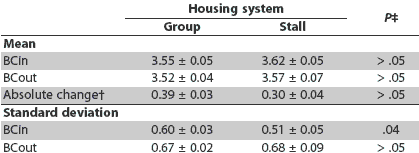
The means and standard deviations for BCin, BCout, and BCc were not significantly different for sows housed at different space allowances or in different pen sizes. Mean BCout scores for sows housed at 2.3 m2, 2.8 m2, and 3.2 m2 were 3.49 +/- 0.09, 3.45 +/- 0.09, and 3.60 +/- 0.06, respectively (P > .05). For sows in SMALL and LARGE pens, BCout scores were 3.57 +/- 0.06 and 3.44 +/- 0.06 (P > .05). Treatment also had no effect on the mean absolute changes in body condition scores, which were 0.44 +/- 0.05, 0.32 +/- 0.05, and 0.41 +/- 0.05 for space allowances of 2.3 m2, 2.8 m2, and 3.2 m2, respectively (P > .05); and 0.43 +/- 0.03 and 0.32 +/- 0.05 for SMALL and LARGE pen sizes, respectively (P > .05). There were no differences in values for body condition between sows in groups and sows in stalls with one exception (Table 1). By chance, the SD for body condition scores within groups of sows that entered the group-housing system was greater than that of sows in stalls. However, at the end of gestation, variability in body condition scores was similar for sows in stalls and groups.
Table 1: Means (+/- SEM) and mean standard deviations (+/- SEM) of body condition scores within a group for sows housed in groups or individual gestation stalls*
* A total of 285 sows were housed in 15 groups. A reference population of 98 sows were housed in individual stalls in the same research facility. All sows were weighed and visually scored for body condition 24 hours prior to entering (BCin) and within 24 hours of leaving (BCout) their assigned gestation housing treatment (1 = emaciated; 2 = thin; 3 = ideal; 4 = fat; 5 = obese) (Patience et al, 199521). † The absolute change in body condition was calculated as (BCin - BCout). ‡ The least squares mean for each parameter for sows housed in stalls was used as a reference value. The difference between the reference value and the mean value from each sow group was calculated, and Student's t-tests were used to determine whether those differences were equal to zero. |
Farrowing performance
Mean numbers of liveborn piglets per litter and average piglet birth weights were similar for sows at the three space allowances: 10.54 +/- 0.14 piglets, 1.59 +/- 0.01 kg; 10.26 +/- 0.33 piglets, 1.61 +/- 0.03 kg; and 10.25 +/- 0.46 piglets, 1.56 +/- 0.03 kg for the space allowances of 2.3 m2, 2.8 m2, and 3.2 m2, respectively (P > .05) and 10.38 +/- 0.32 piglets, 1.57 +/- 0.02 kg and 10.25 +/- 0.21 piglets, 1.60 +/- 0.03 kg for the SMALL and LARGE pen sizes, respectively (P > .05). Group-housed sows had larger litters and slightly heavier piglets than the reference population housed in stalls (Table 2). Sows in groups had 1.06 +/- 0.07 stillborn piglets per litter while those in stalls had 1.37 +/- 0.24. Sows in groups had 0.21 +/- 0.04 mummified fetuses per litter while those in stalls had 0.38 +/- 0.08. Data for stillborns and mummified fetuses were not analyzed because the data sets consisted mainly of zeros.
Table 2: Mean (+/- SEM) number of liveborn piglets per litter and individual piglet birth weight for sows housed in groups or individual gestation stalls*
* Sows described in Table 1. † The least squares mean for each parameter for sows housed in stalls was used as a reference value. The difference between the reference value and the mean value from each sow group was calculated, and Student's t-tests were used to determine whether those differences were equal to zero. |

Lesion scores
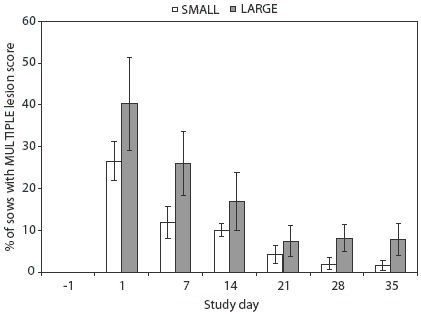
The mean percentages of sows within a group assigned one of the four lesion-score categories (NONE, MILD, MODERATE, and MULTIPLE) 24 hours after mixing at the different space allowances and pen sizes are presented in Table 3. Although the highest percentages of sows with MODERATE and MULTIPLE scores occurred in groups housed at the smallest space allowances, there were no significant differences due to treatment. The mean group lesion scores were also not affected by space allowance (Figure 2) or pen size (Figure 3), but decreased over time (linear, P < .01) in all groups. Similarly, the percentages of sows within groups with MULTIPLE scratches decreased in curvilinear fashion over time, but were not affected by space allowance (Figure 4) or pen size (Figure 5). By 2 weeks after mixing, the percentage of sows in groups with MULTIPLE scratches was less than half of that observed on the day after mixing, and by the end of the first month, fewer than 5% had MULTIPLE scratches. Mean lesion score was 0.60 +/- 0.09 overall for sows in individual stalls, which was similar to values observed the day prior to mixing for sows housed in groups.
Table 3: Mean (+/- SEM) percentages of sows in a research facility assigned one of four categories of skin lesion scores 24 hours after groups were mixed*
* Sows were housed at floor space allowances of 2.3 m2, 2.8 m2, or 3.2 m2, in groups of 11 to 19 sows in SMALL pens (34.0 m2, 35.5 m2, 37.5 m2 and 49.5 m2) and 22 to 31 sows in LARGE pens (72.5 m2 and 74.5 m2). Pen layout is illustrated in Figure 1. † Superficial skin lesions (scratches) on individual shoulders were assigned numeric values: 0 = no scratches; 1 = < 5 scratches; 2 = 5 - 10 scratches; 3 = > 10 scratches. ‡ Analyses of variance using GLM were used to test effects of space allowance, pen size, and their interaction (P > .05). |

Figure 2: Mean (+/- SEM) group skin lesion scores assigned to sows on the days before and after groups were established on Day 0 (mixing) at floor space allowances of 2.3 m2, 2.8 m2, and 3.2 m2, and weekly for 5 weeks after mixing (ANOVA; linear, P < .01; space allowance, P > .05). Scoring system described in Table 3.
|
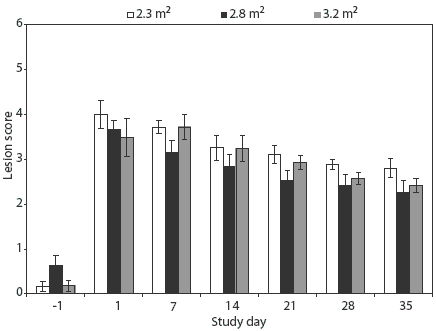
Figure 3: Mean (+/- SEM) group skin lesion scores assigned to sows housed on the days before and after groups were established on Day 0 (mixing) in SMALL and LARGE pens (defined in Figure 1), and weekly for 5 weeks after mixing (ANOVA; linear, P < .01; pen size, P > .05). Scoring system described in Table 3.
|
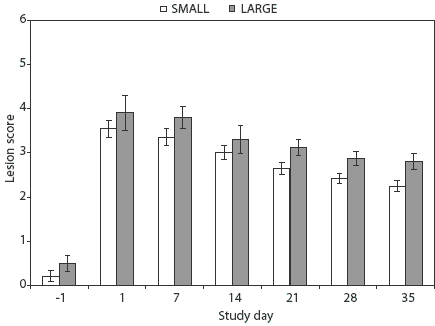
Figure 4: Mean (+/- SEM) percentages of sows within a group assigned a MULTIPLE lesion score when housed at floor space allowances of 2.3 m2, 2.8 m2, and 3.2 m2. Sows were scored on the days before and after groups were established on Day 0 (mixing), and weekly for 5 weeks after mixing (ANOVA; quadratic, P < .01; space allowance, P > .05). Scoring system described in Table 3.
|
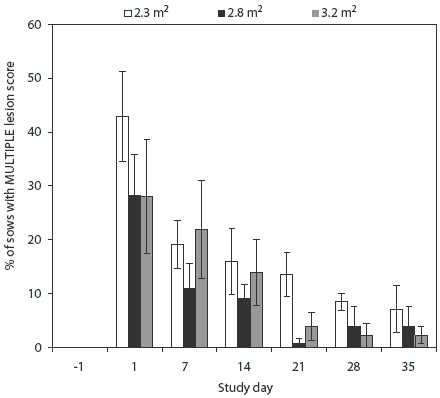
Figure 5: Mean (+/- SEM) percentages of sows within a group assigned a MULTIPLE lesion score when housed in SMALL and LARGE pen sizes (defined in Figure 1). Sows were scored on the days before and after groups were established on Day 0 (mixing), and weekly for 5 weeks after mixing (GLM with repeated measures; quadratic P < .01; space allowance, P > .05). Scoring system described in Table 3.
|
Discussion
One of the main concerns about housing sows in groups, and in particular when floor-feeding systems are used, is the variation in body condition that may occur as a result of lack of control over individual feed intake.16 Within the limits of the experimental parameters tested in this study, housing sows at lower space allowances or pen sizes did not affect the mean body condition score or increase the variability in body condition within groups. In addition, there were no differences in body condition score whether sows were housed in groups or in stalls. These results suggest that all sows in this group-housing system had access to their full ration. There are several possible explanations. Firstly, body condition scores observed in our study indicate that the sows were being overfed. Ideally, gestating sows should have body condition scores between 2.5 and 3.0 at farrowing,21 but the sows in our study averaged one half to a full point higher. Had the sows been managed on a more restrictive regimen, the level of competition over feed and variability in body condition might have been greater.
Secondly, the pen design in this facility ensured that feed was evenly distributed in different feeding areas by multiple dump feeders. Higher-ranking sows are more likely to defend distinct feed piles against subordinate sows,16 resulting in unequal feed intake. Because this system was originally designed with LARGE pens, there was some concern that dividing pens in half would provide more opportunity for dominant sows to defend feed piles by blocking the passage between feeding areas, and would thus result in more variation in body condition within SMALL pens. However, this was not observed.
Another major concern about housing sows in groups is aggression. Most fighting occurs during the first few days after mixing, when sows establish their social hierarchy.6,7 Although fighting behavior was not specifically measured in this study, it has been reported that the level of fighting is proportional to the number of shoulder scratches,8-10 and this was confirmed for sows in this group-housing system in another study.11 The current study demonstrated no significant effects of space allowance or pen size on mean lesion score, although the percentage of sows within a group exhibiting a MULTIPLE lesion score 24 hours after mixing was numerically but not statistically higher for sows housed at 2.3 m2 than at 2.8 m2 or 3.2 m2 per sow.
The relationship between space allowance, aggression, and injury is not straightforward. While Weng et al15 reported that, for a group of six sows, increasing space allowance from 2.0 m2 to 3.6 m2 per sow decreased the incidence and severity of shoulder scratches, Barnett et al8 reported that more restrictive space allowances (0.98 m2 versus 1.98 m2 per gilt) interfered with normal behavior patterns, resulting in reduced aggression. Furthermore, Edwards et al17 showed that the number of interactions increased when groups were given more space (3.7 m2 versus 6.1 m2), although the severity of fight-related injuries was reduced due to the animal's ability to escape. As in our study, Barnett et al14 found no change in the number of lesions when groups of four ovariectomized gilts were mixed in pens providing 1.4 m2 versus 3.4 m2 per sow. Differences in results among studies are likely due to the interactions among space allowance, pen size, and group size. McGlone and Newby24 evaluated groups of 10, 20, and 40 finisher pigs at constant space allowances and determined that the amount of available free space (ie, total floor space not occupied by a pig at any time) increases as group sizes increase. Additionally, greater inter-animal distances are possible in pens accommodating larger group sizes, corresponding with a decrease in aggression or scratches because the animals can effectively avoid agonistic encounters.
Shape of the pen also influences inter-animal distance and aggression among sows.25,26 For example, Barnett et al14 showed that there was significantly less aggression when sows were mixed in small rectangular pens (1.4 m2 per sow) compared to square pens that provided the same space allowance. Flight distances after aggressive encounters average approximately 2.5 m, but some sows may be pursued up to 20 m if given the space.27 Greater inter-animal distances were possible in our LARGE pens, thereby enabling sows to more easily avoid confrontation than in SMALL pens. However, our results indicate that a numerically higher percentage of sows housed in LARGE pens showed evidence of MULTIPLE scratches 24 hours post mixing compared to sows housed in SMALL pens. Similarly, mean lesion scores were consistently but not statistically greater in LARGE than in SMALL pens over time. Increasing group size, up to a certain point, results in higher levels of aggression because of increased general activity and the potential for more encounters among animals.28,29 In our study, group size was confounded with main treatment effects, and because group sizes were not replicated within treatment, it was impossible to include group size in our statistical models. Therefore, we cannot determine whether group size influenced our results.
When lesion scores are used to assess the welfare of sows in groups, it is important to consider the length of time that the sows have been housed together relative to time of scoring. Our study clearly shows that most scratches were the result of mixing, and that they decreased significantly over a short period of time. Previous work with this same herd showed reductions in aggressive behavior over the first 48 hours after mixing.11 This time course also suggests that scratches did not result from chronic aggression due to competition over feed, thereby supporting our data on body condition parameters. Thus, these scratches are of short-term consequence and may not be indicative of compromised sow welfare in the long term.
A final concern of housing sows in groups is the impact that social and nutritional stress may have on reproductive performance.5 It is impossible to make simple comparisons between group and gestation-stall housing because of the wide range of management systems and factors that can affect farrowing performance. Litter size has been reported to be reduced,5,30,31 increased,32,33 or unaffected34-36 by group housing compared to housing in individual stalls. Similarly, birth weights of piglets born to sows housed in groups have also been reported to be lower37 or higher34,36 than those of piglets born to individually housed sows.
It has been suggested that confinement and lack of exercise may reduce the reproductive performance of a sow. Housing sows in groups improves their cardiovascular fitness38 as well as their muscle weight and bone strength.39 Sows that exercise during gestation tend to farrow faster and have shorter birthing times.40 A shorter farrowing interval has been associated with a lower incidence of stillborn piglets.41 In our study, sows housed in groups had significantly more liveborn piglets and slightly heaver piglets than the reference population in stalls. Although we could not test for differences between housing treatments, the numerical value for stillborn piglets was 33% lower for sows in groups compared to that of sows in stalls. However, it should be kept in mind that our data were generated from a relatively small number of sows in a single herd over a period of 1 year.
There are few published reports on the effects of space allowance, pen size, or group size on farrowing performance. Hemsworth et al42 suggested that there may be reproductive advantages to housing sows at 3 m2 versus 2 m2 per sow. Taylor et al28 showed that housing sows at a constant space allowance (2 m2 per sow) but in different group sizes (5, 10, 20, and 40 sows per group) had no effect on production parameters, including litter size and prenatal and perinatal mortality. We found no effects of space allowance or pen size on farrowing performance. It is important to note that in our study, all sows were confirmed pregnant and placentation had occurred before the sows were mixed into groups.
Implications
- Under the conditions of this study, a gestation barn can be converted from individual stalls to a group-housing system for sows confirmed pregnant without compromising body condition or reproductive performance.
- In this group-housing facility, shoulder scratches were a short-term consequence of aggression that occurs after mixing.
Acknowledgements
This research was funded by grants from Ontario Pork, Canadian Adaptation and Rural Development Small Project Initiatives Fund, and the Ontario Ministry of Agriculture and Food. The authors would like to thank Dr M. Quinton for statistical advice and the staff at the Arkell Swine Research Station for their technical assistance.
References
1. Gonyou HW. The social behaviour of pigs. In: Keeling LJ, Gonyou HW, eds. Social Behaviour in Farm Animals. Wallingford, UK: CABI International; 2001:147-176.
2. Barnett JL, Hemsworth PH, Cronin GM, Jongman EC, Hutson GD. A review of the welfare issues for sows and piglets in relation to housing. Aust J Agric Res. 2001;52:1-28.
3. Jensen P. Effects of confinement on social interaction patterns in dry sows. Appl Anim Behav Sci. 1984;12:93-101.
*4. Gonyou HW. Group housing: Alternative systems, alternative management. Adv Pork Prod. 2003;14:101-107.
5. Kongsted AG. Stress and fear as possible mediators of reproduction problems in group housed sows: A review. Acta Agric Scand Sect A, Anim Sci. 2004;54:58-66.
6. Arey DS. Time course for the formation and disruption of social organisation in group-housed sows. Appl Anim Behav Sci. 1999;62:199-207.
7. Mount NC, Seabrook MF. A study of aggression when group housed sows are mixed. Appl Anim Behav Sci. 1993;36:377-383.
8. Barnett JL, Hemsworth PH, Cronin GM, Newman EA, McCallum TH, Chilton D. Effects of pen size, partial stalls and method of feeding on welfare-related behavioural and physiological responses of group-housed pigs. Appl Anim Behav Sci. 1992;34:207-220.
9. Barnett JL, Cronin GM, McCallum TH, Newman EA. Effects of food and time of day on aggression when grouping unfamiliar adult pigs. Appl Anim Behav Sci. 1994;39:339-347.
10. Barnett JL, Cronin GM, McCallum TH, Newman EA, Hennessy DP. Effects of grouping unfamiliar adult pigs after dark, after treatment with amperozide and by using pens with stalls, on aggression, skin lesions and plasma cortisol concentrations. Appl Anim Behav Sci. 1996;50:121-133.
11. Séguin MJ, Friendship RM, Kirkwood RN, Zanella AJ, Widowski TM. Effects of boar presence on agonistic behavior, shoulder scratches and stress response of bred sows at mixing. J Anim Sci. In press.
12. Leeb B, Leeb C, Troxler J, Schuh M. Skin lesions and callosities in group-housed pregnant sows: Animal-related welfare indicators. Acta Agric Scand Sect A, Anim Sci. 2001;30(Suppl):82-87.
*13. Swine Welfare Assurance Program. CWP #3 Animal Observation. Des Moines, Iowa: National Pork Board; 2003:12-17.
14. Barnett JL, Cronin GM, McCallum TH, Newman EA. Effects of pen size/shape and design on aggression when grouping unfamiliar adult pigs. Appl Anim Behav Sci. 1993;36:111-122.
15. Weng RC, Edwards SA, English PR. Behaviour, social interactions and lesion scores of group-housed sows in relation to floor space allowance. Appl Anim Behav Sci. 1998;59:307-316.
16. Brouns F, Edwards SA. Social rank and feeding behaviour of group-housed sows fed competitively or ad libitum. Appl Anim Behav Sci. 1994;39:225-235.
*17. Edwards SA, Mauchline S, Stewart AH. Designing pens to minimize aggression when sows are mixed. Farm Building Prog. 1993;113:20-23.
*18. Edwards SA, Mauchline S, Marston GC, Stewart AH. Agonistic behaviour amongst newly mixed sows and the effects of pen design and feeding method [abstract]. Appl Anim Behav Sci. 1994;41:272.
19. Csermely D, Wood-Gush DGM. Aggressive behaviour of grouped sows in different contexts. Appl Anim Behav Sci. 1987;17:368-369.
20. Agriculture and Agri-Food Canada. The Recommended Codes of Practice for the Care and Handling of Farm Animals: Pigs. Publication 1898/E. Communications Branch Agriculture Canada, Ottawa, Ontario; 1993.
21. Patience JF, Thacker PA, de Lange CFM. Swine Nutrition Guide. 2nd ed. Saskatoon, Saskatchewan: Prairie Swine Centre; 1995.
22. Hodgkiss NJ, Eddison JC, Brooks PH, Bugg P. Assessment of the injuries sustained by pregnant sows housed in groups using electronic feeders. Vet Rec. 1998;143:604-607.
23. de Koning R. Injuries in confined sows: Incidence and relation with behaviour. Ann Rech Vét. 1984;15:205-214.
24. McGlone JJ, Newby BE. Space requirements for finishing pigs in confinement: behavior and performance while group size and space vary. Appl Anim Behav Sci. 1994;39:331-338.
25. Grandin T. Livestock behavior as related to handling facilities design. Int J Stud Anim Prob. 1980;1:33-52.
26. Arey DS, Edwards SA. Factors influencing aggression between sows after mixing and the consequences for welfare and production. Livest Prod Sci. 1998;56:61-70.
*27. Edwards SA, Simmins PH, Walker AJ, Beckett MP. Behaviour of 400 sows in a single group with electronic individual feeding. Proc Int Symp Appl Ethol Farm Anim. Balantonfured, Hungary. 1986;69-73.
*28. Taylor IA, Barnett JL, Cronin GM. Optimum group size for pigs. In: Bottcher RW, Hoff SJ, eds. Livestock Environment V. Proc Am Soc Agric Eng. Bloomington, Minnesota. 1997;965-971.
29. Petherick JC. A biological basis for the design of space in livestock housing. In: Baxter SH, Baxter MR, MacCormack JAD, eds. Farm Animal Housing and Welfare. The Hague, the Netherlands: Martinus Nijhoff; 1983:103-120.
30. Broom DM, Mendl MT, Zanella AJ. A comparison of the welfare of sows in different housing conditions. Anim Sci. 1995;61:369-385.
31. McGlone JJ, von Borell EH, Deen J, Johnson AK, Levis DG, Meunier-Salaün M, Morrow J, Reeves D, Salak-Johnson JL, Sundberg PL. Review: Compilation of the scientific literature comparing housing systems for gestating sows and gilts using measures of physiology, behavior, performance, and health. Prof Anim Sci. 2004;20:105-117.
32. Hemsworth HW. Social environment and reproduction. In: Cole DJA, Foxcroft GR, eds. Control of Pig Reproduction. London, England: Butterworth; 1982:585-601.
33. Hemsworth PH, Barnett JL. Behavioral responses affecting gilt and sow reproduction. J Reprod Fert. 1990;40(Suppl):343-354.
34. England DC, Spurr DT. Litter size of swine confined during gestation. J Anim Sci. 1969;28:220-223.
35. Schmidt WE, Stevenson JS, Davis DL. Reproductive traits of sows penned individually or in groups until 35 days after breeding. J Anim Sci. 1985;60:755-759.
36. Bates RO, Edwards DB, Korthals RL. Sow performance when housed either in groups with electronic sow feeders or stalls. Livest Prod Sci. 2003;79:29-35.
37. den Hartog LA, Backus GB, Vermeer HM. Evaluation of housing systems for sows. J Anim Sci. 1993;71:1339-1344.
38. Marchant JN, Rudd AR, Broom DM. The effects of housing on heart rate of gestating sows during specific behaviours. Appl Anim Behav Sci. 1997;55:67-78.
39. Marchant JN, Broom DM. Effects of dry sow housing conditions on muscle weight and bone strength. Anim Sci. 1996;62:105-113.
40. Ferket SL, Hacker RR. Effect of forced exercise during gestation on reproductive performance of sows. Can J Anim Sci. 1985;65:851-859.
41. Randall GB. Observation on parturition in the sow. II. Factors influencing stillbirth and perinatal mortality. Vet Rec. 1972;90:183-186.
42. Hemsworth PH, Barnett JL, Coleman GJ, Hansen C. Effects of social environment on welfare status and sexual behaviour of female pigs. II. Effects of space allowance. Appl Anim Behav Sci. 1986;16:259-267.
* Non-refereed references.