
Original research |
Peer reviewed |
Cortisol, behavioral responses, and injury scores of sows housed in gestation stalls
Concentraciones de cortisol, respuestas de comportamiento y calificación de lesiones de hembras alojadas en jaulas de gestación
Concentration de cortisol, réponse comportementale, et pointage des lésions chez des truies logées dans cages de gestation
Leena Anil, BVSc, MVSc, PhD; Sukumarannair S. Anil, BVSc, MVSc, PhD; John Deen, DVM, MSc, PhD; Samuel K. Baidoo, MSc, PhD
LA, SSA, JD: Department of Veterinary Population Medicine, College of Veterinary Medicine, University of Minnesota, St Paul, Minnesota. SKB: Southern Research and Outreach Center, University of Minnesota, Waseca, Minnesota. Corresponding author: Dr Leena Anil, Department of Veterinary Population Medicine, College of Veterinary Medicine, University of Minnesota, 335 G Animal Science-Veterinary Medicine, 1988 Fitch Avenue, St Paul, MN 55108; Tel: 612-625-4243; Fax: 612-625-1210; E-mail: anilx001@umn.edu.
Cite as: Anil L, Anil SS, Deen J, et al. Cortisol, behavioral responses, and injury scores of sows housed in gestation stalls. J Swine Health Prod. 2006;14(4):196-201.
Also available as a PDF.
SummaryObjective: To assess welfare status of 25 pregnant sows housed in gestation stalls, in terms of cortisol concentrations, behavior responses, and injury scores. Materials and methods: Data were collected on gestation days 5, 56, and 108. Time-lapse video recording for 24-hour periods was used to observe behavior at each data point. Salivary cortisol concentrations were assessed using radioimmunoassay. Injuries were scored individually and added to provide a total injury score (TIS). Results: Cortisol concentrations were lower on gestation day 56 than on other days, and TIS was higher on day 108 than on days 5 and 56 (P < .05). Time spent lying was highest on day 108 (P < .05). Sows spent more time on exploration and active behavior on day 56 than on days 5 and 108 (P < .05). Time for the transition from sitting to lying was higher on day 108 than on day 56 (P < .05). Frequencies of overall postural change and of standing or sitting to lying and lying to sitting were highest on day 5 (P < .05). Frequency of lying to standing was higher on day 5 than on day 108 (P < .05). Body weight was negatively correlated with time spent on exploration and active behavior and standing, and positively correlated with time spent lying (P < .05). Implications: Welfare of sows in gestation stalls appears to be more compromised during early and late stages of gestation. Providing larger sows with larger stalls might improve welfare. | ResumenObjetivo: Valorar el bienestar de 25 hembras gestantes alojadas en jaulas de gestación, en términos de concentraciones de cortisol, respuestas de comportamiento, y calificación de lesiones. Materiales y métodos: Se recopiló la in-formación a los días 5, 56, y 108 de gestación. Se utilizó la video grabación de lapsos de tiempo por periodos de 24 horas para observar el comportamiento en cada uno de los puntos de evaluación. Se evaluaron las concentra-ciones salivales de cortisol utilizando el radioinmunoensayo. Las lesiones se calificaron individualmente y se sumaron para obtener una calificación de lesión total (TIS por sus siglas en inglés). Resultados: Las concentraciones de cortisol fueron más bajas en el día 56 de la gestación que en los otros días, y el TIS fue más alto en el día 108 que en los días 5 y 56 (P < .05). El tiempo que las hembras pasaron acostadas fue mayor en el día 108 (P < .05). Las hembras pasaron más tiempo explorando y con comportamiento activo en el día 56 que en los días 5 y 108 (P < .05). El tiempo para la transición de sentado a echado fue mayor en el día 108 que en el día 56 (P < .05). La frecuencia de cambio total de postura y de estar paradas o sentadas a echarse y de echado a sentado fue más alta en el día 5 (P < .05). La frecuencia de echado a sentado fue más alta en el día 5 que en el día 108 (P < .05). El peso corporal se correlacionó negativamente con el tiempo utilizado en exploración y comportamiento activo y en estar paradas, y se correlacionó positiv-amente con el tiempo que las hembras permanecieron acostadas (P < .05). Implicaciones: El bienestar de las hembras en jaulas de gestación parece estar más comprometido durante las primeras y las últimas etapas de la gestación. El ofrecer jaulas más grandes a las hembras más grandes, pudiera mejorar el bienestar. | ResuméObjectif: Évaluer le degré de bien-être de 25 truies gestantes logées dans des cages de gestation par mesure des concentrations de cortisol, de la réponse comportementale, et des pointages de lésions. Materiel et methods: Les données ont été prélevées aux jours 5, 56, et 108 de la gestation. L'enregistrement à intervalles pendant des périodes de 24 h a été utilisé afin d'observer le comportement à chaque point de données. Les concentrations de cortisol salivaire ont été mesurées par dosage radio-immunologique. Les blessures ont été mesurées individuellement et additionnées pour donner un pointage total de blessure (TIS). Résultats: Les concentrations de cortisol étaient plus basses au jour 56 de gestation qu'aux autres jours, et le TIS était plus élevé au jour 108 de gestation qu'aux jours 5 et 56 (P < .05). Le temps passé couché était plus grand au jour 108 (P < .05). Les truies ont passé plus de temps à explorer et à avoir un comportement actif au jour 56 comparativement aux jours 5 et 108 (P < .05). Le temps de transition de la position assise à couchée était plus grand au jour 108 qu'au jour 56 (P < .05). Les fréquences de changement de posture générale ainsi que celles de la position debout ou assise à la position couchée et de couchée à assise ont été les plus élevées au jour 5 (P < .05). Les fréquences de changement de la position couchée à assise étaient plus élevées au jour 5 qu'au jour 108 (P < .05). Le poids corporel était corrélé négativement avec le temps passé à explorer et à avoir un comportement actif et être debout, alors qu'une corrélation positive était notée avec le temps passé couché (P < .05). Implications: Le bien-être des truies dans les cages de gestation semble être compromis de manière plus marquée au début et à la fin de la gestation. L'utilisation de cages de gestation plus larges pour les truies plus grosses pourrait augmenter leur bien-être. |
Keywords: swine, welfare,
gestation, cortisol, behavior
Search the AASV web site
for pages with similar keywords.
Received: January
18, 2005
Accepted: June
17, 2005
Sow housing systems have always fo- cused on efficient utilization of space. Housing design affects the welfare status of sows1 at any stage of growth or production. The effect of a poor housing system on welfare may be exacerbated in the absence of good stockmanship. The restriction placed on freedom of movement of pregnant sows has been a major welfare criticism leveled at individual stall housing. While it is presented as one of the main criteria for evaluating the welfare of animals,2 freedom of movement is arguably the most controversial design criterion for housing systems.3 The limited space in stalls is reported to reduce the ease with which the sow can change posture, and can cause injury and discomfort.4-7 It is important to note that the adequacy of space allowance depends on space available relative to the size of the pig. Space requirement of the pig has been related to its body weight by a mathematically defined biological (allometric) relationship,8 and this is used to calculate the total static space occupied. However, sows and gilts housed in individual stalls require space in excess of the lying area per se to facilitate the transition between standing and lying.9 Depriving animals of opportunities to walk and turn around may affect their health, performance, and overall welfare.10 Most of the commercially available stalls provide the minimum space required for average-sized sows and have similar design and measurements. The size of sows, nevertheless, varies considerably, depending on age, genetics, feeding level, and stage of gestation, and effective space available to a sow may become inadequate with advancement of pregnancy. A deficit of space may adversely affect the ease of postural change, expressed by the sow reducing the frequency of postural behavior. Lack of space may also lead to suppression or displacement of one or more activities, causing aberrant behavior and physiological changes and poor welfare.11 Pregnant gilts introduced into stalls are reported to have a lower frequency of lying down and standing up compared with loose-housed gilts, due to the difficulty in carrying out these movements.12 Gilts often turn around with no obvious external stimulus, possibly driven by internal factors, and this behavior is prevented in confined systems.13 Rigorous genetic selection to improve meat production has changed the body size (length and weight) of modern domestic pigs,14 adding to the difficulty in standing up and lying down in restricted spaces. The stall housing system for gestating sows has become a cause of concern for animal welfare movements all over the world, including the United States. A scientific assessment of the welfare of stall-housed sows is therefore warranted to suggest modifications of the stall system to make it more "welfare friendly."
Assessing animal welfare is difficult because of its multi-dimensional nature and lack of validation of the measures. Behavior as a measure in welfare assessment is limited owing to the lack of values indicating compromised welfare. Stereotypies are often reported to be associated with compromised welfare,15 while the alternative view is that stereotypies are part of an animal's coping mechanism.16 Even so, there is little disagreement about the effect of poor health on welfare, and hence use of health-related measures such as injuries to assess welfare is justified. Physiological indicators such as cortisol response, though often used in stress assessment, are limited in that there is no specific level suggestive of stress. Further, higher cortisol levels may be obtained in presumably nonstressful situations such as sexual excitement.17 However, when values for physiological parameters are outside the normal range for the species and the situation under which the sample was collected, then these values might be indicative of stress.18 Change in behavior may be a consistent response to a stressor rather than a physiological change.19 Therefore, a combination of cortisol response and behavioral indicators might provide better assessment of welfare in a given situation than either parameter alone.
The welfare status of sows may not be static throughout their stay in the gestation housing system. Factors such as separation from piglets, change in accommodation, and restricted feeding may contribute to an initially low welfare status of sows in stalls. The sow may adjust to the situation as the stay continues. In late gestation, the sow may be compromised by the relatively smaller space available with increasing body size. Stress associated with advanced gestation may cause further compromise. Though confinement in stalls has been viewed as adversely affecting welfare, the manner in which the compromise in welfare progresses during the course of the stay in the stalls has not been studied in detail.
The present study, therefore, aimed to assess the welfare status of sows housed in stalls through measurement of injury scores, salivary cortisol concentrations, and behavior during the initial (day 5), middle (day 56) and late (day 108) stages of gestation.
Materials and methods
Animals and housing
The study was conducted at the University of Minnesota Southern Research and Outreach Center at Waseca, Minnesota. All protocols were approved by the institutional Animal Care and Use Committee of the University of Minnesota. Twenty-five sows (Yorkshire ´ Landrace) of parities one to five and with body weights ranging from 157 to 249 kg were randomly selected at weaning and housed in conventional gestation stalls after weaning. Stalls had fully slatted floors and individual feeders and waterers, and were 200 cm (length) ´ 60 cm (width) ´ 97 cm (height). Sows were artificially inseminated while in the stalls. Sows were fed 1.8 to 2.5 kg of feed daily, on the basis of body weight and backfat at weaning. Injury scores, behavior, and salivary cortisol concentrations were assessed and sows were weighed on days 5, 56, and 108 of gestation.
Measurements
Salivary cortisol. Saliva samples were collected from the sows before injury scoring, using a Salivette with cotton wool swab (Sarstedt, Aktiengesellschaft and Co, Numbrecht, Germany). Sows were allowed to chew the swab clipped to a flexible thin metal rod until it was thoroughly moistened. Saliva samples were collected between 10 and 11 am on all collection days. Care was taken to keep the sows minimally disturbed during the process of saliva collection. The Salivettes with moistened cotton swabs were centrifuged at 400g for 5 minutes to extract the saliva. Approximately 0.5 mL saliva was obtained from each swab. The solid-phase cortisol radioimmunoassay (Coat-A-Count TKCOs; Diagnostic Products Corporation, Los Angeles, California) was modified20 to measure cortisol concentrations in saliva. All samples were analyzed in duplicate.
Injury score. Injuries of sows were scored by use of a scoring system reported elsewhere.21 The injury scores were based on frequency and severity of wounds on different body locations (0 = no injury; 1 = mild; 2 = obvious; 3 = severe). Individual scores for a sow were added to get the total injury score (TIS). The same person scored injuries on all days.
Behavior. Behavior of the sows during 24-hour periods was observed using time-lapse video recording. Sows were identified by large numbers painted on their backs, applied one day before video recording began. Cameras were mounted as conveniently as possible to view the movements of the sows in the stalls, with each camera including four to five sows in the frame. Videotapes were analyzed for the duration and proportion of time spent on behaviors and frequency of behaviors. The frequency of behaviours and proportion of time each sow spent performing different behaviors during the first 15 minutes of every hour for the 24-hour period were analyzed from the videotape using The Observer, version 4.1. (Noldus Information Technology Inc, Leesburg, Virginia). Postures, exploration and active behavior, and stereotypies were recorded. Postures included standing (body supported by all four legs in an upright position), sitting (dog-sitting posture), and lying (lateral or sternal recumbency). Rooting, nosing, and licking of the fixtures and fittings while standing, feeding, and drinking were considered exploration and active behavior. Behavioral patterns performed repetitively in a fixed order and without any obvious function, such as repetitive vacuum chewing and bar biting, were considered stereotypies. The proportion of time spent on a specific behavior was expressed as percentage of observation time, and the number of occurrences in the observation time was expressed as frequency of behavior.
Statistical analysis
This was an observational study with sow as the experimental unit for analysis. Mean and standard error (SE), median, and range were used to describe the data collected. ANOVA for repeated measures and Tukey's pairwise comparisons were performed to compare cortisol concentrations, body weight, proportion of time spent performing behavior, and duration of behavior at different stages of gestation. A Friedman's chi-squared test based on Cochran-Mantel-Haenszel statistics with rank scores (after adjusting for sows to reduce the variation due to individual sow differences) followed by nonparametric multiple comparison (comparison of mean ranks) were employed for comparing frequency of behavior and injury scores. The correlations of cortisol concentrations with proportion of time spent on behavior and duration of behavior were analyzed using Pearson correlation. Spearman rank correlation was used for studying the association between cortisol concentrations and behavior frequency, cortisol concentrations and injury scores, and injury scores and behavior. The chi-squared test was performed to study the association between presence or absence of injuries in different body locations and stages of gestation. All analyses were performed using the statistical software SAS (Statistical Analysis System, Version 8.2; SAS Institute Inc, Cary, North Carolina). A value of P < .05 was considered significant for all tests.
Results
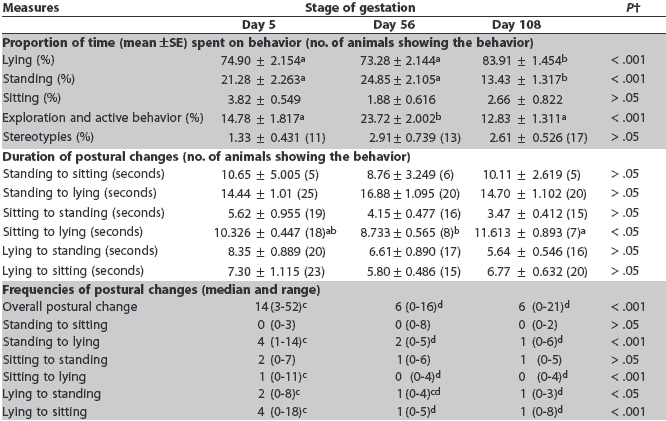
Proportions of time spent on the postural behaviors, times taken for postural changes, and frequencies of the postural behaviors at different stages of gestation are presented in Table 1. The proportion of time spent lying was higher and time spent standing was lower on day 108 of gestation than on days 5 and 56. The proportion of time spent in exploration and active behavior was higher on day 56 than the other two stages. The stages of gestation did not differ in terms of the proportion of time sows spent sitting or performing stereotypic behaviors. The time taken for postural changes (ie, time for the transitions) from standing to sitting, standing to lying, lying to standing, lying to sitting, and sitting to standing did not differ with the stage of gestation, whereas the time taken for sitting to lying was longer on day 108 than on day 56 of gestation. Median frequency of overall postural change and median frequencies of transitions from standing to lying, sitting to lying, and lying to sitting were higher on day 5 than on days 56 and 108 of gestation. Median frequency of the transition from lying to standing was higher on day 5 than on day 108. Injuries on the udder increased as gestation advanced (c2 = 12.662, df = 2; P < .01) and udder injuries were positively correlated with the amount of time spent lying down (r = 0.412; P < .001).
Table 1: Means (+/- SE) of proportion of time spent (% of observation time) on different behaviors,* time taken for postural changes, and medians and ranges of frequencies of postural behavior at different stages of gestation for 25 sows housed in gestation stalls and observed by time-lapse videotaping for 24-hour intervals
* Exploration and active behavior included rooting, nosing, and licking of the fixtures and fittings while standing, feeding, and drinking. Stereotypies included behavioral patterns performed repetitively in a fixed order, without obvious function (eg, repetitive vacuum chewing and bar biting). † ANOVA for repeated measures and Tukey's pairwise comparisons were performed to compare proportion of time spent performing behavior and duration of behavior at different stages of gestation. A Friedman's chi-squared test based on Cochran-Mantel-Haenszel statistics with rank scores (after adjusting for sows to reduce the variation due to individual sow differences) followed by nonparametric multiple comparison (comparison of mean ranks) were employed for comparing frequency of behavior. ab Within each row, means with different superscripts differ (Tukey's pairwise comparisons; P < .05) cd Within each row, mean ranks of values with different superscripts differ (Tukey's pairwise comparisons; P < .05) |
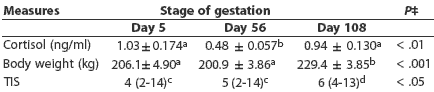
Salivary cortisol concentrations and body weights (mean +/- SE) and medians and ranges of TIS are shown in Table 2. Salivary cortisol concentrations were lower on day 56 than on days 5 and 108 of gestation. Body weight was greater on day 108 than on days 5 and 56, and had increased by > 10% between day 5 and day 108 of gestation. Median TIS was higher on day 108 than on days 5 and 56 of gestation. Body weight was negatively correlated with the proportions of time spent in exploration and active behavior (r = - 0.261; P < .05) and standing (r = - 0.278; P < .05) and positively correlated with the proportion of time spent lying (r = 0.233; P < .05). Salivary cortisol concentrations were not correlated with TIS or behavior, and TIS was not correlated either with the proportion of time spent on any of the observed postures or frequency of postural changes.
Table 2: Salivary cortisol concentrations* and body weights (mean +/- SE) and total injury scores† (TIS; median and range) at different stages of gestation for 25 sows housed in gestation stalls
* Salivary cortisol assessed using a modified20 solid-phase cortisol radioimmunoassay (Coat-A-Count TKCOs; Diagnostic Products Corporation, Los Angeles, California). † One investigator, using the system of Anil et al,21 scored all sows for injuries on different body areas: 0, no injury; 2, mild; 3, obvious; 4, severe. Individual scores were added to get the TIS for each sow. ‡ Cortisol concentrations and body weights compared using ANOVA for repeated measures and Tukey's pairwise comparisons. A Friedman's chi-squared test based on Cochran-Mantel-Haenszel statistics with rank scores (after adjusting for sows to reduce the variation due to individual sow differences) followed by nonparametric multiple comparison (comparison of mean ranks) were employed for comparing TIS. ab Within a row, means with different superscripts differ (Tukey's pairwise comparisons; P < .05). cd Scores with different superscripts differ in their mean rank (Tukey's pairwise comparisons; P < .05).
|
Discussion
The increase in salivary cortisol concentrations in the sows observed in this study during the initial stages of gestation (day 5) might have been caused by separation from the piglets and rapid transition from the ad libitum feeding in farrowing crates to restricted feeding in gestation crates. Previous reports22,23 have indicated that weaning increases cortisol secretion in sows. The difference in the size and structure of farrowing crates and gestation stalls might also have contributed to stress and elevation in cortisol concentrations. The flooring in the farrowing crate was cast iron, while in the gestation stall it was concrete slats. The width of the stall (60 cm) was also less than that of the farrowing crate (66 cm). In addition, stall-housed sows are reported to experience a higher frequency of undecided agonistic interactions with unfamiliar sows on either side, depending on the design of the stall, and have less opportunity to exhibit active avoidance behavior, both of which cause increased stress24 during the initial period of the stay in gestation stalls. The change to restricted feeding might have also contributed to the discomfort of the sow in gestation stalls, as it has been reported that food and water deprivation are stressful and increase plasma cortisol in pigs.25 The sows might have adjusted to the changed situation as their stay in stalls continued, as evident from the reduction in cortisol concentrations by day 56 of gestation. Pigs are reported to adapt to behavioral restriction with experience.26 With continued time in the stalls, all factors except feed restriction became less relevant.
There was no increase in body weight between days 5 and 56 of gestation, and therefore no further reduction in relative space availability in the stall and consequent difficulty in making postural changes. However, salivary cortisol concentrations again increased in late gestation, probably due to difficulty and discomfort in making postural changes in the limited space with increasing body weight. This was further aggravated by the physiological and hormonal changes occurring late in gestation. Piglets initiate an increase in cortisol in late gestation as preparation for farrowing. Elevated levels of fetal27 and maternal28 cortisol have been reported near the end of gestation.
The increase in time spent lying down in late gestation could be due to the increase in body weight29 with advancing pregnancy, when a lying posture might have been more comfortable. It may be that during early gestation, sows have not have successfully mastered the technique of making postural changes in the stalls, as they had previously been in farrowing crates for approximately a month. In late gestation, the relative reduction in space availability due to increasing body weight or size made postural changes more difficult. This reasoning was supported by the observation that a longer time was taken for the transition from sitting to lying on day 108 of gestation compared to day 56, but there was no difference in the time for this transition between days 5 and 56. Sitting to lying can be viewed as a part of the postural change from standing to lying. The ease of lying may be indicative of sow comfort.4,30 The longer time taken for sitting to lying on gestation days 5 and 108 suggests that the sows were relatively less compromised on day 56.
Pigs are explorative by nature, and exploratory behavior is considered an important component of pig welfare.31 More time spent on exploration and active behavior, as observed on day 56 of gestation compared to days 5 and 108, suggested that the sows were less compromised on day 56. Confinement and limited occupational opportunity might be responsible for stereotypies indicating frustration,32 and these conditions remained unchanged throughout gestation. With increasing body weight or size, the sow might find it difficult to stand for a longer time, as evident from the negative correlation between duration of standing and exploration and active behavior.
As gestation advances, abdominal girth increases and the udder becomes engorged. When the sow is lying down, especially in ventral recumbency, the engorged udder may be pressed against the floor, causing injuries. During lateral recumbency, if stall width is inadequate, the udder may extend into the neighboring stall and may be stepped on by the adjacent sow. Udder injuries in this study might have contributed to the higher median TIS on day 108. This is further supported by the significant positive correlation between lying duration and udder injuries and the greater amount of time spent lying down in late gestation. A previous study33 also reported that skin-health scores for the udders of stall-housed gilts were lowest on day 91 after breeding, further supporting the findings of the present study. Udder lesions suggest difficulty in rising.34 More udder injuries in late gestation therefore indicate that sows had difficulty in getting up at this stage, and a causative factor is lack of space.
The increase in frequency of overall postural changes on day 5 of gestation might have resulted from separation from the piglets, change in accommodation, and feed restriction. Behavior indicators of stress include high activity levels characterized by frequent postural changes.12 However, a lower frequency of postural changes does not necessarily equate with less stress. If there is insufficient space for an animal to perform an activity, then that activity is not performed or is suppressed.35,36 The reduction in frequency of overall postural change observed on day 108 of gestation thus might be due to a reduction in space available for postural changes, consequent to the increase in body weight or size.
In terms of welfare, sows in gestation stalls appeared to be more compromised during early and late stages of gestation. A basic stressor, ie, lack of space for postural changes, remains the same throughout gestation, while additional factors operate in early and late gestation. In this study, the lack of significant change in body weight between day 5 and day 56 of gestation suggests that the difference in welfare on day 5 might be due to weaning, feed restriction, and change in accommodation, and not space restriction alone. The reduction in welfare in late gestation might have resulted from increasing body weight and consequent reduction in space available, making postural changes uncomfortable, as well as physiological changes occurring with advancing gestation. Although salivary cortisol concentrations showed significant changes with stage of gestation, cortisol concentration was not correlated with duration and frequency of behaviors and injuries. However, this was expected, as there were no opportunities, under the conditions of this study, for episodes of acute cortisol surge, such as intense aggression or excitement. Saliva was not collected immediately after behavioral events. However, body weight increased significantly late in gestation and was negatively correlated with the proportions of time spent in exploration and active behavior, indicating the difficulty experienced by sows in advanced gestation when the space is restricted.
Under the conditions of this study, it appears that increasing available space in gestation stalls would improve sow welfare. Provision of adjustable stalls or slightly larger stalls for larger sows are options worth considering, given the difficulty in altering the sizes of all stalls in all housing systems. Although this study provided an assessment of welfare of pregnant sows during their stay in gestation stalls, the relative contributions of various stressors operating at different stages of gestation could not be assessed and no comparision was made to the welfare of sows in pens, limiting interpretation of the results to this extent.
Implications
- Welfare of sows in gestation stalls may be less compromised in midgestation than in early and late gestation.
- Welfare of gestating sows may be improved by providing slightly larger stalls for larger sows.
Acknowledgements
The authors are thankful to the National Pork Board and Minnesota Pork Producers Association for funding this project. The authors would like to acknowledge the help rendered by Professor Roger D. Walker and his staff at Southern Research and Outreach Center, Waseca, Minnesota, in data collection, and Professor Jonathan E. Wheaton for his help in cortisol analysis.
References
1. Barnett JL, Hemsworth PH, Cronin GM, Newman, EA, McCallum TH. Effects of design of individual cage-stalls on the behavioural and physiological responses related to the welfare of pregnant pigs. App Anim Behav Sci. 1991;32:23-33.
*2. Webster AJF. The challenge of animal welfare. Proc World Conf Anim Prod. Edmonton, Canada. 1993;513-524.
3. Gonyou HW. Design criteria: Should freedom of movement be retained? Acta Agric Scand Sect A. 1996;27(Suppl):36-39.
*4. Clough CE. An evaluation of the farrowing crate. Farm Build Prog. 1984;76:21-26.
5. Lawrence AB, Petherick JC, McLean KA, Chirnside J, Vaughan A, Clutton E, Terlouw EMC. The effect of environment on behaviour, plasma cortisol and prolactin in parturient sows. Appl Anim Behav Sci. 1994;39:313-330.
6. Boyle LA, Leonard FC, Lynch PB, Brophy P. Prevalence and severity of skin lesions in sows housed individually during the production cycle. Irish Vet J. 1999;52:601-605.
7. Anil L, Anil SS, Deen J. Evaluation of the relationship between injuries and size of gestation stalls relative to size of sows. JAVMA. 2002;221:834-836.
*8. Petherick JC, Baxter SH. Section II: Seminar on Modeling, Design and Evaluation of Agricultural Buildings. Modeling the static spatial requirements of livestock. In: MacCormack JAD, ed. Proc CIGR. Bucksburn Aberdeen, UK: Scottish Farm Buildings Investigation Unit. 1983;75-82.
9. Hurnik JF, Lewis NJ. Use of body surface area to set minimum space allowances for confined pigs and cattle. Can J Anim Sci. 1991;71:577-580.
10. Barnett JL, Winfield CG, Cronin GM, Hemsworth PH, Dewar AM. The effect of individual and group housing on behavioral and physiological responses related to the welfare of pregnant pigs. Appl Anim Behav Sci. 1985;14:149-161.
11. Petherick JC. A biological basis for the design of space in livestock housing. Farm animal housing and welfare. In: Baxter SH, Baxter MR, MacCormack JAD, eds. Farm Animal Welfare and Housing. Boston: Martinus Njhoff Publishers; 1983:103-120.
12. Taylor L, Friend T, Smith LA. Effects of housing on in situ postures of gestating gilts. Appl Anim Behav Sci. 1988;19:265-272.
13. McFarlane JM, Boe KE, Curtis SE. Turning and walking by gilts in modified gestation crates. J Anim Sci. 1988;66:326-333.
*14. Whittemore CT. Causes and consequences of change in the mature size of the domestic pig. Outlook Agric. 1994;23:55-59.
15. Mason GJ. Forms of stereotypic behaviour. In: Lawrence AB, Rushen JR, eds. Stereotypic Animal Behaviour: Fundamentals and Applications to Welfare. Oxford, United Kingdom: CAB International; 1993:7-40.
16. Cronin GM, Van Tartwijk JMFM, Van der Hel W, Verstegen MWA. The influence of degree of adaptation to tether-housing by sows in relation to behaviour and energy metabolism. Anim Prod. 1986;42:257-268.
17. Anil SS, Anil L, Deen, J. Challenges of pain assessment in animals. JAVMA. 2002;220:313-320.
*18. Toscano MF, Lay DC Jr, Wilson ME. Physiological indicators of stress. In: Reynnells R, ed. The Science and Ethics Behind Animal Well-being Assessment. Washington DC: United States Department of Agriculture; 2003:10-12.
19. Hicks TA, McGlone JJ, Whisnant CS, Kattesh HG, Norman L. Behavioral, endocrine, immune, and performance measures for pigs exposed to acute stress. J Anim Sci. 1998;76:474-483.
20. Ruis MAW, TeBrake JHA, Engel B, Ekkel ED, Buist WG, Blokhuis HJ, Koolhaas JM. The circadian rhythm of salivary cortisol in growing pigs: effects of age, gender and stress. Physiol Behav. 1997;62:623-630.
21. Anil L, Bhend KMG, Baidoo SK, Morrison RS, Deen J. Comparison of injuries in sows housed in gestation stalls and group pens with electronic sow feeders. JAVMA. 2003;223:1334-1338.
22. Rojkittikhun T, Rojanasthien S, Einarsson S, Madej A, Lundeheim N. Effect of fractioned weaning on hormonal patterns and weaning to oestrus interval in primiparous sows. Acta Vet Scand. 1991;32:35-45.
23. Tsuma VT, Einarsson S, Madej A. Cortisol and [beta]-endorphin levels in peripheral circulation around weaning in primiparous sows. Anim Reprod Sci. 1995;37:175-182.
24. Broom DM, Mendl MT, Zanella AJ. A comparison of the welfare of sows in different housing conditions. Anim Sci. 1995;61:369-385.
25. Einarsson S, Madej A, Tsuma V. The influence of stress on early pregnancy in the pig. Anim Reprod Sci. 1996;42:165-172.
*26. Jarvis S, van der Vegt BJ, Lawrence AB, McLean KA, Calvert SK, Deans LA, Chirnside J. The effect of parity on the behavioural and physiological responses of parturient pigs to the farrowing environment. In: Veissier I, Boissy A, eds. Proc Int Cong Appl Ethology. France: Clermont-Ferrand; 1998:129.
*27. Fowden AL, Silver M. Adrenocortical activity in the fetal pig. J Physiol. 1988;403:124P.
28. Nikolic AJ, Wivkovic B. Possible relationships of some parameters of reproductive success in sows to serum concentrations of thyroid hormones, insulin, IGF-I, cortisol and progesterone. Acta Vet Beograd. 1996;46:255-269.
29. Sekiguchi T, Koketsu Y. Behavior and reproductive performance by stalled breeding females on a commercial swine farm. J Anim Sci. 2004;82:1482-1487.
*30. Baxter MR. The 'Freedom' farrowing system. Farm Build Progr. 1991;104:9-15.
31. Wood-Gush DGM, Vestergaard K. Inquisitive exploration in pigs. Anim Behav. 1993;45:185-187.
32. Morris JR, Hurnik JF, Friendship RM, Buhr MM, Allen OB. The behaviour of gestating swine housed in the Hurnik-Morris system. J Anim Sci. 1993;71:3280-3284.
33. Harris MJ, Sorrells AD, Eicher SD, Richert BT, Pajor EA. Effects on production, health and behavior of two types of housing for gestating gilts. J Anim Sci. 2002;80(Suppl 1):26-27.
34. de Koning R. Injuries in confined sows. Incidence and relation with behaviour. Ann Rech Vet. 1984;15:205-214.
35. Ekkel ED, Spoolder HAM, Hulsegge I, Hopster H. Lying characteristics as determinants for space requirements in pigs. Appl Anim Behav Sci. 2003;80: 19-30.
36. Petherick JC. A note on allometric relationships in large white ´ Landrace pigs. Anim Prod. 1983;36: 497-500.
* Non-refereed references.