
Original research |
Peer reviewed |
Association of inadequate feed intake during lactation with removal of sows from the breeding herd
Asociación del consumo de alimento inadecuado durante la lactancia con la eliminación de hembras del pie de cría
Association entre un apport alimentaire inadéquat durant la lactation et le retrait de truies du troupeau reproducteur
Sukumarannair S. Anil, BVSc, MVSc, PhD; Leena Anil, BVSc, MVSc, PhD; John Deen, DVM, MSc, PhD, Diplomate ABVP; Samuel K. Baidoo, MSc, PhD; Roger D. Walker, PhD
SSA, LA, JD: Department of Veterinary Population Medicine, College of Veterinary Medicine, University of Minnesota, St Paul, Minnesota. SKB, RDW: Southern Research and Outreach Center, University of Minnesota, Waseca, Minnesota. Corresponding author: Dr Sukumarannair S. Anil, Department of Veterinary Population Medicine, College of Veterinary Medicine, University of Minnesota, 335 G Animal Science/Veterinary Medicine Building, 1988 Fitch Avenue, St Paul, MN 55108; Tel: 612-625-4243; Fax: 612-625-1210; E-mail: sukum001@umn.edu.
Cite as: Anil SS, Anil L, Deen J, et al. Association of inadequate feed intake during lactation with removal of sows from the breeding herd. J Swine Health Prod. 2006;14(6):296–301.
Also available as a PDF.
SummaryObjectives: To assess the association of farrowing and lactation factors with likelihood of removal of sows from the breeding herd before the next farrowing, and to analyze the effect on sow removals of inadequate daily feed intake (≤ 3.5 kg per day) during the first 2 weeks of lactation. Methods: Retrospective data on sows in a research herd were subjected to multivariate logistic regression analysis to determine associations between sow retention and factors relating to feed intake, farrowing, and lactation. Results: Higher average daily lactation feed intake, greater litter weight, and greater backfat thickness at weaning were associated with less likelihood of removal of sows from the herd before the subsequent parity. Sows consuming ≤ 3.5 kg of feed per day during the first 2 weeks of lactation were more likely to be removed from the herd before the next parity. Implications: Measures to ensure adequate feed intake from the start of lactation may minimize sow removals from breeding herds. Under the conditions of this study, a sow consuming no feed on a single day during the first 2 weeks of lactation has the highest odds of removal from the herd. | ResumenObjetivos: Evaluar la asociación de los factores al parto y durante la lactancia con la probabilidad de eliminación de hembras del pie de cría antes del siguiente parto, y analizar el efecto sobre la eliminación de hembras del consumo de alimento diario inapropiado (≤ 3.5 kg por día) durante las 2 primeras semanas de lactancia. Métodos: Se analizó la información retrospectiva de hembras en una piara mediante el análisis de regresión logística multivariado para determinar asociaciones entre la retención de hembras y los factores relativos al consumo de alimento, parto, y lactancia. Resultados: El consumo de alimento diario alto en lactancia, un mayor peso de la camada, y un mayor grosor de grasa dorsal al destete se asociaron con una menor probabilidad de eliminación de hembras antes del siguiente parto. Las hembras con un consumo de ≤ 3.5 kg de alimento por día durante las primeras 2 semanas de lactancia fueron más susceptibles de ser eliminadas de la piara antes de la siguiente paridad. Implicaciones: Las medidas adoptadas para asegurar el consumo de alimento adecuado desde el inicio de la lactancia puede minimizar la eliminación de hembras del pie de cría. Bajo las condiciones de este estudio, una hembra que no consume alimento un solo día durante las primeras 2 semanas de lactancia tiene las probabilidades más altas de ser eliminada de la piara. | ResuméObjectifs:Évaluer l’association entre des facteurs liés à la mise bas et la lactation et la probabilité de retrait de truies du troupeau reproducteur avant la prochaine mise bas, et analyser l’effet d’un apport alimentaire quotidien inadéquat (≤ 3.5 kg par jour) durant les 2 premières semaines de lactation sur le retrait des truies. Méthodes: Les données rétrospectives provenant de truies d’un troupeau de recherche ont été soumises à une analyse de régression logistique multivariée afin de déterminer les associations entre la rétention des truies et les facteurs reliés à l’apport alimentaire, la mise bas, et la lactation. Résultats: Une moyenne quotidienne d’apport lacté supérieure, un poids plus élevé de la portée, et une épaisseur de gras dorsal plus importante au sevrage étaient associés à une probabilité moindre de retrait des truies du troupeau avant la parité suivante. Les truies consommant ≤ 3.5 kg par jour durant les 2 premières semaines de lactation étaient plus susceptibles d’être retirées du troupeau avant la prochaine parité. Implications: Les mesures mises en place pour assurer un apport alimentaire adéquat à partir du début de la lactation peut minimiser le retrait de truies des troupeaux reproducteurs. Dans les conditions de la présente étude, une truie ne consommant aucune nourriture pendant une seule journée durant les 2 premières semaines de la lactation a la plus grande chance de retrait du troupeau. |
Keywords: swine, longevity,
lactation feed intake, culling
Search the AASV web site
for pages with similar keywords.
Received: September
21, 2005
Accepted: March
17, 2006
Retention of sows in breeding herds for fewer than five parities is a reason for both economic and welfare concerns. Although sow removals are attributed to many causes, reproductive and locomotor problems are the major reasons for removal.1,2 Lactation is a high-risk event in the life of a breeding female. Nutrition during lactation plays an important role in ensuring reproductive efficiency, which in turn enhances the longevity of females in breeding herds. Inadequate feed intake has both direct and indirect effects on sow longevity. Direct effects include lameness related to trauma and stress3 secondary to inadequate consumption of feed to meet the sow’s nutritional demands, especially in highly productive sows. Indirect effects are mediated by conditions that impair breeding performance. A prolonged wean-to-estrus interval (WEI)4 and lower pregnancy rate and embryo survival5 have been linked to restricted feeding during lactation. Another study6 has suggested an association between shorter farrowing-to-estrus interval and higher lactation feed intake (LFI), regardless of the length of lactation.
Although most lactating females lose body weight, excessive loss may cause prolonged WEI and smaller subsequent litter size. As reproductive efficiency is essential in commercial herds, affected sows are removed from the herd.7 Lactation feeding and lactation length may affect sow longevity in two ways.8 Sows with shorter lactation length tend to lose less body weight and are less exposed to higher nutrient demands in the short term. In the long term, sows with shorter lactation periods farrow more litters in the same time frame, which may result in higher culling rates. Greater risk of removal from the herd of sows with shorter lactation length has been reported.9
During lactation, a female should consume adequate feed for maintenance as well as for milk production. Younger sows have an additional requirement for growth. The smaller intestinal capacity of primiparous sows may prevent them from consuming enough feed to meet their requirements10 and may result in reproductive failure.11 It has been shown12 that in primiparous sows, higher daily feed intake during lactation is associated with less tissue loss, greater litter weight gain, and less probability of a prolonged WEI (by 42% per extra kg of intake). As modern gilts are highly prolific, it is essential to encourage adequate daily feed intake in order to minimize weight loss during lactation. Sows with lean genotypes may not have adequate body protein and fat stores to reproduce efficiently and stay in the herd for several parities, although they can produce their first litter at 8 to 9 months of age.13 Voluntary intake may be insufficient to meet requirements for maintenance and milk production in lactating sows,14 and this may adversely affect subsequent reproduction.
Although several researchers have assessed the effect of nutrition during lactation on subsequent reproductive performance, including parameters such as WEI,4,15 number of embryos and their survival,16 ovulation rate,15,17 piglet mortality,18 and litter size and weight,19 little work has been done on the direct relationship between LFI and sow longevity. A relationship between measures of reproductive performance, such as wean-to-service interval and longevity, has been reported.20 The effect of LFI on subsequent breeding performance and physiological effects suggests a link between LFI and longevity of females in breeding herds.
Available studies analyzing the relationship between lactation feeding, reproduction, and longevity have used different parameters representing LFI, including average daily feed intake during lactation and pattern of daily feed intake,21 average daily feed intake,22 and backfat at weaning.23 It has been suggested24 that for studies analyzing the effect of feed intake on longevity, the experimental design must take into account the period of time a sow is expected to stay in the herd and that data based on one reproductive cycle may not be adequate. However, it has been proposed25 that at some time points during lactation, the physiological mechanisms controlling reproduction (eg, estrus after weaning) are more sensitive to inadequate feed intake, sufficient to cause sow removals. It was reported21 that sows exhibiting a drop in feed intake during either the first or second week of lactation are more likely to be culled for anestrus than unaffected sows, suggesting that even a transient reduction in feed intake during lactation can impair postweaning estrus.
Inadequate feeding during the first 3 weeks of lactation is associated with lower LH pulse frequency and longer WEI, which is linked to lower plasma concentrations of insulin and glucose.26 Therefore, feed intake on individual lactation days may be a more appropriate variable than average feed intake during the entire lactation to study the effect of lactation feeding on subsequent performance and longevity of breeding females.
Each farrowing is a high-risk event for removal for both production and welfare reasons. The peripartum period (ie, 3 days before the predicted farrowing date to 3 days after farrowing) is the period of greatest risk in the reproductive cycle, with 42% of sow deaths occurring during this short interval.27 A higher proportion of sow deaths during lactation, compared to other stages of the reproductive cycle, has been previously reported.2 In addition to LFI, other farrowing and lactation factors associated with sow removals from breeding herds include parity,28,29 lactation length,30 litter size,28,31 and stillbirths.28
The objectives of this study were to assess the association of farrowing factors (including parity, litter weights at birth and weaning, mummies, and stillborns) and lactation factors (including lactation length, average LFI, and body condition represented by backfat thickness) on the likelihood of removal of sows from the breeding herd before the next farrowing, and to analyze the effect of inadequate daily feed intake during the first 2 weeks of lactation on sow removals before subsequent farrowing.
Materials and methods
A retrospective study was conducted at the University of Minnesota, Southern Research and Outreach Center, Waseca, during February to July 2004, including 499 sows (Genetically Advanced Pigs; GAP Genetics, Winnipeg, Manitoba, Canada; body weight 221 ± 1.1 kg; parities one to eight). Data on daily feed intake, body weight, and backfat thickness on day 108 of gestation and at weaning were collected from sow cards.
Feed consumed was assumed to be equal to that fed if the feeder was empty. If some feed was eaten, then the amount of feed consumed was estimated. Finally, if it appeared that the sow had not eaten, the feed consumed was recorded as 0 kg. Sows in farrowing crates were hand-fed twice daily using a standardized scoop. Sows were fed 3 kg per day until farrowing and were fed according to appetite after farrowing. If any feed remained in the feeder from previous delivery, the quantity fed was reduced accordingly, but the amount remaining was not measured. If no feed remained from the previous delivery, the sow was offered 1 kg extra the following day. Little wastage of feed was observed, but this was not measured. The average LFI for each sow was calculated by dividing the total quantity of feed consumed from day 1 of lactation until weaning by the number of lactation days for that sow.
At 108 days of gestation and on the day of weaning (15 to 24 days post farrowing), all sows were weighed on an electronic scale (Ag Alliance, Altoona, Iowa), and backfat was measured at the last rib (5 cm from the midline of the back on both left and right sides) with a Lean-Meater ultrasound unit (Renco, Minneapolis, Minnesota). Litter birth weight, litter weaning weight, parity, lactation length, sow removals, and numbers of stillborn pigs and mummies were obtained from the PigCHAMP database (PigCHAMP, Ames, Iowa) of the research unit. The litter from each sow, including fostered pigs, was weighed at birth and at weaning using a weighing cart (Ag Alliance) with an electronic scale (Model TI500; Transcell Technology, Inc, Wheeling, Illinois; accurate to 1 lb).
Statistical analysis
All statistical analyses were performed using SAS software (Statistical Analysis System, Version 8.2; SAS Institute Inc, Cary, North Carolina). The frequency distribution of the number of lactation days (N = 8851) was calculated for all sows using daily feed intake categories of 0, > 0 to 2, > 2 to 4, > 4 to 6, > 6 to 8, > 8 to 10, and >10 to 12 kg. Day 1 of lactation was excluded from the calculation because feeding to appetite started after farrowing, making it is possible for a sow that farrowed in the evening to have received a restricted diet that morning, even though it was considered to be day 1 of lactation. Mean and SE of farrowing factors and lactation factors collected from PigCHAMP records and sow cards (parity, body weight and backfat thickness at day 108 of gestation, litter size at birth, litter birth weight, lactation length, average daily feed intake during the 1st, 2nd, and 3rd weeks of lactation, body weight and backfat of the sows at weaning, litter size at weaning, litter weaning weight, and weaning-to-service interval) were calculated. A logistic regression analysis (Stepwise, Proc Logistic) using the Wald statistic was performed to analyze the association of farrowing and lactation factors with sow removals (including culling, death, or euthanasia) before subsequent farrowing. Parity was categorized as 1 and 2, 3 to 5, and = 6, and mummies and stillborns were reported as either present or absent. Litter birth weight, litter weaning weight, backfat thickness and body weights at day 108 of gestation and at weaning, lactation length, and average LFI were included in the model as continuous variables. Parity was forced into the model. The number of days when LFI was = 0, 0.5, 1.0, 1.5, 2.0, 2.5, 3.0, or 3.5 kg for the period from day 2 to day 14 post farrowing was calculated for each sow.
The likelihood of removal associated with each LFI category was assessed using separate logistic regression analyses (Proc Logistic), with models including only the number of days of lactation with the specific level of feed intake as the explanatory variable. One univariable logistic regression model was analyzed for each of the eight categories of feed intake = 3.5 kg. The comparison group in each model was the rest of the population. No diagnostics were performed on the models. A P value < .05 was considered significant in all analyses.
Results
Means (± SE) of farrowing and lactation parameters of sows included in this study are presented in Table 1. The numbers of sows with mummies and stillbirths were 99 and 230, respectively. Of 499 sows, 52 were removed (Table 2), with 54% of these removed for reproductive reasons.
Table 1: Means ± SE of farrowing and lactation factors for 499 sows included in a retrospective study in a research herd
* Parities ranged from one to eight. |
Table 2: Reasons for removal from the breeding herd for 52 sows assigned to three removal categories
* Emaciated. † Showed no signs of estrus. ‡ Parity ≥ 7. § Includes sudden death, heat stroke, behavioral problems, wastes feed, unthrifty, and other reasons. |
|||||||||||||||||||||||||||||||||||||||
Restricted feed intake has been defined as = 3 kg per day.4,5 In this study, average daily feed intake was approximately 7 kg per day, and feed intake = 3.5 kg per day was considered inadequate.
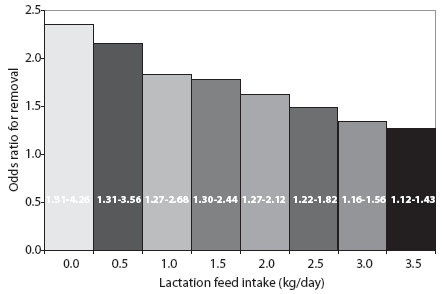
The results of multivariate and univariate regression models are presented in Table 3 and Figure 1, respectively. Table 3 shows the odds ratios (OR) and confidence intervals (CI) for associations between sow removal and farrowing and lactation factors. The odds of a sow being removed from the herd before another farrowing decreased by approximately 30% with a 1-kg increase in average daily LFI. The odds of removal decreased by 5% with a 1-kg increase in litter weaning weight and by 17% with a 1-mm increase in backfat thickness at weaning. The odds of removal increased by 2% with each 1-kg increase in body weight at day 108 of gestation. Other variables included in the model (parity, litter size at birth or weaning, litter birth weight, weaning-to-service interval, and lactation length) were not associated with whether or not sows were removed from the herd.
Table 3: Factors associated with sow removal before subsequent farrowing among 499 sows in a breeding herd
* Based on multivariate logistic regression analysis |
| Figure 1: Odds of removal for 499 sows in a research
unit breeding herd for categories of feed intake ≤ 3.5 kg per day during
days 2 to 14 of lactation. Values inside the bars indicate confidence intervals
for the odds ratio. Eight different univariate logistic regression models
were fitted, one for each category of lactation intake. The comparison
group in each model was the rest of the population, with P < .05
for each model.
|
The frequency distribution of daily feed intake of all sows during the entire lactation, excluding day 1, is presented in Figure 2. In 50% of the lactation days analyzed, sows consumed 6 to 8 kg of feed; in 35.7% of days, sows consumed > 8 kg of feed; and in 14.3% of days, sows consumed < 6 kg of feed.
| Figure 2: Distribution of categories of feed intake
during a total of 8851 lactation days for 499 sows in a research unit breeding
herd. Feeding to appetite began after farrowing. Day 1 of lactation was
not included in the calculation because sows that farrowed in the evening
were likely to have been fed a restricted amount that morning. Sows were
weaned 15 to 24 days post farrowing.
|
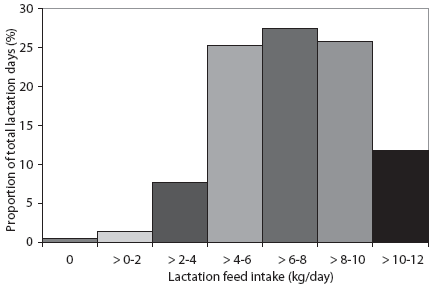
Figure 1 shows the odds of sow removals for categories of feed intake = 3.5 kg per day calculated in eight different univariate logistic regression models, one for each level of feed intake. The odds of removal was higher for sows consuming = 3.5 kg feed in any one day within the first 2 weeks of lactation than for sows consuming > 3.5 kg (P < .05 for all feeding levels).
The odds of removal decreased with an increase in feed intake and was highest (OR 2.36, CI 1.311- 4.261) for sows that consumed no feed during in any one day during the first 2 weeks of lactation compared to the rest of the population.
Discussion
Inadequate feed intake of sows during lactation may cause depletion of body reserves to meet nutritional requirements. Even with ad libitum feeding during lactation, the nutritional demands for high-producing females cannot be met,14 and sows lose weight and backfat. Factors that may affect LFI, and thus body weight at weaning, include parity, litter size, lactation length, pregnancy weight gain, mean room temperature,32 and particle size and digestibility of the feed.33 Inadequate LFI and excessive weight loss indicate increased tissue catabolism to maintain lactation and may have adverse reproductive consequences. Restricted LFI (ie, 3 kg per day compared to 6 kg per day) prolongs WEI.4 Restricted LFI is also associated with a lower pregnancy rate and embryo survival.5 As reproductive inefficiency is the most important reason for sow removals in breeding herds,1 effects of low LFI may reduce longevity of sows. Hughes and Varley34 confirmed an adverse effect of inadequate nutrition on reproduction and longevity of females in breeding herds. The association of a lower likelihood of sow removals before subsequent farrowing with a higher average daily LFI in the present study agrees with earlier reports on LFI and sow longevity. Most sows in this study were removed from the herd for reproductive inefficiency, also confirming earlier results.
Overfeeding during gestation increases weight and condition of the sow at the end of pregnancy, which can cause farrowing and lactation problems and culling for poor lactation performance or locomotor problems.11 Our finding that likelihood of sow removal increases with body weight on day 108 of gestation agrees with this report. The odds ratios reported in this study were controlled for parity, as higher parity sows are likely to weigh more than young females and are more likely than younger sows to be removed from the herd for old age (= 7th parity), especially if they develop other reproductive or health problems.
Average daily LFI increases with suckling litter size from small litters of three to six pigs up to a maximum of approximately 11 pigs.35 Evidently, there is a positive association between litter size and litter weight at weaning. Greater litter weaning weight indicates the ability of the sow to produce the required quantity of milk, which is linked to her LFI. Thus, sows with greater litter weight at weaning have greater average daily LFI and are less likely to have problems that result in removal from the herd, as shown in this study by the lower likelihood of sow removals with greater litter weight at weaning.
Although the associations of LFI with WEI and backfat thickness at weaning were not analyzed in this study, there was a greater likelihood of removal before subsequent farrowing in sows with low backfat thickness at weaning. This finding is supported by a previous report,36 in which WEI was 8.1 days in mature sows with backfat < 10 mm compared to 5.8 days for sows with backfat > 13 mm. It is likely that a prolonged WEI can lead to sow removal.20 However, WEI is one of several reproductive variables determining sow retention. A higher culling rate of parity 1 and 2 sows with < 12 mm P2 backfat thickness at weaning has been reported.23 An extensive review1 concludes that improving body condition at weaning is beneficial in terms of improving sow mortality and replacement rates. Ensuring adequate feed intake is crucial in improving sow longevity. Modern high-producing genotypes produce large quantities of milk, with a high nutrient requirement for lactation. When this requirement is not met, tissue reserves are utilized to meet milk-production demands, and body condition is lost. With excessive loss of body condition, premature culling of high-producing sows may result because of reproductive problems such as anestrus or failure to conceive upon weaning. Lactation feed intake may vary with lactation length. Therefore, the diet must be adequate to ensure that milk production demands are met and that postweaning breeding performance remains unaffected when lactation length is short. First-parity sows may require a more concentrated diet, ie, more energy, since they consume less feed. Other factors that may influence LFI must be considered to ensure adequate feed intake during lactation, including ad libitum availability of water, frequency of feeding, environmental temperature, and feeder design.
Although this study clearly demonstrated the adverse effect of inadequate LFI on sow longevity, feed disappearance rather than feed intake was measured, therefore wasted feed was included in intake. In addition, feeding was not absolutely ad libitum, since feed was offered on the basis of feed disappearance. As this study involved only one genetic line, the results cannot be generalized to other lines, since milk production, and thus nutritional requirement during lactation, are largely under genetic control.
Implications
- Ensuring adequate feed intake throughout lactation minimizes sow removals in breeding herds.
- Under the conditions of this study, inadequate feeding of sows on even a single day during the first 2 weeks of lactation is associated with a greater risk of removal from the herd.
- Lower backfat thickness at weaning may increase the risk of sow removals.
Acknowledgement
The authors are thankful to the National Pork Board for funding this project.
References
1. Stalder KJ, Knauer M, Baas TJ, Rothschild MF, Mabry JW. Sow longevity. Pig News Info. 2004;25:53N–74N.
2. Anil SS, Anil L, Deen J. Evaluation of patterns of removal and associations among culling because of lameness and sow productivity traits in swine breeding herds. JAVMA. 2005;226:956–961.
3. Tubbs RC. Lameness in sows: solving a preventable problem. Vet Med. 1988;83:612–616.
4. Baidoo SK, Aherne FX, Kirkwood RN, Foxcroft GR. Effect of feed intake during lactation and after weaning on sow reproductive performance. Can J Anim Sci. 1992;72:911–917.
5. Kirkwood RN, Baidoo SK, Aherne FX, Sather AP. The influence of feeding level during lactation on the occurrence and endocrinology of the post weaning estrus in sows. Can J Anim Sci. 1987;67:405–415.
6. Koketsu Y, Dial GD, Pettigrew JE, Xue JL, Yang H, Lucia T. Influence of lactation length and feed intake on reproductive performance and blood concentrations of glucose, insulin and luteinizing hormone in primiparous sows. Anim Reprod Sci. 1998;52:153–163.
*7. Boyd RD, Castro GC, Cabrera RA. Nutrition and management of the sow to maximize lifetime productivity. Adv Pork Prod. 2002;13:47–59.
*8. Levis DG. Effect of lactation length on sow reproductive performance. 2005. Available at: http://ianrpubs.unl.edu/swine/ec275.pdf. Accessed September 5, 2006.
9. Xue JL, Dial GD, Marsh WE, Lucia T. Association between lactation length and sow reproductive performance and longevity. JAVMA. 1997;210:935–938.
10. Yang H, Eastham PR, Phillips P, Whittemore CT. Reproductive performance, body weight and body condition of breeding sows with differing body fatness at parturition, differing nutrition during lactation, and differing litter size. Anim Prod. 1989;48:181–201.
11. Dourmad JY, Etienne M, Prunier A, Noblet J. The effect of energy and protein intake of sows on their longevity: A review. Livest Prod Sci. 1994;40:87–97.
12. Eissen JJ, Apeldoorn EJ, Kanis E, Verstegen MWA, de Greef KH. The importance of a high feed intake during lactation of primiparous sows nursing large litters. J Anim Sci. 2003;81:594–603.
13. Rozeboom DW, Pettigrew JE, Moser RL, Cornelius SG, El Kandelgy SM. Influence of gilt age and body composition at first breeding on sow reproductive performance and longevity. J Anim Sci. 1996;74:138–150.
14. Noblet J. Energy utilization in pregnant and lactating sows:
Modeling of energy requirements.
J Anim Sci. 1990;68:562–572.
15. Zak LJ, Williams IH, Foxcroft GR, Pluske JR, Cegielski AC, Clowes EJ, Aherne FX. Feeding lactating primiparous sows to establish three divergent metabolic states: I. Associated endocrine changes and postweaning reproductive performance. J Anim Sci. 1998;76:1145–1153.
16. Kirkwood RN, Baidoo SK, Aherne FX. The influence of feeding level during lactation and gestation on the endocrine status and reproductive performance of second parity sows. Can J Anim Sci. 1990;70:1119–1126.
17. Almeida FRCL, Kirkwood RN, Aherne FX, Foxcroft GR. Consequences of different patterns of feed intake during the estrous cycle in gilts on subsequent fertility. J Anim Sci. 2000;78:1556–1563.
18. Van der Peet-Schwering CMC, Kemp B, Binnendijk GP, den Hartog LA, Vereijken PFG, Verstegen MWA. Effects of additional starch or fat in late-gestating high nonstarch polysaccharide diets on litter performance and glucose tolerance in sows. J Anim Sci. 2004;82:2964–2971.
19. Veum TL, Reyes J, Ellersieck M. Effect of supplemental yeast culture in sow gestation and lactation diets on apparent nutrient digestibilities and reproductive performance through one reproductive cycle. J Anim Sci. 1995;73:1741–1745.
20. Tantasuparuk W, Lundeheim N, Dalin AM, Kunavongkrit A, Einarsson S. Weaning-to-service interval in primiparous sows and its relationship with longevity and piglet production. Livest Prod Sci. 2001;69:155–162.
21. Koketsu Y, Dial GD, Pettigrew JE, King VL. Feed intake pattern during lactation and subsequent reproductive performance of sows. J Anim Sci. 1996;74:2875–2884.
*22. Anil SS, Anil L, Baidoo SK, Walker RD. Analysis of the association between farrowing and lactation factors and sow removal. Proc ADSA, ASAS and CSAS Joint Meeting. Cincinnati, Ohio. 2005: Abstract #W6.
23. Young LG, King GJ, Shaw J, Quinton M, Walton JS, McMillan I. Interrelationships among age, body weight, backfat and lactation feed intake with reproductive performance and longevity of sows. Can J Anim Sci. 1991;71:567–575.
24. O’Grady JF, Elsley FWH, MacPherson RM, McDonald I. The responses of lactating sows and their litters to different dietary energy allowances. 2. Weight changes and carcass composition of sows. Anim Prod. 1975;20:257–265.
25. Pettigrew JE, Tokach MD. Nutrition and female reproduction. Pig News Info. 1991;12:559–562.
26. Koketsu Y, Dial GD, Pettigrew JE, Marsh WE, King VL. Influence of imposed feed intake patterns during lactation on reproductive performance and on circulating levels of glucose, insulin, and luteinizing hormone in primiparous sows. J Anim Sci. 1996;74:1036–1046.
27. Chagnon M, D’Allaire S, Drolet R. A prospective study of sow mortality in breeding herds. Can J Vet Res. 1991;55:180–184.
*28. Irwin CK, Deen J. Levels of culling in commercial herds. Allen D. Leman Swine Conf. 2000;27:102–104.
29. Koketsu Y. Retrospective analysis of trends and production factors associated with sow mortality on swine breeding farms in USA. Prev Vet Med. 2000;46:249–256.
30. D’Allaire S, Drolet R. Culling and mortality in breeding animals. In: Straw BE, D’Allaire S, Mengeling WL, Taylor DJ, eds. Diseases of Swine. 8th ed. Ames, Iowa: Iowa State University Press; 1999:1003–1016.
31. Abiven N, Seegers H, Beaudeau F, Laval A, Fourichon C. Risk factors for high sow mortality in French swine herds. Prev Vet Med. 1998;33:109–119.
32. O’Grady JF, Lynch PB, Kearney PA. Voluntary feed intake by lactating sows. Livest Prod Sci. 1985;12:355–365.
33. Wondra KJ, Hancock JD, Kennedy GA, Hines RH, Behuke KC. Reducing particle size of corn in lactation diets from 1200 to 400 micrometers improves sow and litter performance. J Anim Sci. 1995;73:421–426.
34. Hughes PE, Varley MA. Lifetime performance of the sow. In: Wiseman J, Varley MA, Kemp B, eds. Perspectives in Pig Science. Nottingham: Nottingham University Press; 2003:333–355.
35. Koketsu Y, Dial GD, Pettigrew JE, Marsh WE, King VL. Characterization of feed intake patterns during lactation in commercial swine herds. J Anim Sci. 1996;74:1202–1210.
36. Hughes PE. The effects of food level during lactation and early gestation on the reproductive performance of mature sows. Anim Prod. 1993;57:437–445.
* Non-refereed references.