
Original research
Peer reviewed
A retrospective study of mortality in grow-finish pigs in a multi-site production system
Dominiek Maes, DVM, MS, MSc, PhD; Alejandro Larriestra, DVM, MSc; John Deen, DVM, MSc, PhD; Robert Morrison, DVM, MBA, PhD
DM: Faculty of Veterinary Medicine, Department of Reproduction,
Obstetrics and Herd Health, Ghent University, Salisburylaan 133
9820 Merelbeke, Belgium
AL, JD, RM: College of Veterinary Medicine, Department of Clinical
and Population Sciences, University of Minnesota, St Paul, MN
55108
Maes D, Larriestra A, Deen J, et al. A retrospective study of mortality in grow-finish pigs in a multi-site production system. J Swine Health Prod. 2001;9(6):267-273. Also available as a PDF.
Summary
Objectives: To investigate overall and weekly mortality in grow-finish pigs in a large multi-site production system, and to assess the associated financial losses.
Materials and methods: Between January 1996 and January 2000, mortality was investigated retrospectively in 14 swine complexes, including 146 closeouts comprising 1,345,127 pigs. Overall mortality during the entire grow-finish period was expressed as deaths per 1000 pig weeks. Weekly mortality was the number of pigs that died during a week divided by the average inventory of pigs during that week. Opportunity costs of mortality were assessed for each year of the study.
Results: Mean overall mortality during the 4 years was 3.23 per 1000 pig weeks. Mortality increased steadily from 2.6 (1996) to 3.6 per 1000 pig weeks (1999) (P<.001). Late mortality was consistently greater than early mortality (P<.001), and increased from 3.1 (1996) to 5.5 pigs per 1000 pig weeks (1999) (P<.001). Opportunity costs due to overall mortality increased from $2.86 per marketed pig in 1996 to $5.22 in 1999, with late mortality, which was more pronounced during fall months, accounting for about two thirds of these total costs ($US).
Implications: Increased mortality rates occur mainly in older, more valuable finishing pigs and cannot be predicted by early mortality. Mortality records should be analyzed to investigate patterns. Weekly mortality rates may be calculated using the record keeping systems used in many US swine farms. Causes of death and risk factors for the seasonal change in mortality pattern warrant further research.
Keywords: swine, mortality pattern,
grow-finish pigs, multi-site production,
swine, mortality pattern,
grow-finish pigs, multi-site production,
opportunity cost
Received: October 20, 2000
Accepted: March 27, 2001
Modern swine production is characterized by confinement housing of large groups of pigs, usuallyon large specialized farms or production systems. This intensification creates an ideal environment for transmission of infectious agents and may negatively influence the health of the pigs. To overcome or limit these disadvantages, new technologies, such as multi-site production and early weaning, have been introduced in North America and in some European countries.1 The new technologies appear to reduce transmission of infectious pathogens2 and improve the productivity and profitability of pig production.3, 4 The pattern of disease (ie, severity of disease, age groups affected, and specific diseases that occur) differs between multi-site and traditional production systems.1 Early weaning and the strict separation of groups of pigs with all in-all out (AIAO) production generally minimize infections during the early production phases in multi-site production systems.1 However, the low incidence of infections may not be maintained until the end of the finishing period. If disease problems are postponed until later in the finishing period, the result is poorer performance and more disease in older finishing pigs.5
Mortality rate, ADG, and FCR are the major parameters used to measure performance in grow-finish pigs.6,7 When mortality in the finishing period is high, the pigs that die represent a considerable investment.8 Many studies have investigated pre-weaning mortality 9,10 and mortality in sows.11, 12 However, only a few have focused on mortality in grow-finish pigs.13-15 Some investigated mortality in pigs in test stations,13 and others were conducted on European farms with traditional management systems.14 Consequently, the results may not apply to multi-site production systems in the United States. Moreover, most studies on mortality in grow-finish pigs were designed to discern risk factors for increased overall mortality rates16,17 without considering the age at which pigs die during the grow-finish period. Detailed information is available about the pattern of mortality in pre-weaning pigs and sows, but we are not aware of similar studies focused on grow-finish pigs. Financial losses due to mortality are likely to vary greatly depending on whether pigs die at the beginning or at the end of the finishing period. Therefore, analysis of the cost of mortality will be a more accurate estimate if the age at which pigs die is taken into account.
This study was conducted in a large multi-site production system facing an increase in mortality in grow-finish pigs. The major objectives were to investigate overall mortality and patterns of mortality during the grow-finish period. In addition, an assessment was made of the financial costs associated with the increased mortality.
Materials and methods
The production system
The study was conducted in a three-site production system consisting of one sow complex, five similar nursery complexes, and 14 grow-finish complexes. The sow complex consisted of 12 sow barns housing 2240 sows each. Each nursery complex consisted of 24 barns with a capacity of 1360 pigs per barn. Each grow-finish complex consisted of eight barns with a capacity of 1150 pigs per barn (9200 pigs per complex). The grow-finish facilities, built in 1994 to 1995, contained 46 pens per barn.
Piglets were weaned three times a week at about 18 days of
age and transferred to one of the nursery complexes. In order
to fill nursery complexes completely, some pigs originating from
a different sow complex were transferred to the nursery complexes.
This amounted to approximately 10% of the pigs present in the
nurseries (1100 per week). At about 10 weeks of age, nursery pigs
were moved into the finishing barns, with 25 to 26 pigs per pen,
and an initial stocking density of approximately
0.641 m2 per pig. Barrows and gilts were not housed
separately. Three pens per barn were used as hospital pens.
Feeding practices and housing conditions were identical in all grow-finish complexes for the entire duration of the study. The barns were tunnel-ventilated (ie, plastic ducts with a fan in one end of the barn) and had fully slatted concrete floors. Manure was flushed daily to a lagoon. Pigs were fed a corn-soybean feed (meal) ad libitumin a wet-dry feeding system. Six different feeding phases were used during the grow-finish period, with bacitracin added to all phases as a growth promotant.
Nursery facilities were managed AIAO by barn, and grow-finish facilities were managed AIAO by complex. The stand-empty period between two closeouts, when barns were cleaned by power washing and disinfected with a commercial disinfectant, was on average 4 days. This period was similar in all complexes and remained constant over time.
The whole herd was free of pseudorabies, but was infected with Mycoplasma hyopneumoniae, Actinobacillus pleuropneumoniae serovar 3, and porcine reproductive and respiratory syndrome (PRRS) virus. Sows were vaccinated before breeding against PRRS and Escherichia coli, and against influenza H1N1 until mid-1998, when the influenza vaccination was discontinued. The same vaccines were used for incoming gilts. Pigs in the nursery unit were vaccinated against M hyopneumoniae at 6 and 8 weeks of age. No other vaccination programs were employed during the study period.
Study population and study design
Mortality was investigated retrospectively in all 14 grow-finish complexes between January 1996 and January 2000 (4 years), including 146 closeouts comprising 1,345,127 placed pigs. A closeout consisted of all grow-finish pigs placed into one complex before it was emptied (approximately 9200 pigs). For practical reasons, the barns within a complex were usually populated within 1 week, and the finishing pigs in a complex were sent to slaughter in different shipments, usually during a period of about 5 weeks. Pigs were marketed as early as week 13 of the grow-finish period, but in most closeouts, the first groups were marketed at about week 15. The last groups were marketed week 19 (1999) or 21 (1996, 1997, and 1998).
On a weekly basis, the farm manager recorded the number of pigs in each complex that died and the numbers culled and transferred. Dead pigs included those that died naturally and sick or injured pigs euthanized for welfare reasons. Culled pigs included pigs weighing less than 160 lb at closeout, pigs that suffered from inguinal or umbilical hernias, and pigs that were thin, severely lame, or suspected of having gastro-esophageal ulcers. Because these pigs were unlikely to reach market weight either within the farm or in an outside production system, they were sent to a separate market. Transferred pigs were low-weight pigs that were expected to reach market weight only with extra time and were moved out of the farm to continue their finishing period outside the system.
Overall and weekly mortality
Overall mortality during the entire grow-finish period and early mortality (weeks 1 to 10 in the finishing period) and late mortality (week 11 to end of finishing period) across the 4 years of the study were calculated as incidence rates and expressed as the number of deaths per 1000 pig weeks.18 Weekly mortality was calculated as the number of pigs that died during a week divided by the average inventory of pigs during that week. The average weekly inventory of a closeout was a function of the number of pigs placed and the number of pigs lost during the grow-finish period because of death, culling, transfer, and shipment to slaughter. To check the validity of the data, we compared the number of dead, culled, transferred, and marketed pigs with the number of pigs placed in the grow-finish unit. Necropsies were performed on approximately 600 pigs that died during the summer of 1999.
Statistical analyses
The complex closeout was the unit of analysis. Differences in overall mortality across the 4 years were analyzed using ANOVA. Where overall differences were significant, pair-wise comparisons between years were performed using the Scheffé test.
Life table analysis was used to investigate weekly mortality patterns of the grow-finish period across the years.19 This method was chosen because censoring occurred in the data set due to withdrawals (culling, transfer, and shipment of pigs to slaughter). The cumulative probability that an animal had not died some time after the start of the kth week of the grow-finish period was the product of the probabilities that an animal did not die beyond the start of that week and through each of the k-1 preceding weeks. Possible differences in survival curves across the years were analyzed with the log-rank test.19
The correlation between early mortality (weeks 1 to 10 of finishing period) and late mortality (week 11 to end of finishing period) for the entire study period was analyzed using the Spearman rank correlation test. Differences in early and late overall mortality for the entire study period were analyzed using ANOVA. In case of a significant overall difference, pair-wise comparisons between early and late mortality within each year were made using the Scheffé test. Differences in early and late overall mortality across the 4 years were analyzed by ANOVA. Statistical tests were considered significant at the 5% level. Calculations, graphs, and statistical analyses were performed using the software package Statistica(TM).
Financial analyses
Financial losses due to mortality during the grow-finish period were calculated using a simple economic model (all values in $US). First, the value of slaughter pigs was assumed to be $100 per pig, assuming an average pig price of $40 per 100 lb live weight and a final weight of 250 lb per pig. Next, feed costs were calculated for pigs that died, for feed that they would have consumed if they had reached slaughter weight. These costs were a function of the amount of feed consumed and feed price. The amount of feed that pigs would have consumed during the remainder of the grow-finish period was calculated using the date of death, the duration of the finishing period, and standard average daily feed intake curves.20 The end date of the grow-finish period was the weighted average of the different shipment dates of slaughter pigs, which were 18.8 (1996), 19.1 (1997), 17.3 (1998) and 16.5 weeks (1999). An average price of feed was used in the analyses, which was $120 per 2000 lb, corresponding to $0.06 per lb. Feed costs for pigs that died before reaching slaughter weight were obtained by multiplying the average price of feed by the amount of feed not consumed. Finally, financial losses for a dead pig (ie, opportunity costs) were calculated as the value of a slaughter pig minus the costs for the feed not consumed. Loss due to mortality was calculated for each year of the study, and expressed as the cost per pig marketed.
Results
Overall mortality
Overall mortality rate during the 4 years was 3.23 deaths per 1000 pig weeks (Table 1). Overall mortality steadily increased every year from 1996 to 1999 (P<.001). Overall mortality was significantly lower in 1996 compared to 1997 (P<.01), and in 1996 compared to 1998 and 1999 (P<.001). Overall mortality was significantly lower in 1997 than in 1999 (P<.01). There were no other differences in overall mortality between years (P>.05). There were no differences in overall mortality among the grow-finish complexes (P>.05). The percentage of culled pigs showed some variation across the 4 years, but no pattern could be identified (Table 1). The percentage of transferred pigs decreased slightly in the first 3 years of the study. In 1999, no pigs were transferred because analysis had shown that transfer was not financially justified. The total number of culled and transferred pigs showed no clear pattern across the 4 years: the highest percentage was observed in 1997, followed sequentially by 1998, 1996, and 1999. The ratio of dead, culled, transferred, and marketed pigs and the number of pigs placed in the grow-finish unit each year was consistently between 0.99 and 1.

Necropsy data indicated that pneumonia was the most frequent lesion, followed by gastric ulcers. However, no conclusive diagnosis could be established.
No major changes in management practices related to pig flow, genetics, feeding, or housing were reported during the study period, except in 1999, when pigs were no longer transferred and groups were closed out approximately 2 weeks earlier than in previous years. Several methods of intervention were attempted to combat the increasing mortality (for example, in-feed treatment with chlortetracycline or chlortetracycline-tiamulin at the start of the grow-finish phase, vaccination of piglets for PRRS, vaccination of feeder pigs with a commercial vaccine against Salmonella serovar Choleraesuis, and a change in feed). None of these measures were associated with a change in mortality or with a change in the pattern of mortality varying from year to year during the fall months. No clear relationship could be identified between mortality and the number of weeks pigs spent in each grow-finish complex.
Weekly mortality
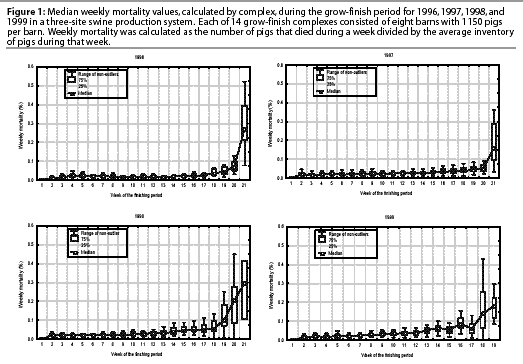
Weekly mortality rates remained constant during the first weeks of the grow-finish period, but increased in the last weeks (Figure 1). In addition, weekly mortality showed much more variation in the second half of the grow-finish period. This was evidenced by much wider 25% and 75% quartiles, ie, values that include 50% of the data.
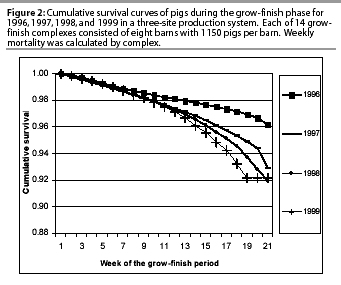
Increased risk for mortality occurred mainly after week 10 of the grow-finish period in all 4 years (Figure 2). Consequently, two distinct episodes of mortality were distinguished: early mortality occurring during weeks 1 to 10 of the grow-finish period and late mortality during week 11 until the end of the finishing period. In addition, there was a divergence in survival curves among the years, especially between 1996 and the other years, with survival decreasing in successive years. For clarity, the 95% confidence intervals surrounding the survival functions are not presented.
The average ratio of late to early mortality for the 4 years was 2.5. In 95% of the close-outs, this ratio was >=1.20, indicating that late mortality was at least 20% higher than early mortality.
Early and late mortality
Early and late mortality across the 4 years of the study were calculated in the same way as overall mortality. During the entire study period, late mortality (4.92 deaths per 1000 pig weeks) was greater (P<.001) than early mortality (2.16 deaths per 1000 pig weeks), and there was no correlation between early and late mortality (r=0.038; P=.64). Early and late mortality did not differ in different grow-finish complexes (P>.05).
Early mortality remained constant across the years except in 1998, when early mortality was higher than in 1996 (P<.01). Early mortality, expressed in number of pig deaths per 1000 pig weeks, was 1.93+/-0.69 in 1996, 2.12+/-0.67 in 1997, 2.50+/-0.83 in 1998, and 2.10+/-0.51 in 1999 (Figure 3).
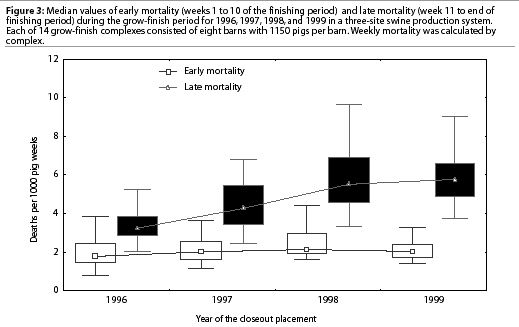
In each year of the study, late mortality was greater than early mortality (P<.001) and increased steadily from 3.39 in 1996 to 5.91 in 1999 (P<.001). Late mortality was lower in 1996 than in 1997 (P=.053) and lower in 1996 than in 1998 or 1999 (P<.001). Late mortality was lower in 1997 than in 1998 (P<.01) and 1999 (P<.001). Late mortality did not differ between 1998 and 1999 (P>.05).
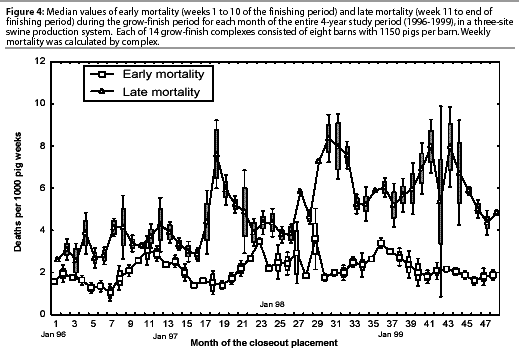
A peak in late mortality consistently occurred each year in September, October, and November for groups placed in June, July, and August (Figure 4). The seasonal pattern for early mortality was less pronounced (Figure 4). The peaks were lower and were more dispersed over the months. However, groups placed during fall months had a higher early mortality, corresponding with a higher mortality in younger grow-finish pigs during the fall and early winter.
Economic losses
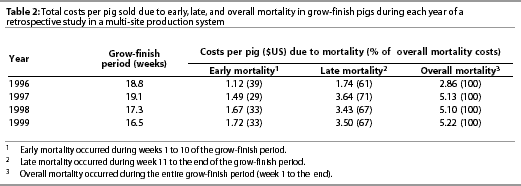
The opportunity cost due to overall mortality increased from $2.86 per marketed pig in 1996 to $5.22 in 1999 (Table 2). The cost of early mortality increased slightly between 1996 ($1.12 per marketed pig) and 1999 ($1.72 per marketed pig). The cost of late mortality showed a more pronounced increase from 1996 ($1.74 per marketed pig) to 1999 ($3.50 per marketed pig). On average, late mortality accounted for about two thirds of the total costs of overall mortality.
Discussion
Unique characteristics of this study include the method of recording mortality on a weekly basis, the long period of observation (4 years), the large number of pigs, and the study population, which was homogeneous with respect to breed, management practices, housing conditions, feeding, disease prevention procedures, and biosecurity measures. Studying a homogeneous population has the advantage that results are not influenced by variation in the listed variables, which may be the case when mortality is investigated across different swine farms. On the other hand, using a homogeneous study population also implies that the results may not be applicable to all swine farms, or even to other multi-site production systems. Clermont and Désilets21 reported differences in mortality across different types of farms, with higher overall mortality in pigs from grow-finish farms compared to pigs from farrow-to-finish farms. Further studies are required to investigate whether the overall mortality and mortality pattern observed in this study also occur in single-site farms or other multi-site production systems.
Overall mortality increased from 2.57 deaths per 1000 pig weeks in 1996 to 3.57 in 1999. A recent NAHMS study in 393 US swine operations, each with more than 300 finishing pigs, showed a mean mortality of 2.3% for pigs placed in grow-finish pigs facilities.15 Overall mortality higher than 4% was experienced by 13.5% of the operations. Straw et al13 found an overall mortality of 5.3% and 6.3% in two groups of grow-finish pigs raised in a test station.
Because the inventory decreased throughout the grow-finish period due to death, culling, transfer, and shipment to slaughter, overall mortality was not expressed as the percentage of the number of pigs initially placed in the finishing units, but as the number of pigs per 1000 pig weeks. In this way, changes in the total number of pigs were taken into account in the calculations. Because the number of pigs in the barns decreased towards the end of the finishing period, the absolute number of pigs that died late in the finishing period may be somewhat lower than appear based on the mortality risk at this time. The percentage of pigs culled and transferred varied across the years. Because culled or transferred pigs may be more likely to die, this variation may have introduced some minor bias into the mortality results.
The weekly mortality patterns indicated that increased overall mortality was due mainly to a higher mortality occurring after week 10 of the finishing period, ie, in pigs older than 20 weeks. From week 10 onwards, there was no longer an overlap of the 95% confidence intervals surrounding the survival curves of the different years. We used this to split the grow-finish period into two periods, one before 10 weeks, and one after 10 weeks. Straw et al13 showed that more pigs in a test station died in the last 6 weeks of the 18-week finishing period than in the first 6 weeks. To the authors' knowledge, the present study is the first that investigated weekly mortality patterns in pigs raised in a multi-site production system.
In contrast with clinical, serological, pathological, or even some performance parameters, mortality can be recorded reliably by swine barn managers. Although mortality is often recorded on a weekly basis, the data are usually used to calculate only overall mortality. The results of this study suggest that farm managers should analyze mortality on a weekly basis and use this data to monitor the health status of pigs throughout the grow-finish period. In addition, weekly mortality data can be linked with other health parameters (eg, coughing index) that are more difficult to measure under practical conditions.
The results of the financial analysis in this study show that death loss in grow-finish pigs may have a great impact on the profitability of swine operations.8 In addition, from an economic point of view, Table 2 also demonstrates that it is important to know whether pigs are dying at the beginning or at the end of the grow-finish period. The periods of risk for mortality are well documented for suckling pigs 9,10 and breeding females;11,12 however, despite the long grow-finish interval, the periods with the highest risk for mortality have not yet been identified for grow-finish pigs. In general, two farms with the same percentage of overall mortality in grow-finish pigs can suffer quite different financial losses depending on the age at which pigs die, because older pigs are more valuable. The increase in financial losses due to late mortality in the present study would have been even more pronounced if the duration of the grow-finish period had remained the same across the years. The grow-finish period was about 2 weeks shorter in 1999, resulting in a shorter period for late mortality. A simple economic model was used to calculate the opportunity costs.22 Although the outcome may differ slightly from the results of detailed economic calculations on mortality, our model provides a good estimate of the losses associated with mortality. A fixed price was used for feed and for slaughter pigs to eliminate the influence of different market conditions across the years. Therefore, differences in mortality pattern were responsible for the changes in costs of mortality across the years, and the comparisons of mortality costs in different years were not confounded by changing market conditions. Reducing mortality increases gross revenue for the producer. However, the entire value of the losses are not recaptured, because costs of preventive measures to reduce mortality must be included when the net profitability of reduced mortality is calculated. Pigs grow more efficiently and economically in multi-site production systems than in conventional swine farms,3,4 in part because they have a lower pathogen load and better health status. However, it remains to be investigated whether better health status can be maintained until the end of the finishing period.5 If disease problems are delayed until later in the finishing period, the benefits resulting from better performance in younger pigs may be diminished by the higher disease prevalence and mortality in older, more valuable finishing pigs. Further prospective studies, using clinical parameters, serology, and additional laboratory investigations, are required to identify causes of increased mortality and associated risk factors late in the grow-finish period. The most common causes of mortality in grow-finish pigs include respiratory disease, cardio-vascular failure, and diseases of the intestinal and urogenital tract.13,14
While the risk of mortality in this production system did not increase until pigs reached 20 weeks of age, the problem might actually have started earlier. However, a very consistent seasonal pattern could be observed, especially with respect to late mortality. Schoder et al14 also found a higher risk of mortality in grow-finish pigs in the month of September. A precise explanation for the seasonal pattern is currently not available. Studies that investigated pneumonia lesions in slaughter pigs23,24 showed a higher prevalence during the winter, and the investigators ascribed this to more adverse weather conditions during that period. Further research is warranted to investigate whether a similar mortality pattern occurs in other production systems and to elucidate possible risk factors for increased mortality.
Implications
- Assessing weekly mortality in grow-finish pigs in large, multi-site production farms may reveal a change in mortality pattern.
- An increase in mortality may occur specifically in older, more valuable finishing pigs and the increase may be more pronounced during fall months.
- In one multi-site production system studied over 4 consecutive years, approximately two thirds of the overall costs of mortality in grow-finish pigs were associated with deaths occurring in pigs older than 20 weeks.
References -- refereed
1. Harris D, Alexander T. Methods of disease control. In: Straw B, D'Allaire S, Mengeling W, Taylor D, eds. Disease of Swine. 8th ed. Ames, Iowa: Iowa State University Press; 1999:1077-1110.
2. Dritz S, Chengappa M, Nelssen J, Tokach M, Goodband R, Nietfeld J, Staats J. Growth and microbial flora of non-medicated, segregated, early weaned pigs from a commercial swine operation. JAVMA. 1996;208:711-715.
3. Harris D. Alternative approaches to eliminating endemic diseases and improving performances of pigs. Vet Rec. 1988;123:422-423.
7. Whittemore C. The Science and Practice of Pig Production. Oxford: Blackwell Science; 1998:537-549.
11. Stein T, Dijkhuizen A, D'Allaire S, Morris R. Sow culling and mortality in commercial swine breeding herds. Prev Vet Med. 1990;9:85-94.
12. Chagnon M, D'Allaire S, Drolet R. A prospective study of sow mortality in breeding herds. Can J Vet Res. 1991;55:180-184.
13. Straw B, Neubauer G, Leman A. Factors affecting mortality in finishing pigs. JAVMA. 1983;183:452-455.
14. Schoder G, Maderbacher R, Wagner G, Baumgartner W. Causes of losses in a pig fattening facility. Dtsch Tierarztl Wochenschr. 1993;100:428-432.
15. Losinger W, Bush E, Smith M, Corso B. An analysis of mortality in the grower/finisher phase of swine production in the United States. Prev Vet Med. 1998;33:121-145.
16. Losinger W, Bush E, Smith M, Corso B. Mortality attributed to respiratory problems among finisher pigs in the United States. Prev Vet Med. 1998;37:21-31.
18. Martin S, Meek A, Willeberg P. Veterinary Epidemiology: Principles and Methods. Ames, Iowa: Iowa State University Press; 1987:48-76.
19. Le CT. Applied survival analysis. New York: John Wiley and Sons, Inc; 1997:257.
21. Clermont R, Désilets A. Epizootiological aspects of porcine respiratory diseases which were encountered in Québec from September 1980 until February 1981. Can Vet J. 1982;23:179-182.
22. Dijkhuizen A, Huirne R, Morris R. Economic decision making in animal health management. In: Dijkhuizen A, Morris R, eds. Animal Health Economics. Principles and Applications. Sydney: Post-Graduate Foundation in Veterinary Science; 1997:13-24.
23. Straw B, Backström L, Leman A. Evaluation of swine at slaughter. I. The mechanics of examination and epidemiologic considerations. Compend Contin Educ Pract Vet. 1986;8:541-548.
24. Maes D, Deluyker H, Verdonck M, Castryck F, Miry C, Vrijens B, Ducatelle R, de Kruif A. Non-infectious herd factors associated with macroscopic and microscopic lung lesions in slaughter pigs from farrow-to-finish pig herds. Vet Rec. 2001;148:41-46.
References -- non refereed
5. Dee S. The porcine respiratory disease complex: are subpopulations important? Swine Health Prod. 1996;4:147-149.
6. Brumm M. Maximizing profit from the growing-finishing phase. Proc AD Leman Swine Conf. St Paul, Minnesota. 1995:137-142.
8. Holden P. Swine costs and production. Agri-practice. 1991;12:46-48.
17. Ross P, Sanz M, Sernia C, Bustos L, Sanguinetti H, Risso M, Moredo F, Vigo G, Idiart J, Perfumo C. Causes of death in growing and fattening pigs in a farrow-to-finishing operation. Evaluation of their prevalence. Proc AASP. Indianapolis, Indiana. 2000:61-65.
20. Shurson J. Overview of pork production. Swine nutrition and feeding course, University of Minnesota. http://www.ansci.umn.edu/web-courses/AnSc4401/ . Accessed July 20, 2001.